


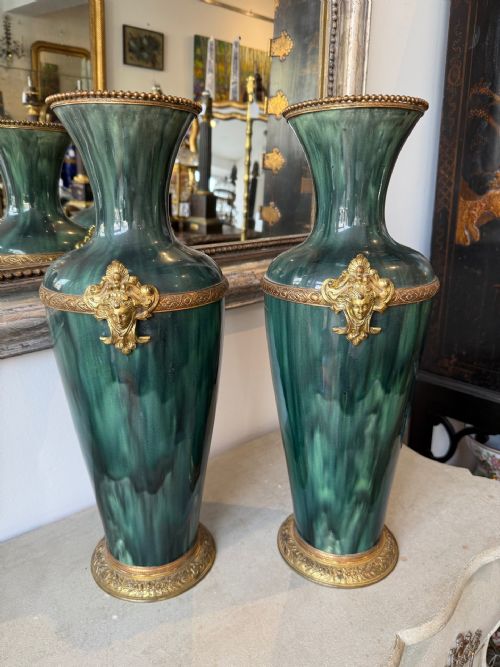

Mounted Porcelain Urns
Mounted porcelain urns combine fired ceramic bodies with cast metal mounts, offering a decorative presence shaped by European and Asian traditions.
Mounted Porcelain Urns
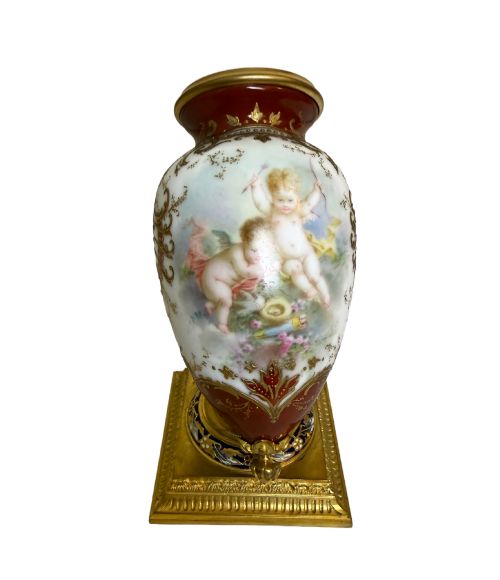
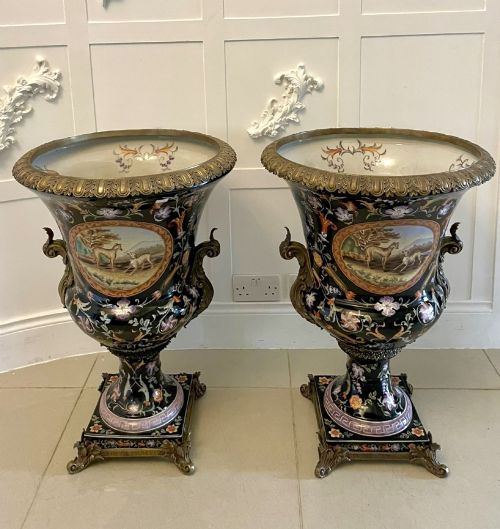
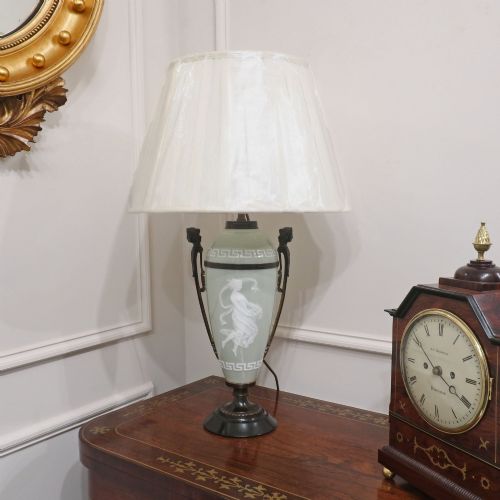
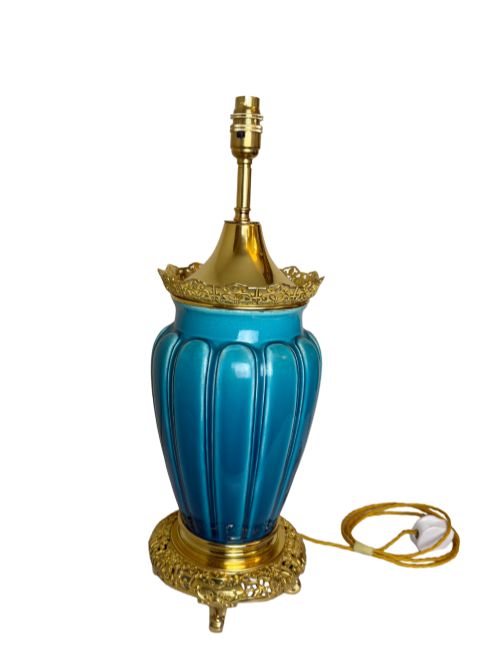
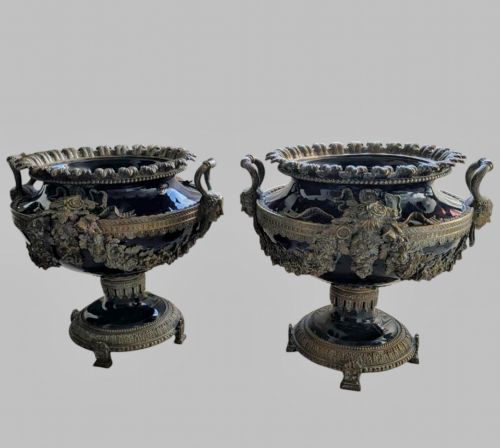
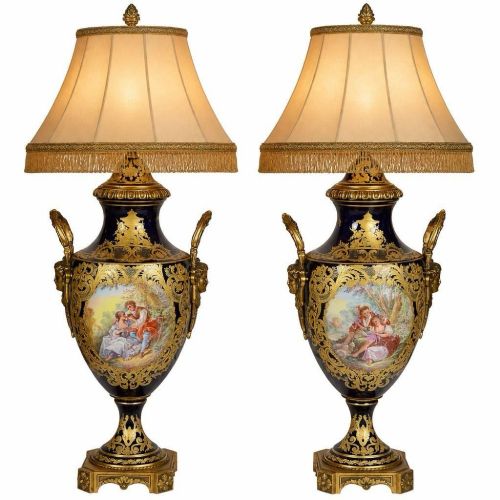
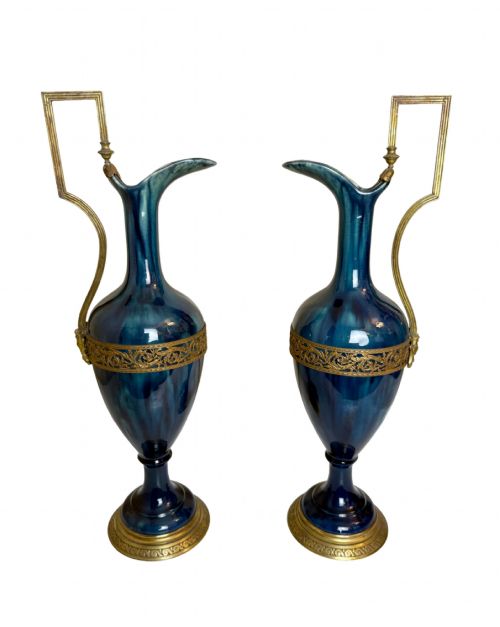
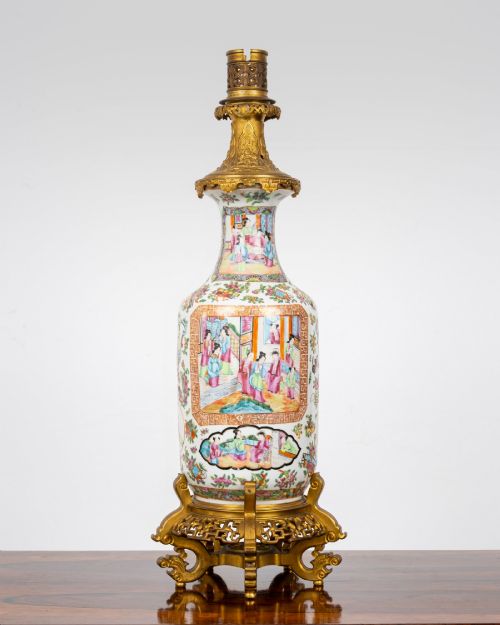
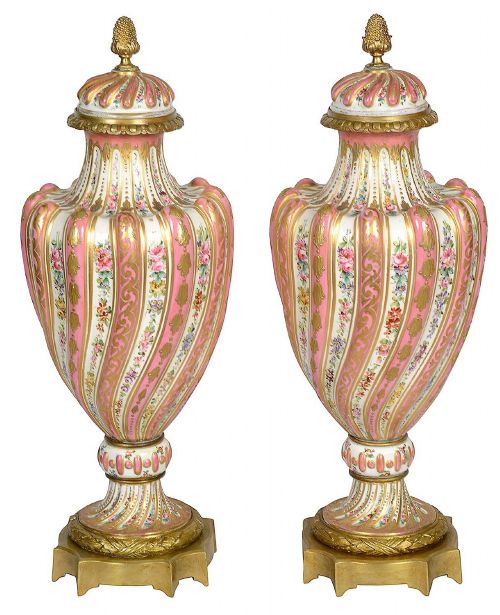
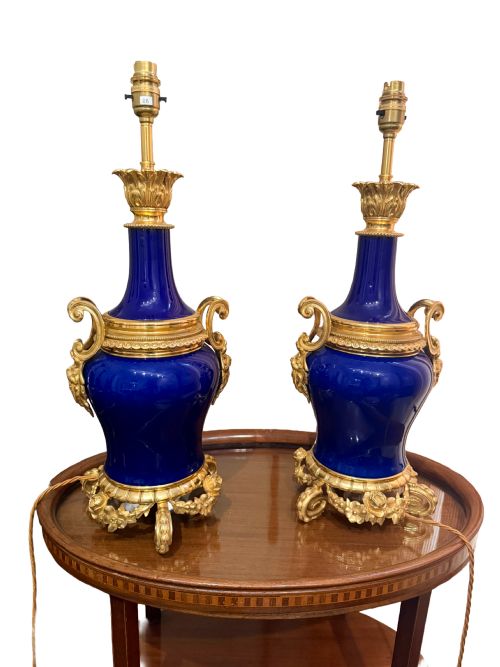
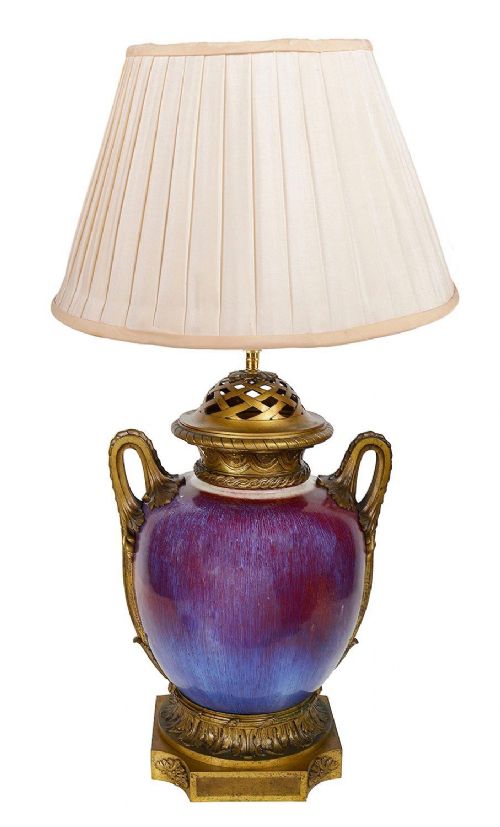
Mounted porcelain urns bring together ceramic vessels and metal mounts, appearing across styles from French Rococo Revival to Chinese Export. When you examine mounted porcelain urns on this page, you encounter pieces that function as decorative vases, table lamps, jardinières, and mantel clocks.
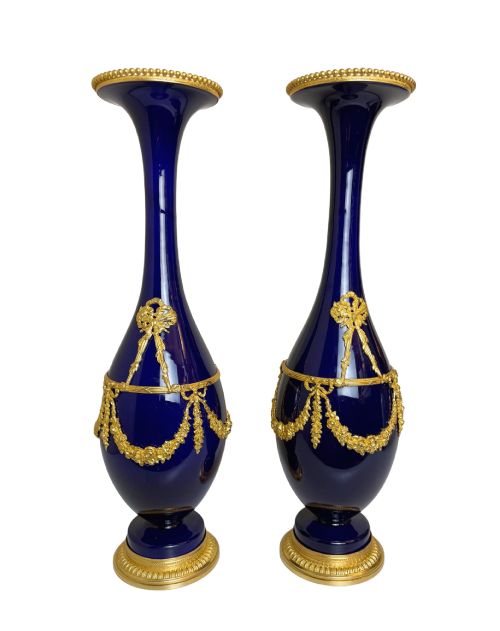
The ceramic bodies range from eighteenth-century Chinese celadon and sang de bouef to nineteenth-century French Sevres style porcelain and Paris porcelain. Many items survive in pairs, reflecting their original purpose as garnitures and mantel ornaments.
European workshops frequently took imported or domestic porcelain and added metal fixtures to suit contemporary interiors. The resulting objects bridge utilitarian vessels and ornamental sculpture through varied forms and glazes.
How they were made
Makers shaped porcelain on the wheel or in moulds before firing the ceramic bodies at high temperatures, applying glazes such as powder blue, turquoise, and celadon. Artisans then fitted these vessels with cast metal components, securing handles, bases, and rims around the ceramic form.
The metal mounts consist primarily of gilt bronze, ormolu, brass, and gilt metal, shaped through casting and chasing to create scrollwork, foliage, and classical motifs. These metal elements were fastened to the porcelain using pins, screws, or adhesives designed to hold the heavy components securely together.
Several pieces double as clocks, ensuring that even time itself is wrapped in porcelain and bronze.
What varies in quality
Quality rests on the crispness of the metal chasing and the precision with which the mounts fit the contours of the ceramic body. Finer pieces display sharply defined gilding and mounts that complement rather than overwhelm the porcelain beneath.
The artistry of the ceramic painting and the depth of the glaze also distinguish standard production from exceptional examples. Potteries achieved superior results through controlled firing temperatures and meticulous hand-painting on the porcelain surface.
Sevres·Minton·Samson·Meissen
The Mounted Porcelain Urns Glossary
- Ormolu
- Gilded bronze. Makers used this technique to apply a gold-mercury amalgam onto bronze mounts, producing a rich matte and bright golden finish.
- Garniture
- A set of matching vases or urns. These groups were traditionally placed on mantelpieces or cabinets as balanced decorative arrangements.
- Jardinière
- An ornamental pot or receptacle for holding plants. These vessels often received metal mounts to elevate their status for interior display.
- Celadon
- A pale green jade-like glaze. This traditional ceramic finish originated in China and influenced later European interpretations.
- Pate sur pate
- A method of porcelain decoration. Artisans built up layers of liquid clay paste on a coloured body to create a low-relief cameo effect.
Mounted Porcelain Urns: Frequently Asked Questions
What are mounted porcelain urns?
Mounted porcelain urns are ceramic vessels fitted with decorative metal mounts such as gilt bronze or ormolu. They serve primarily as ornamental objects, table lamps, and mantel garnitures.
These pieces combine ceramic manufacturing traditions with metalworking craftsmanship. European and Asian workshops produced them across several centuries for interior display.
How were mounted porcelain urns used?
Historically, these urns decorated grand reception rooms, mantelpieces, and side tables in domestic interiors. Many formed part of larger garniture sets arranged symmetrically.
Over time, some urns were converted into table lamps while retaining their original decorative character. They functioned as status symbols reflecting contemporary tastes in interior design.
How do you clean mounted porcelain urns?
Dust the porcelain and metal mounts gently with a soft, dry brush to prevent the accumulation of dirt. Avoid harsh chemical cleaners that can damage the glaze or strip the gilding from the bronze.
Take care around painted surfaces and metal mounts when handling the object. Professional conservation is recommended for delicate repairs or deep cleaning.
How do you tell periods apart?
Period identification relies on stylistic cues, manufacturing techniques, and the character of the metal mounts. Nineteenth-century pieces often emulate earlier eighteenth-century designs with revivalist details.
Examine the glaze colours, the weight of the porcelain, and the casting style of the bronze. Comparing these elements against known factory marks helps narrow down the date.