

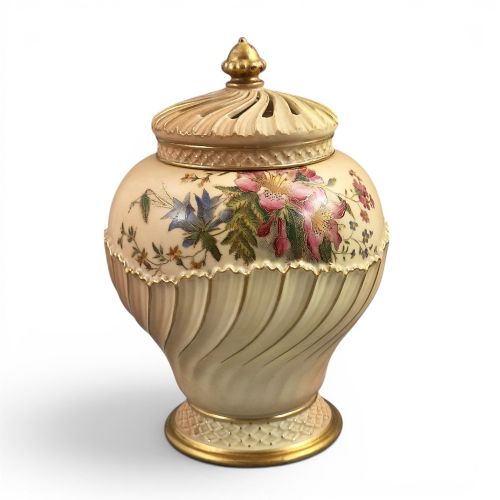


Gold Leaf Porcelain Urn
These gold leaf porcelain urn pieces bring together fine ceramic bodies and rich metal gilding across various historic periods.
Gold Leaf Porcelain Urn
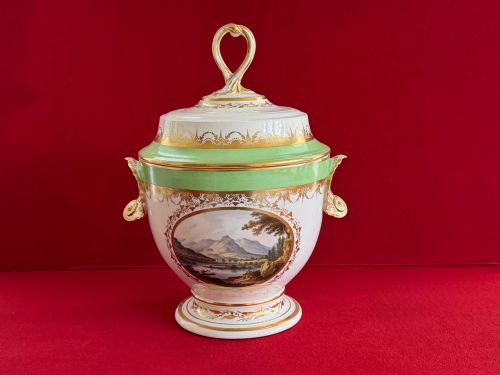
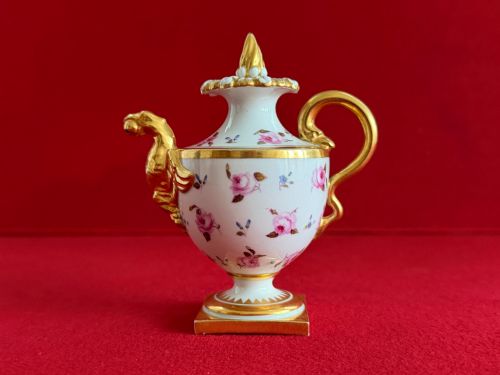
When you search for a gold leaf porcelain urn, you encounter a selection of ceramic vessels enhanced with gold leaf, gilt, or gilding. The pieces span periods such as the Georgian, Regency, Victorian, and Edwardian eras, alongside Japanese Meiji and Edo period works.
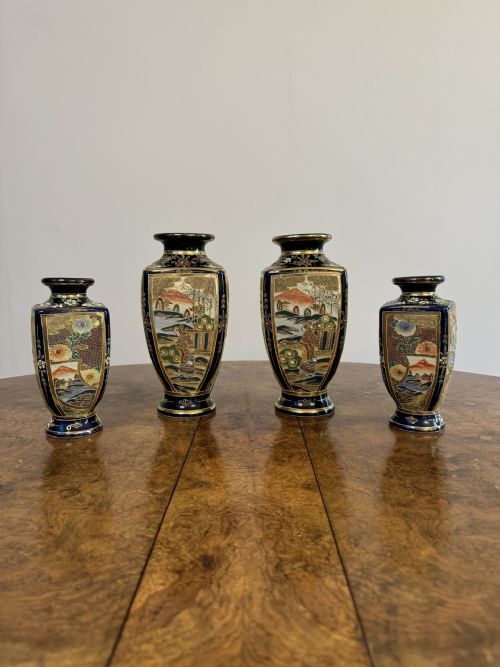
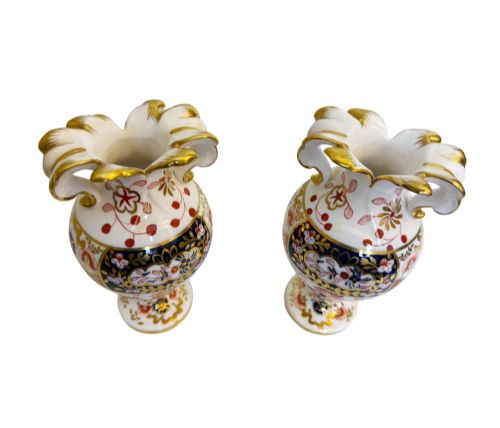
The objects on this page take forms ranging from decorative vases and jardinieres to ice pails, pot-pourri jars, and mantel clocks. English factories like Royal Worcester and Worcester feature prominently alongside Japanese Satsuma and Arita wares.
Buyers look for these items to add decorative presence to a room, drawing on classic shapes like the Medici vase or traditional Japanese garnitures. Each piece combines ceramic manufacture with applied metallic decoration.
What varies in quality
The standard of a gold leaf porcelain urn depends heavily on the skill of the painting and the precision of the gilding. Hand painted scenes by known artists demonstrate a higher level of craftsmanship than standard factory output.
The weight and detail of associated mounts, handles, and covers also distinguish finer examples. Well-preserved gilding that retains its original burnished brightness elevates a piece above those with worn metallic surfaces.
Gold Leaf Porcelain Urn Retail Price Guide 2026
Typical asking prices for gold leaf porcelain urn among the pieces listed under this phrase on Sellingantiques today, from the lower quarter to the upper quarter. They describe what is for sale here now, not the wider market.
Listings include porcelain, earthenware, and ceramic bodies enhanced with gold leaf, gilt, ormolu, and enamel across multiple historic periods.
Flight Barr And Barr·Royal Worcester·Kinkozan·Spode·Derby
The Gold Leaf Porcelain Urn Glossary
- Gilding
- The application of gold leaf or gold dust to a ceramic surface. This technique provides the metallic sheen seen on many historical vases and jars.
- Ormolu
- Gilt bronze mounts applied to decorative ceramics and clocks. French and English makers utilised this material to enhance the status of an object.
- Moriage
- A Japanese ceramic technique using slip to create raised decorative patterns. Artisans often covered these raised designs with gold paint.
- Garniture
- A set of matching vases or pots designed for display together on a mantelpiece or sideboard. These sets frequently include three or more coordinating vessels.
- Imari
- A style of Japanese export porcelain decorated in underglaze blue and iron red with added gold. European factories later copied these distinct palette choices.
Gold Leaf Porcelain Urn: Frequently Asked Questions
What periods do these pieces come from?
The selection includes items from the Georgian, Regency, and Victorian eras, as well as Edwardian and Meiji period Japanese works.
Maker dates and stylistic markers help place each item within its historical context.
How do I care for gold leaf on porcelain?
Clean the surface gently with a dry, soft cloth to remove dust without disturbing the metallic leaf.
Avoid liquid cleaners or chemical polishes, which can damage both the porcelain glaze and the delicate gilding.
Are these items purely decorative?
Many pieces functioned as display items, garnitures, or mantel garnishments rather than utilitarian vessels.
Certain forms, such as ice pails, pot-pourri jars, and jardinieres, originally served specific domestic functions before becoming decorative objects.
How do I identify Japanese Satsuma ware?
Satsuma pieces typically feature a crackle-glaze earthenware body decorated with polychrome enamels and rich gold.
Signatures or artist marks on the base often indicate specific Kyoto workshops or makers like Kinkozan.