
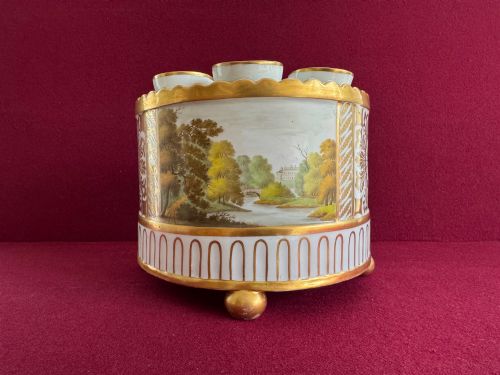
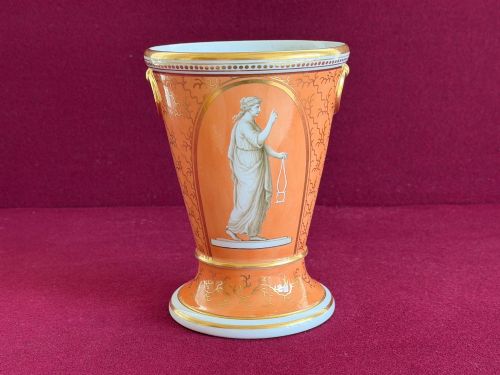
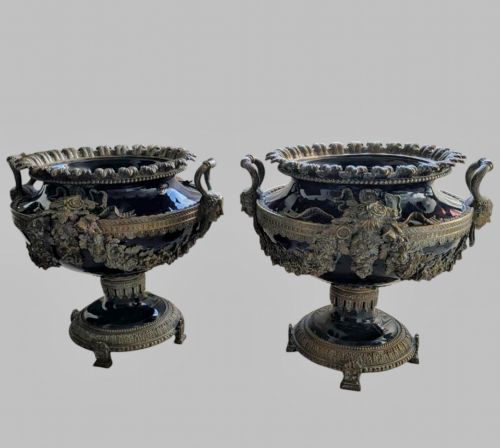


Gilded Porcelain Cachepot
These gilded porcelain cachepot pieces are decorative indoor plant holders dressed in gold leaf and enamel, bringing bright colour and period weight to a room.
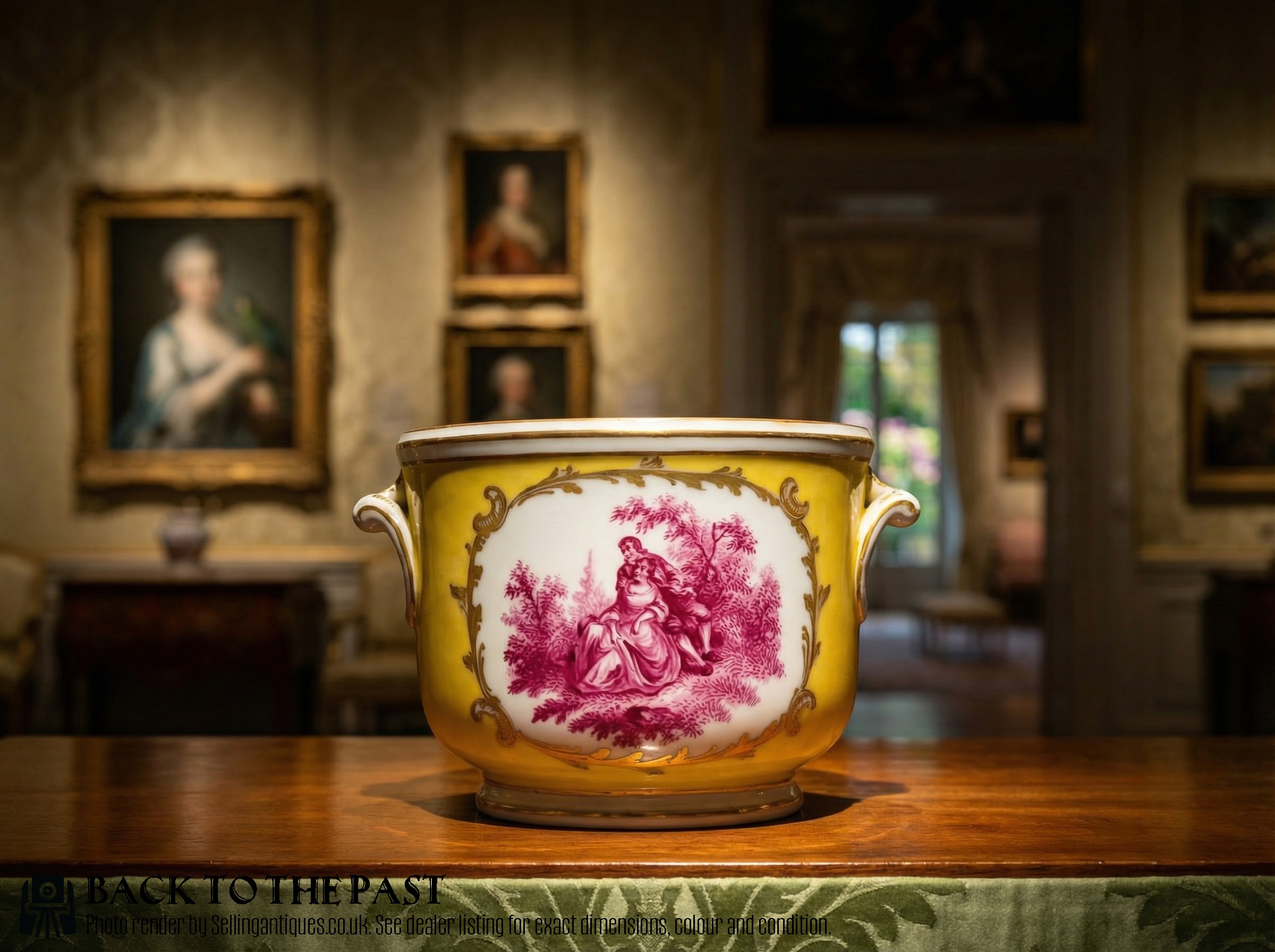
Gilded Porcelain Cachepot
A gilded porcelain cachepot is an ornamental container designed to hold a potted plant, sitting on a table, sideboard or mantelpiece. The pieces gathered here span the Georgian and Victorian eras, alongside later pieces from around nineteen hundred, taking forms that range from traditional tub-shaped jardinières to twin-handled urns and bough pots.
The English examples lean towards early nineteenth-century Worcester production, including works by Flight and Barr, whilst the continental pieces often showcase French blue ceramic bodies or German porcelain figural flower carts. Many pieces double as vases or table ornaments, reflecting the crossover between botanical display and interior decoration during the nineteenth century.
Materials and construction
The core body of each vessel is formed from fired ceramic or porcelain, frequently finished with a white, blush ivory or coloured glaze before any decorative work begins. Gilding and gold leaf are then applied by hand to the rims, handles and raised mouldings to catch the light.
Enamel painting and hand-painted details complete the surface, often featuring floral motifs or figural scenes fired into the glaze at high temperatures. Mounts and handles in gilt bronze or cast metal appear on select French and English items to add structural weight and contrast.
Listings feature porcelain, gold leaf, enamel and gilt bronze across Georgian and Victorian periods.
Judging quality and execution
Quality rests in the crispness of the porcelain moulding and the precision of the hand-painted enamels, where finer pieces display smooth, even glazes free of heavy pooling or firing blemishes. The application of gold leaf and gilding also sets the standard, with superior examples retaining sharp burnished highlights rather than flat, dull washes.
The prestige of the maker dictates much of the standing, as demonstrated by documented Worcester factories or named modellers like James Hadley. Heavier potting, well-proportioned handles and intact, crisp relief work separate the master potter's output from standard commercial ware.
Flight and Barr·Barr Flight and Barr·Royal Worcester·Royal Doulton·Kister Scheibe-Alsbach·Coalport
The Gilded Porcelain Cachepot Glossary
- Cachepot
- A decorative container designed to hide a plain flowerpot standing inside it. The French term translates literally as hide-pot.
- Jardiniere
- A large ornamental pot or stand for flowers and plants, usually ceramic or metal. These pieces form the majority of the larger botanical vessels on this page.
- Bough pot
- A vessel with a pierced or removable cover designed specifically for holding cut branches and flowering boughs. They were popular in Georgian interiors for bringing greenery indoors.
- Blush ivory
- A matte cream-coloured ceramic ground developed by Royal Worcester in the late nineteenth century. It provides a soft backdrop for hand-painted floral decoration.
- Gilding
- The application of gold leaf or gold powder to the surface of porcelain. It highlights moulded details and adds a reflective finish to rims and handles.
Gilded Porcelain Cachepot: Frequently Asked Questions
What is a gilded porcelain cachepot used for?
These vessels were originally made to house potted plants inside the home, keeping watering mess away from fine furniture surfaces while adding decorative colour to a room.
Today they function equally well as standalone ornaments, table centrepieces or receptacles for dried arrangements and floral displays.
How do I clean a vintage cachepot?
Dust the surface gently with a dry, soft cloth to prevent scratching any delicate enamel work or worn surface gilding.
Avoid soaking antique pieces in water or using harsh modern detergents, as moisture can seep through unglazed bases or damage fragile painted details.
Can I plant directly inside them?
Planting directly into antique porcelain is generally discouraged because moisture and soil acids can eventually discolour the interior glaze or weaken the ceramic body.
It is much safer to keep the plant in a standard nursery pot and use the cachepot merely as an outer decorative shell.
How do I date a Georgian piece?
Georgian examples, particularly those from Worcester factories around eighteen hundred, feature distinctive paste bodies, hand-painted botanical motifs and specific factory script marks on the underside.
Comparing the baseline glaze characteristics and gold application styles against known factory periods helps confirm their early nineteenth-century origins.