

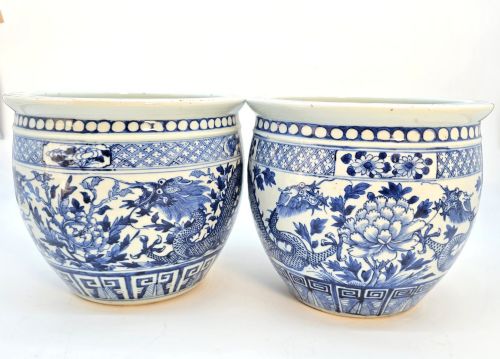


Hand Painted Porcelain Planter
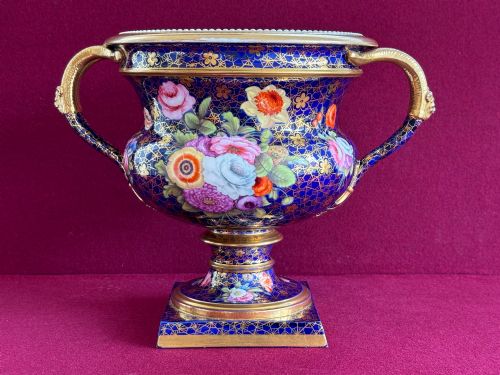
These hand painted porcelain planter examples range from Georgian Worcester pieces to 19th-century Chinese blue and white vessels, bringing vibrant colour and classical forms to interior spaces.
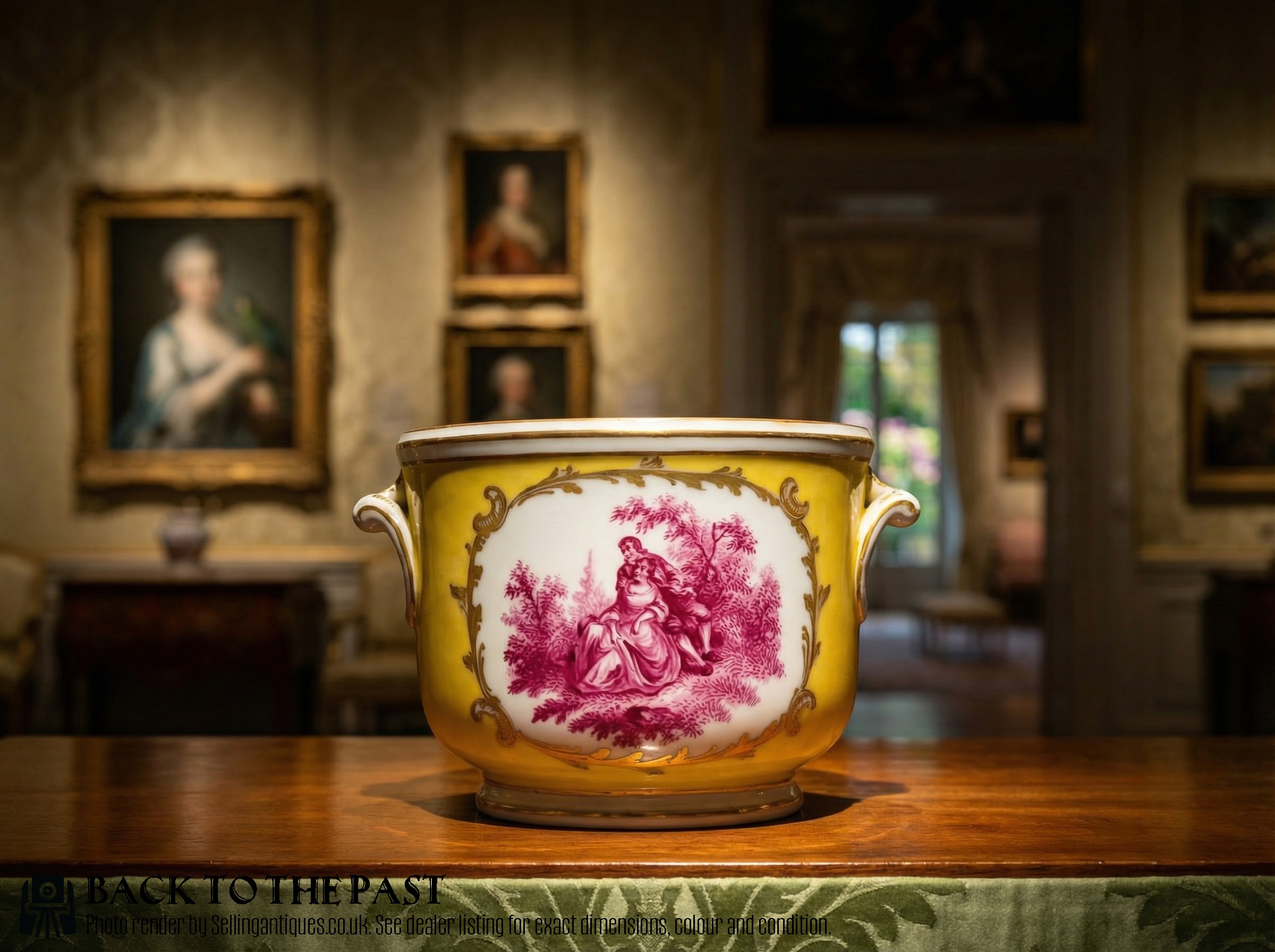
Hand Painted Porcelain Planter
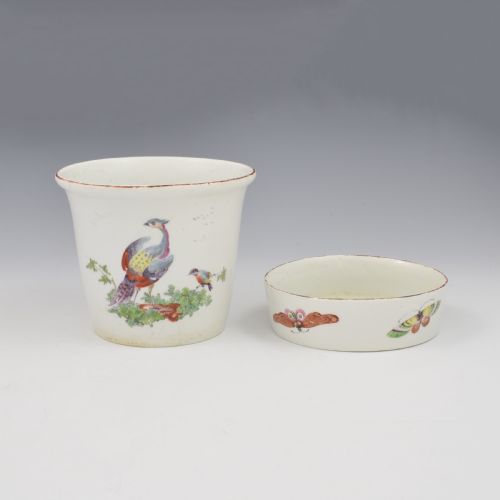
A hand painted porcelain planter serves as a decorative vessel designed to house potted plants or act as an independent ornamental piece. The selections gathered here encompass jardinieres, cache pots, and flower pots created across multiple centuries.
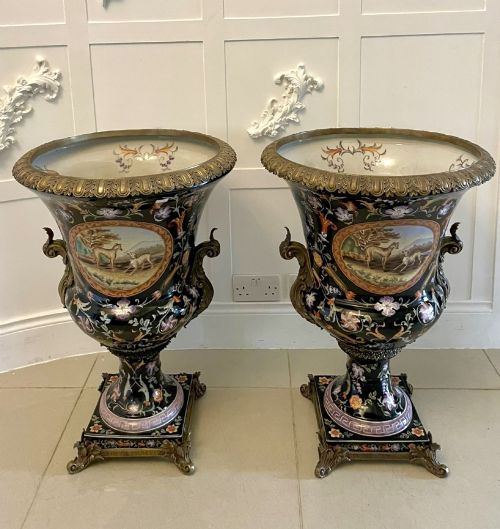
British and European factories like Worcester and Dresden sit alongside substantial Chinese Export and Japanese Imari pieces. Buyers frequently encounter French and Victorian examples featuring brass mounts or detailed enamel decoration.
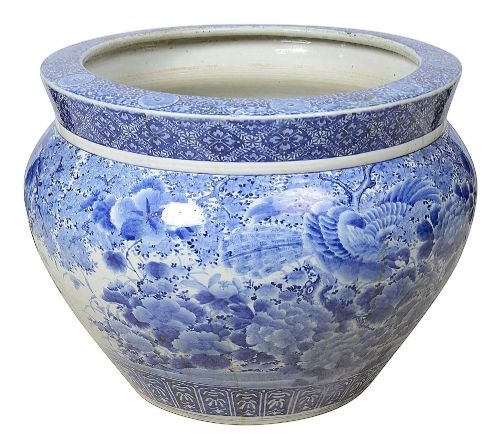
Forms span from traditional hexagonal planters with drip trays to large fish bowls and urns. Each piece reflects the aesthetic preferences of its period, moving through Georgian, Victorian, and Edwardian design phases.
How they were made
Potters shaped ceramic and porcelain bodies by hand or through moulding before applying cobalt underglaze, enamel pigments, and gold leaf details. Kiln firing fixed these colours into the ceramic body, often followed by secondary low-temperature firings for delicate enamel work.
Many European and Asian vessels incorporate gilt highlights and applied brass mounts to secure structural stability and enhance decorative appeal. Glaze application varied from clear protective coats to rich coloured finishes that sealed the porous earthenware and porcelain.
Several planters doubled as fish bowls, proving that Victorian goldfish deserved a residence with proper artistic credentials.
What varies in quality
Quality rests upon the precision of the hand painting, the clarity of the porcelain body, and the preservation of any gilt or enamel work. Finer pieces demonstrate superior brushwork control and well-balanced forms that maintain their structural integrity.
The sophistication of the design execution distinguishes standard factory output from exceptional works bearing maker marks or specific period characteristics. Preservation of the original glaze and minimal wear on raised decorative surfaces indicate careful historical handling.
Barr, Flight and Barr·Royal Worcester·Coalport·Clarice Cliff·Vion and Baury
The Hand Painted Porcelain Planter Glossary
- Jardiniere
- A large ornamental pot or stand used for holding flowers or plants. These vessels typically sit on floor stands or tabletops.
- Cache pot
- A decorative flower pot designed to conceal a plain inner plant pot rather than hold soil directly. French examples often feature matching drip trays.
- Imari
- A style of Japanese porcelain decorated in underglaze blue and overglaze red, gold, and other colours. This aesthetic heavily influenced European ceramic production during the 18th and 19th centuries.
- Famille Rose
- A major palette of Chinese ceramic glazes distinguished by opaque pink or purple enamel colours. It gained prominence during the Qing dynasty and appears frequently on export porcelain.
- Gilt
- A thin layer of gold applied to the surface of porcelain or metal mounts. This technique accents moulded details and handles.
Hand Painted Porcelain Planter: Frequently Asked Questions
Can I plant directly inside an antique planter?
Most antique pieces lack drainage holes or possess delicate interior glazes vulnerable to moisture damage. Using a separate plastic liner preserves the ceramic body while allowing safe watering.
Placing gravel at the base of an inner pot helps manage runoff away from fragile historical surfaces.
How do I distinguish Chinese export pieces from European copies?
Chinese export ceramics display specific paste characteristics, iron specking, and pigment depths typical of Qing dynasty production. European factories often utilised lighter earthenware bodies or distinct mark systems.
Examining the foot ring and glaze pooling helps identify regional manufacturing methods.
How should I clean a hand painted porcelain surface?
Dusting with a dry, soft cloth remains the safest method for preserving fragile enamels and gold leaf. Liquid cleaners risk damaging degraded overglaze decoration.
Professional conservation advice is recommended for pieces showing active flaking or unstable glaze.