



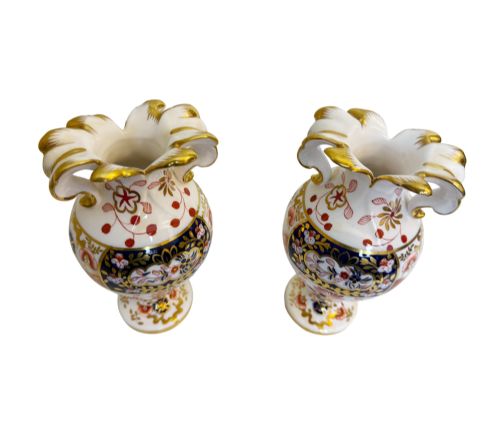



Imari Patterned Urn Pair
These imari patterned urn pair selections bring together striking cobalt and iron red ceramic vessels that transform any mantelpiece.
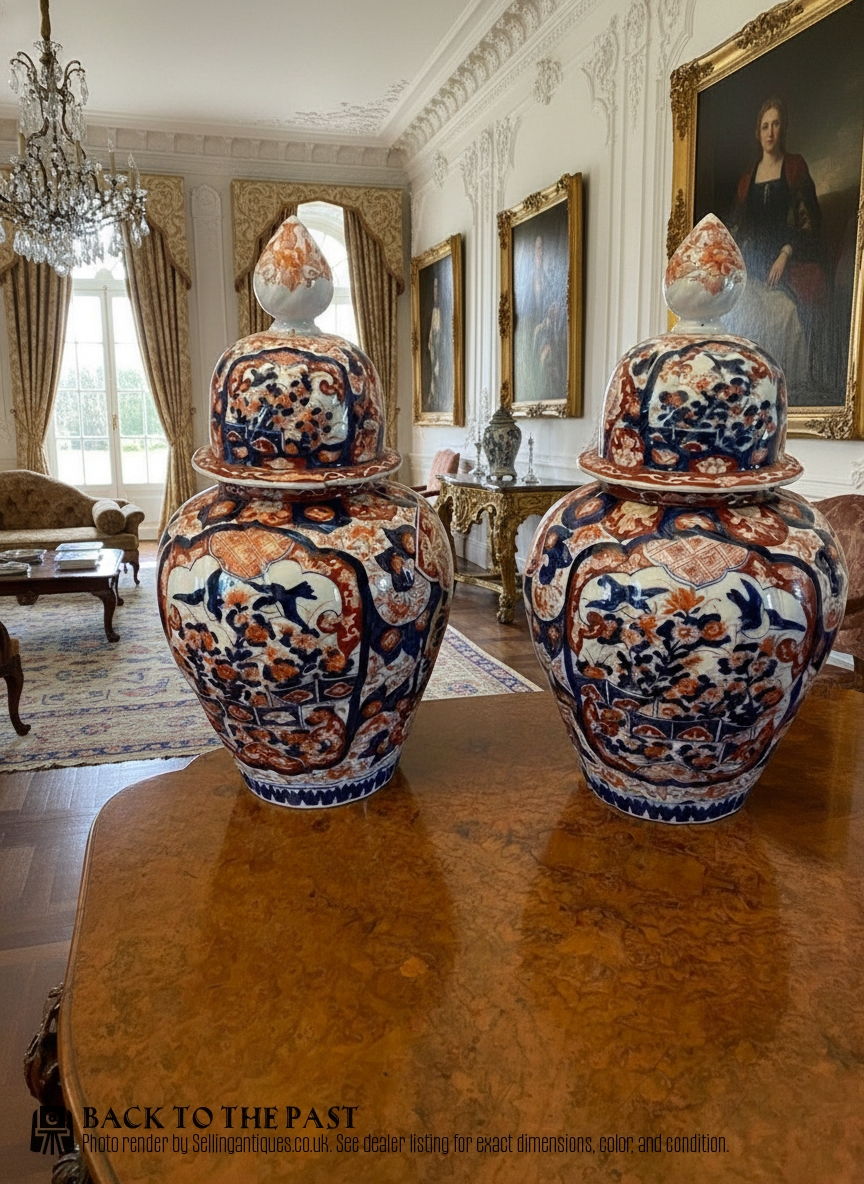
Imari Patterned Urn Pair
When you search for an imari patterned urn pair, you are looking for matched sets of decorated ceramic vessels that draw on distinctive blue, red and gold palettes. The listings here span Japanese export production and English adaptations from the eighteenth and nineteenth centuries.
You will most frequently encounter lidded jars and tall vases alongside specialised forms like ice pails and jardinieres. These pieces originate from periods including the Georgian era, the nineteenth century and around nineteen hundred, reflecting both East Asian manufacture and European revival styles.
Manufacture and materials
The foundation of these pieces rests on hard paste porcelain or ironstone, fired at high temperatures to achieve a durable ceramic body. Potters then applied hand-painted underglaze blue and iron red enamel, frequently accented with gold leaf or gilt details.
Mounts and secondary elements incorporate brass, gilt bronze, silk and turned wood, particularly on vessels adapted later into table lamps. The decorative schemes rely on traditional Japanese Imari motifs executed by both Eastern workshops and Western factories like Spode and Chamberlain Worcester.
Imari Patterned Urn Pair Retail Price Guide 2026
Typical asking prices for imari patterned urn pair among the pieces listed under this phrase on Sellingantiques today, from the lower quarter to the upper quarter. They describe what is for sale here now, not the wider market.
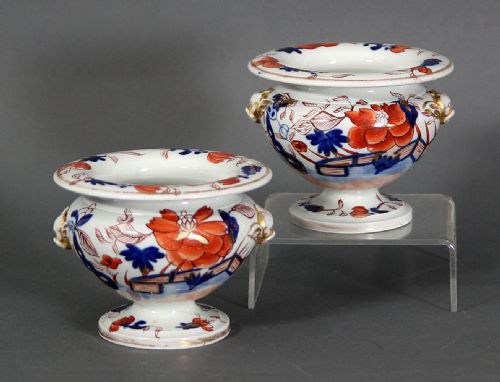
Salt cellars make a surprise appearance among these towering urns, proving that imari decoration could conquer the smallest dining table.
Judging quality in these vessels
The distinction between ordinary and exceptional examples lies in the crispness of the hand-painted cobalt and the precision of the overglaze enamelling. Superior pieces display vibrant gilding that remains intact across complex surface patterns and intricate panel divisions.
Form and scale also dictate worth, where massive vases or specialised items like ice pails demonstrate greater ambition from the maker. The harmony between matched pairs indicates whether the items were conceived together from the start or assembled later.
Spode·Chamberlain Worcester·Samson·Mason
The Imari Patterned Urn Pair Glossary
- Imari
- A style of Japanese porcelain featuring a palette of underglaze blue, iron red and gilt. The name derives from the port of shipment for wares produced in Arita.
- Ironstone
- A type of durable heavy earthenware patented in the nineteenth century. It serves as a sturdy alternative to porcelain for utilitarian and decorative vessels.
- Gilt
- A thin layer of gold applied to the surface of porcelain or metal mounts. This technique highlights rims, handles and decorative borders.
- Jardinier
- An ornamental pot or stand designed to hold growing plants. These vessels often match the decorative schemes of large salon vases.
- Japonisme
- The nineteenth century European interest in Japanese art and aesthetics. This movement heavily influenced Western ceramic design and interior decoration.
Imari Patterned Urn Pair: Frequently Asked Questions
What defines an imari patterned urn pair?
These matching vessels display the characteristic iron red, cobalt blue and gilt decoration associated with traditional Imari export wares. They encompass both Japanese originals and European interpretations from various historic periods.
Such pairs were designed to create symmetrical focal points on mantelpieces, sideboards or large entrance tables.
How do I distinguish English imari from Japanese originals?
English factories like Spode and Chamberlain Worcester utilised distinct body pastes such as ironstone or soft porcelain, alongside European vessel shapes. Japanese pieces often feature traditional Arita clays and specific export forms.
Examining the foot rim and the tone of the underglaze blue usually reveals the origin of the manufacture.
Were these vessels used for practical purposes?
Many lidded jars and urns served primarily as decorative garnitures rather than functional storage containers. Specialised forms included ice pails and table lamps intended for active domestic use.
Over time, numerous decorative vases were fitted for electricity or adapted into lamp bases.
How should I care for antique ceramic pairs?
Dust these porcelain and ironstone surfaces gently with a soft, dry cloth to protect the delicate gilt and enamel decoration. Avoid using chemical cleaners or immersing antique metal mounts in water.
Position the pairs away from direct sunlight to preserve the vibrancy of the iron red pigments.