


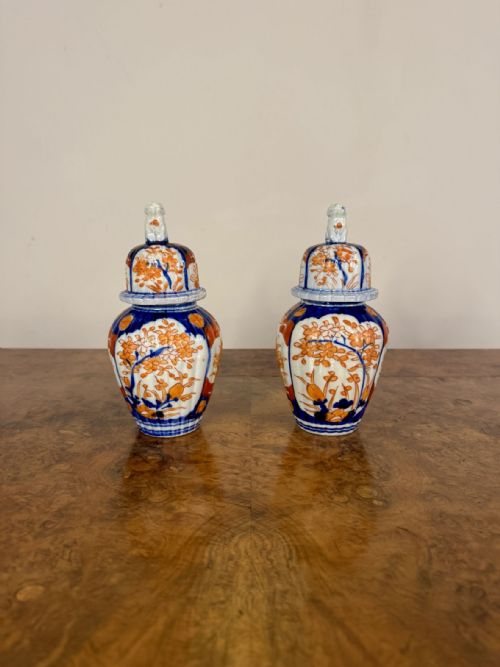


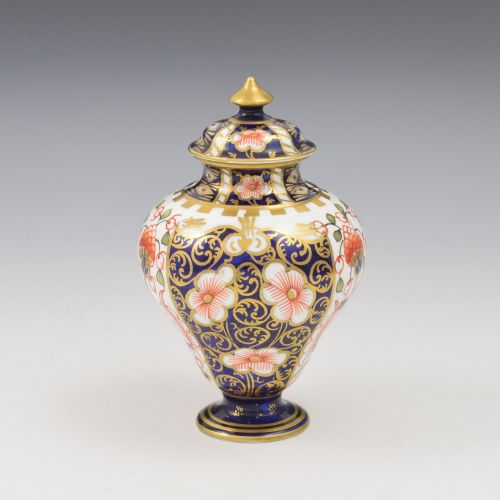
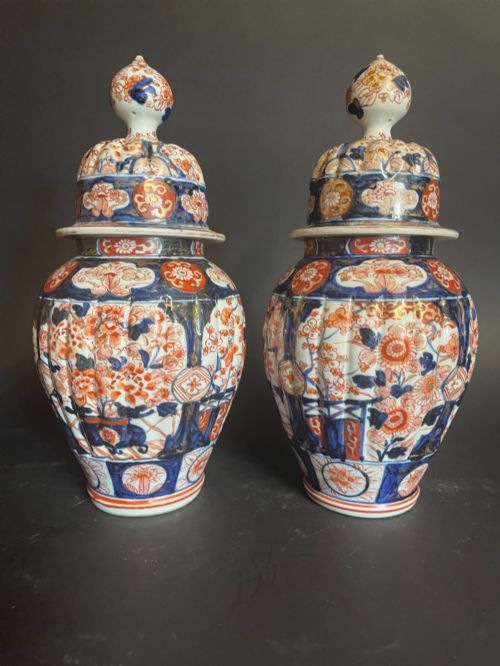


Porcelain Imari Lidded Urn
A porcelain imari lidded urn combines covered ceramic vessel forms with distinctive iron-red, blue, and gilt palettes suited to display.
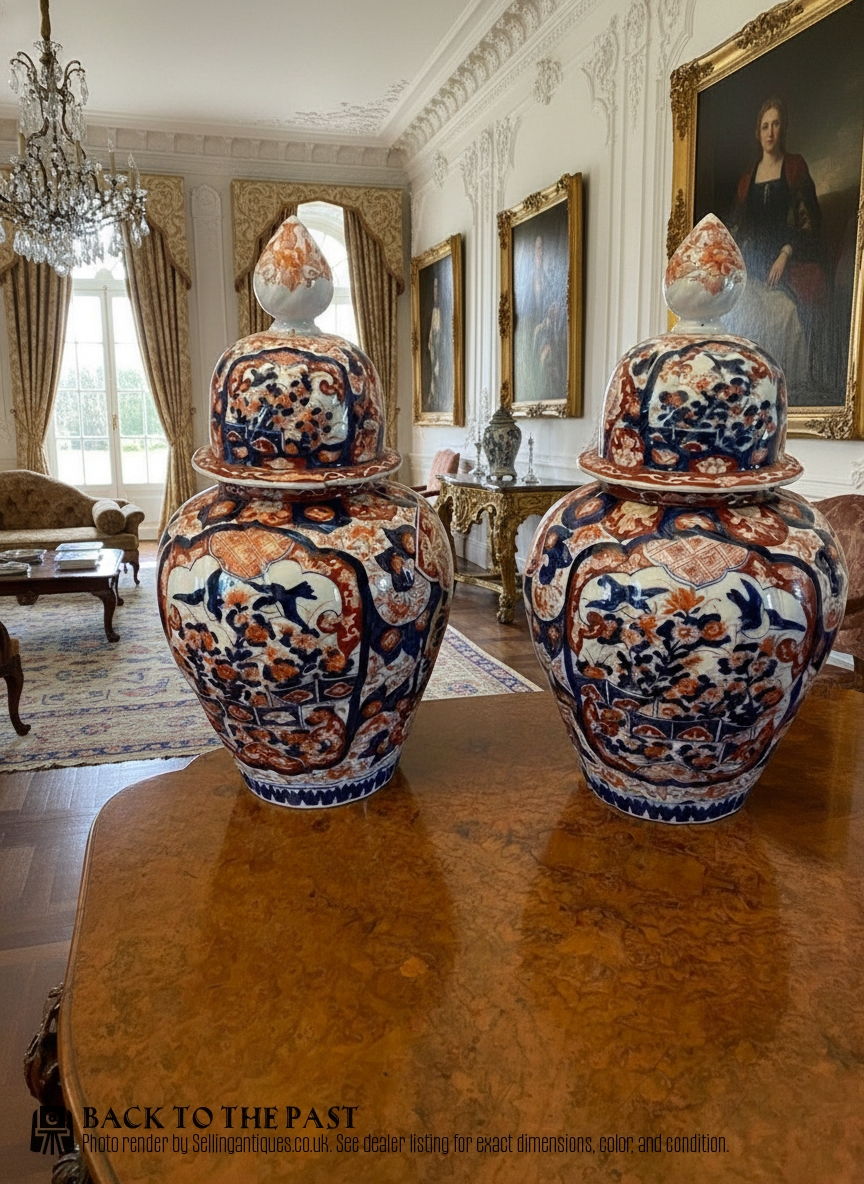
Porcelain Imari Lidded Urn
A porcelain imari lidded urn is a covered ceramic vessel intended for display, drawing on centuries of Japanese and European manufacturing traditions. When you browse this page, you meet pieces designated as lidded vases, ginger jars, and pot pourri jars decorated in the Imari palette.
The objects span multiple periods, ranging from seventeenth-century Japanese Arita pieces to eighteenth and nineteenth-century examples, alongside later British and French interpretations. Forms vary from simple baluster shapes to octagonal vessels and miniature vases with covers.
Origins stretch across Japanese Meiji and Edo periods, alongside Victorian and Edwardian European potteries mimicking the style. Buyers encounter pairs, trios, and single grand vessels intended for prominent placement in a room.
How They Were Made
Makers shaped these vessels using porcelain, ceramic, or ironstone, fired at high temperatures to create durable bodies. Glaze covers the ceramic base, providing a smooth surface for subsequent decoration.
Artisans applied pigment using enamel, gold leaf, gilt, and gilding to achieve the characteristic Imari palette of iron-red, cobalt blue, and metallic highlights. Covers were thrown and glazed to match the precise contours of each corresponding jar or vase body.
Porcelain Imari Lidded Urn Retail Price Guide 2026
Typical asking prices for porcelain imari lidded urn among the pieces listed under this phrase on Sellingantiques today, from the lower quarter to the upper quarter. They describe what is for sale here now, not the wider market.
Listings feature porcelain imari lidded urns spanning from the seventeenth-century Edo period through to twentieth-century Edwardian reproductions.
What Varies in Quality
Quality rests in the crispness of the hand-painted cobalt blue and iron-red underglaze work, paired with the abundance and preservation of the gold leaf or gilding. Superior examples display precise control over the ceramic body, particularly in large forms and matching pairs.
The fidelity of the painting and the complexity of the vessel shape, such as octagonal baluster forms or detailed pot pourri piercings, distinguish standard production pieces from finer studio and factory output.
Royal Crown Derby·Masons Ironstone·Samson
The Porcelain Imari Lidded Urn Glossary
- Imari
- A style of ceramic decoration originating in Japan, defined by a palette of cobalt blue, iron-red, and gold. The style was widely copied by European potteries during later centuries.
- Baluster
- A vase form with a rounded body that tapers toward the base and swells outward near the centre. This shape provides a stable foundation for a fitted lid.
- Ginger jar
- A covered ceramic vessel originally used for storing spices, featuring a wide shoulder and a domed lid. These jars are frequently decorated in the Imari palette across various periods.
- Ironstone
- A type of heavy, durable ceramic developed in the nineteenth century as a tough alternative to porcelain. It takes glazes and enamels effectively.
- Pot pourri
- A decorative jar with a pierced cover designed to hold scented dried plant material. These vessels allow fragrance to disperse while concealing the contents.
Porcelain Imari Lidded Urn: Frequently Asked Questions
What is an imari lidded urn?
An imari lidded urn is a covered ceramic or porcelain vessel decorated in the distinctive Japanese Imari palette of blue, red, and gold. These pieces function primarily as decorative objects for display on mantelpieces or tables.
The form includes ginger jars, baluster vases, and pot pourri containers fitted with matching ceramic lids. Both Japanese workshops and European potteries produced these vessels over several centuries.
How do I tell Japanese imari from European imari?
Distinguishing Japanese imari from European copies involves examining the ceramic body, the weight, and the characteristics of the glaze and pigments. Japanese pieces often use fine-grained porcelain with distinct potting traits associated with Arita kilns.
European interpretations, such as those from nineteenth-century English or French makers, may utilise ironstone or different paste compositions. Examining the foot ring and the underside usually reveals clues regarding the place of manufacture.
Were these urns used for storing food?
While forms like ginger jars originally served practical storage purposes, the surviving lidded urns on this page are primarily decorative arts. Their intricate enamel and gold leaf decoration make them better suited for display rather than culinary use.
Some variations, such as pot pourri jars, were specifically designed to hold aromatic mixtures to scent domestic interiors. The tight fit of the lids helped contain the contents while the pierced covers released fragrance.
How do I care for antique porcelain imari?
Caring for antique porcelain requires gentle handling and placement away from direct sunlight and high traffic areas. Dusting with a soft, dry cloth is sufficient for routine maintenance.
Avoid using liquid cleaners or abrasive materials, which can damage the delicate gilt, enamel, and gold leaf highlights applied over the glaze. Ensuring the urn rests on a stable surface protects the body and the fitted lid from accidental knocks.