
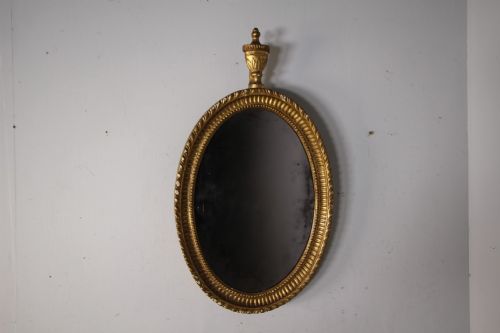
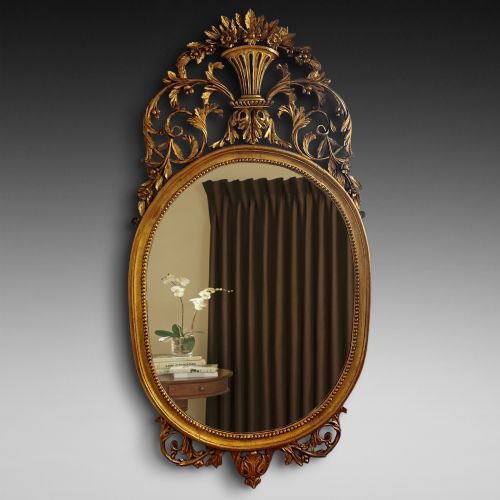
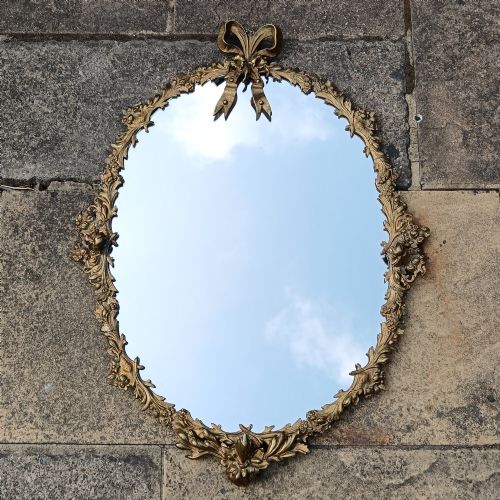
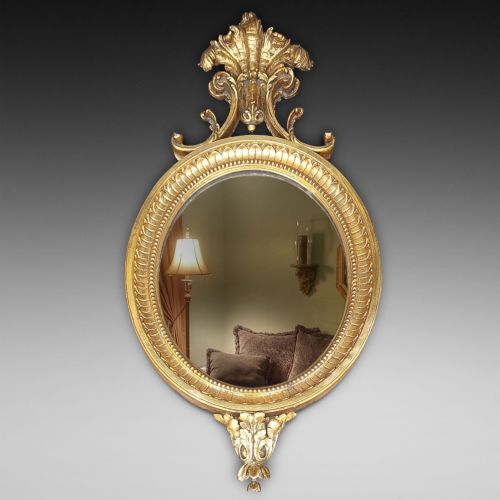



Neoclassical Oval Gilt Mirror
A neoclassical oval gilt mirror brings symmetry and light to a room through carved classical motifs and gilded surfaces.
Neoclassical Oval Gilt Mirror
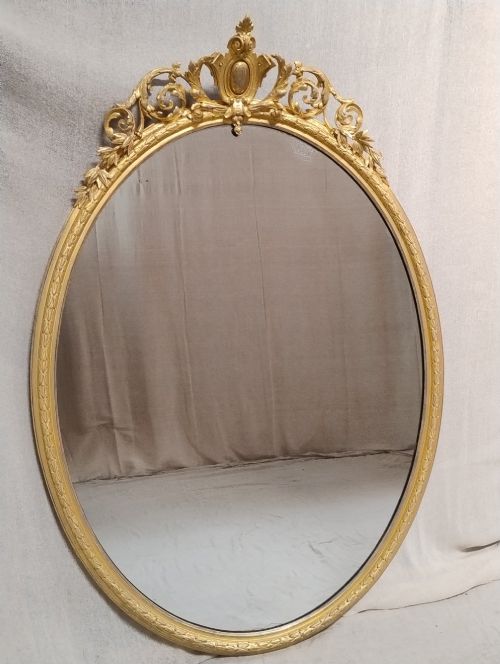
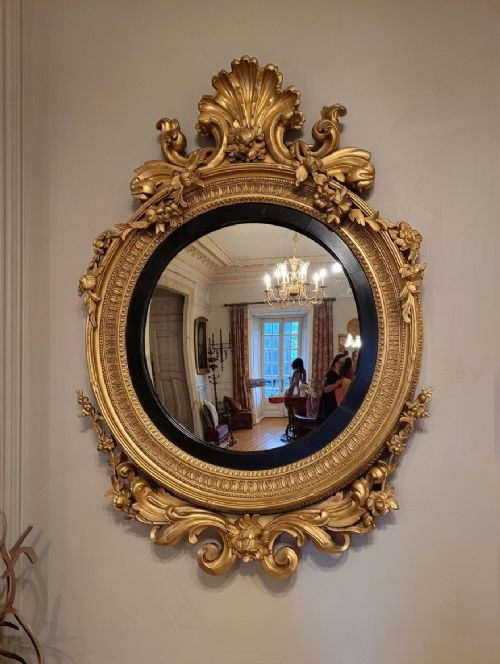
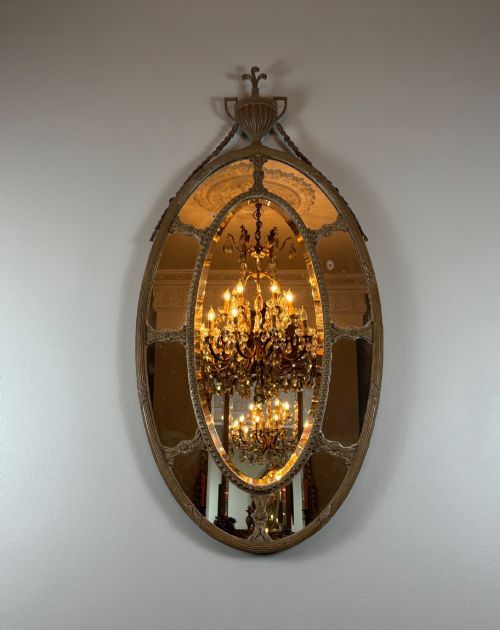
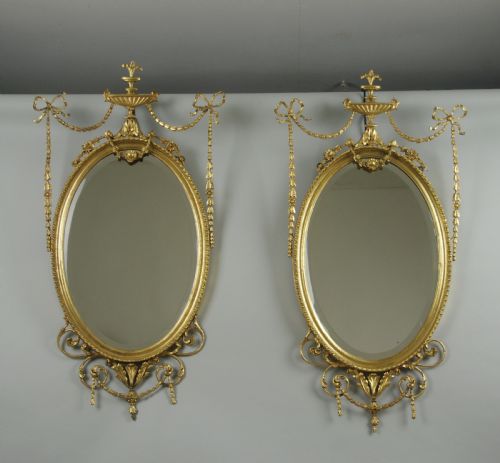
When searching for a neoclassical oval gilt mirror, buyers encounter wall-hanging and overmantel forms spanning the Georgian, Regency, and Victorian periods. These pieces often incorporate decorative classical elements such as urns, swags, ribbons, and bows.
The selections on this page run from eighteenth-century English and French examples to later nineteenth-century revivals including Adam and Louis XVI styles. Most examples date from the Georgian era through to the late Victorian period, rendered in upright or horizontal oval formats.
Makers and designers from these periods utilised classic architectural proportions to frame the reflective glass. Whether scaled for a grand hall or a smaller parlour, each piece relies on the characteristic oval shape to soften interior angles.
Materials and Construction
Frames are constructed predominantly from wood, employing carved giltwood alongside gilded wood and ebonised elements with parcel-gilt details. Gesso and composition materials are frequently applied over timber to build up crisp relief ornament such as swags and urns before gilding.
Gilding techniques involve the application of gold leaf to the prepared surface, creating a luminous finish that catches the light. Mercury plates and traditional mirror glass provide the reflective surface within these ornate frames.
Judging Quality
Quality rests upon the crispness of the hand-carved detail in the wood and the depth of the gesso relief work. Superior examples exhibit finely rendered swags, ribbons, and classical urns that retain their original definition beneath the gold leaf.
The integrity of the gilding and the character of the original mirror glass or mercury plate distinguish finer pieces. Hand-carved giltwood frames demonstrate a superior standard of craftsmanship compared to later composition-heavy castings.
The Neoclassical Oval Gilt Mirror Glossary
- Giltwood
- Wood that has been coated with gold leaf or gold powder. This finish provides the characteristic metallic brilliance seen on period frames.
- Gesso
- A plaster-like mixture applied to wood frames to create a smooth surface for carving or moulding relief decoration. It allows intricate details like swags and bows to be shaped before gilding.
- Mercury plate
- An early type of mirror glass backed with a tin-mercury amalgam. It produces a distinctive mottled, dark reflection.
- Adam style
- A neoclassical design style popularised in the eighteenth century by the Adam brothers. It is characterised by light, elegant classical motifs including urns, husks, and ribbons.
- Girandole
- A branched wall mirror designed to hold candles. The reflective glass multiplies the candlelight within the room.
Neoclassical Oval Gilt Mirror: Frequently Asked Questions
Where should I hang an oval mirror?
These mirrors suit principal reception rooms, hallways, and above mantelpieces where their vertical or horizontal oval shape can balance surrounding furniture. They work particularly well on narrow wall spaces that benefit from reflected light.
Ensure the wall fixings can support the weight of the timber and gesso frame safely. Positioning the glass opposite a window maximises the illumination brought into the space.
How do I date an antique gilt mirror?
Dating relies on examining the construction of the wooden frame, the composition of the gesso, and the backboards where visible. Georgian and Regency pieces often display hand-carved elements, whereas later nineteenth-century revivals may utilise moulded composition ornamentation.
The type of mirror glass also offers clues, as older mercury plates possess a characteristic soft, uneven reflection distinct from modern float glass.
What is the difference between Adam style and Regency mirrors?
Adam style mirrors date from the neoclassical revival of the eighteenth century, featuring delicate symmetrical motifs like urns, swags, and ribbons. Regency mirrors often incorporate bolder architectural details, convex surfaces, or heavy gilded frames.
Both styles draw on classical antiquity but differ in the scale and relief of their decorative plaster and carved ornaments.
How do I clean a antique giltwood frame?
Dust the frame gently with a very soft, dry brush to remove surface particles without disturbing the delicate gold leaf. Avoid using water, liquid cleaners, or abrasive cloths that can strip the historic gilding.
Professional conservation is recommended for any deeper cleaning or stabilization of flaking gesso to preserve the integrity of the antique surface.