


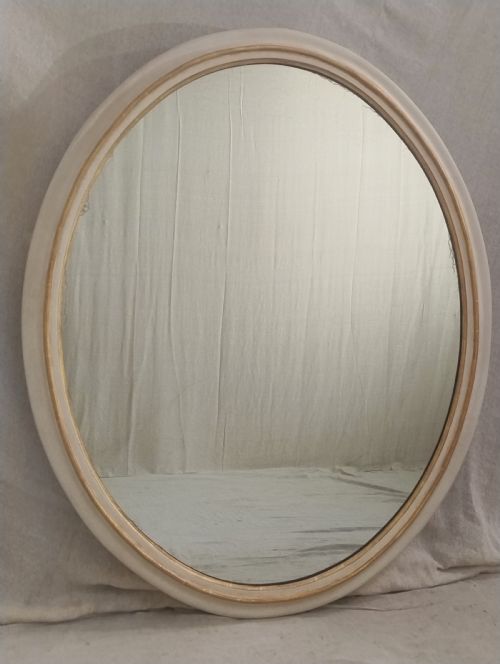
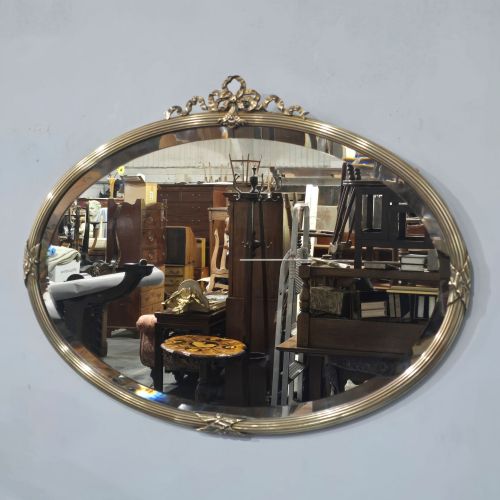
Vintage Gold Oval Mirror
A vintage gold oval mirror brings warmth and a sense of proportion to a room, reflecting light while offering a distinct decorative focal point.
Vintage Gold Oval Mirror
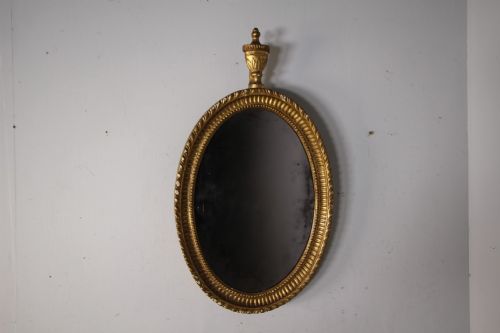
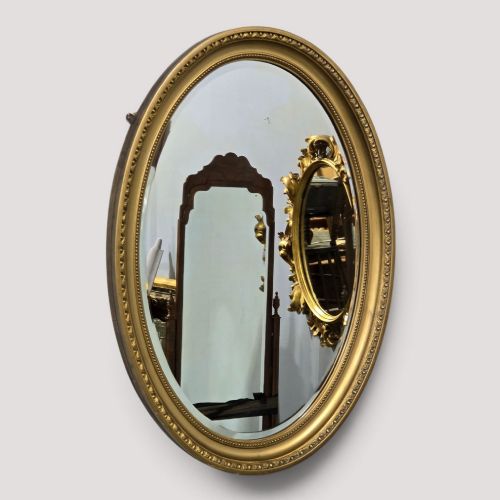
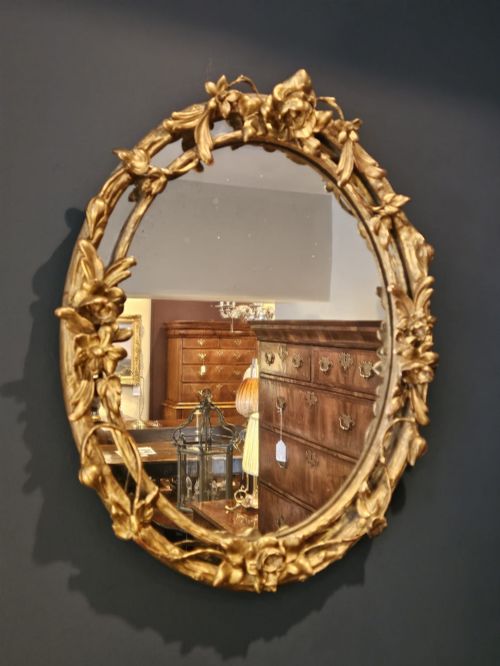
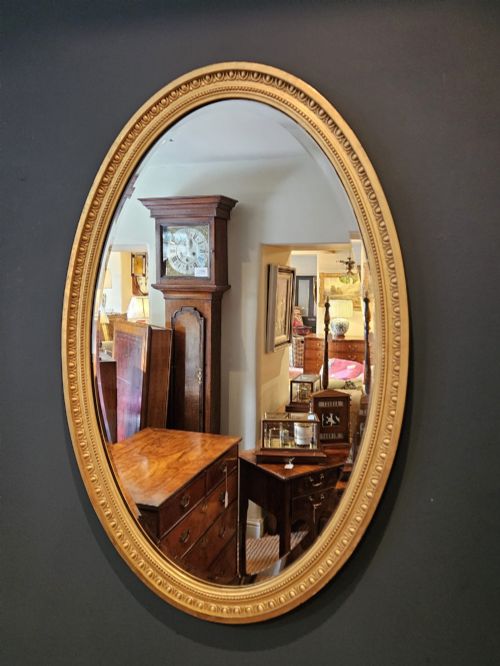
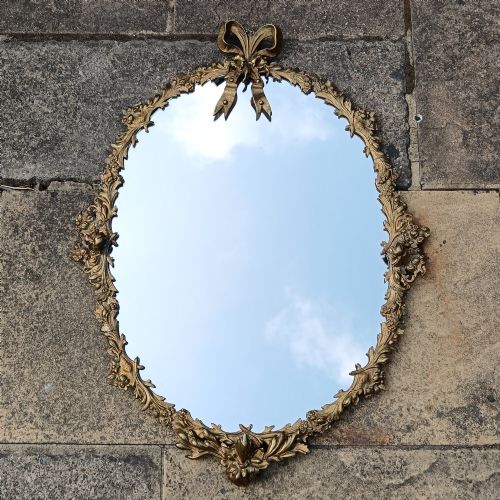
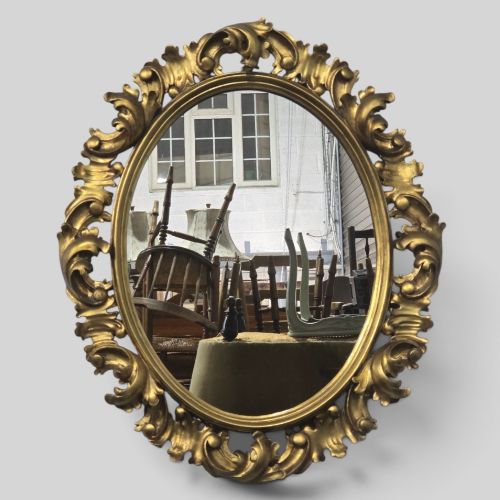
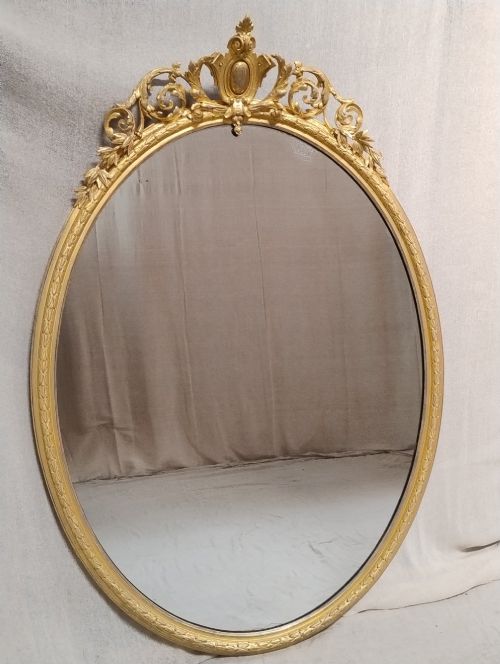
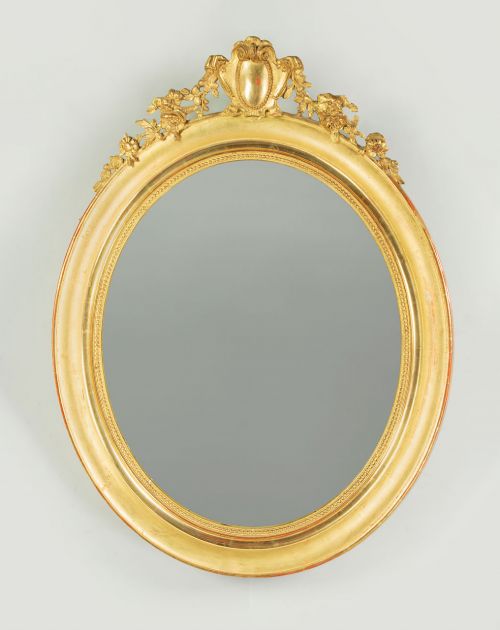
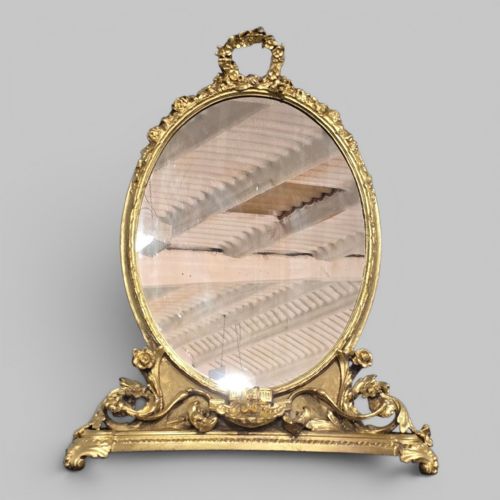
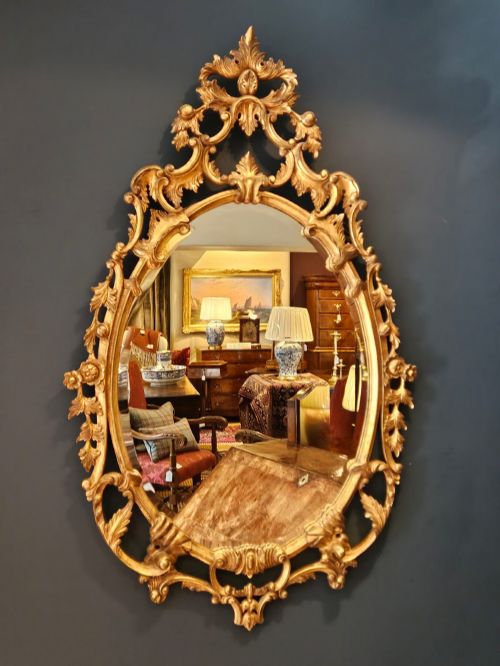
When searching for a vintage gold oval mirror, you encounter pieces spanning from the eighteenth century through to the early twentieth century, with Victorian and Edwardian examples appearing frequently. These objects take the form of wall mirrors, dressing table mirrors, and overmantle pieces designed to hang in principal rooms or private chambers.
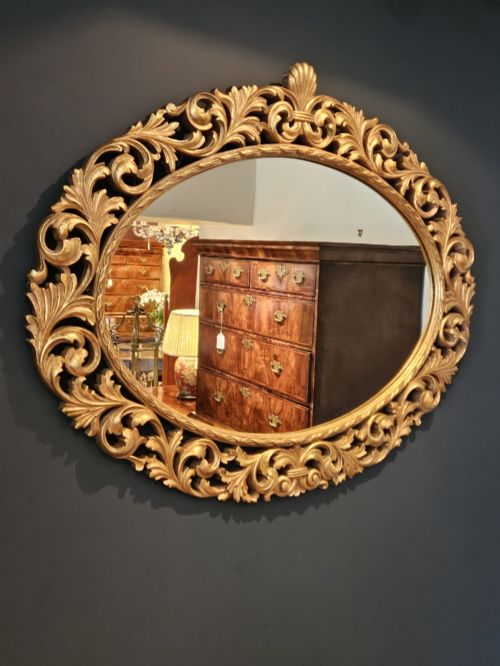
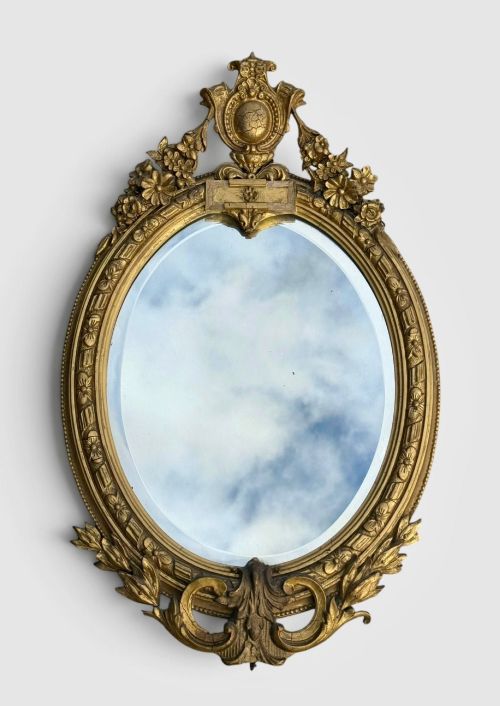
The styles represented on this page range from ornate Rococo Revival and Neoclassical designs to restrained Georgian and Adam style frames. French influence is visible in Louis XV and Louis XVI style pieces, alongside British and Irish craftsmanship.
The most common format is a wall-hanging mirror with a vertical orientation, shaped to soften the hard angles of a traditional interior while providing a functional reflective surface.
Materials and construction
Frames are constructed from timber, such as carved wood, overlaid with gesso and composition ornaments to create relief decoration before the application of gold leaf or parcel gilt finishes. Giltwood, brass, gilt metal, and bronze are also utilised across different periods to achieve the desired metallic lustre.
Mirrors from the earlier periods often feature original mercury plates, while later nineteenth and twentieth century pieces utilise standard silvered glass suited to the domestic interior of the era.
Vintage Gold Oval Mirror Retail Price Guide 2026
Typical asking prices for vintage gold oval mirror among the pieces listed under this phrase on Sellingantiques today, from the lower quarter to the upper quarter. They describe what is for sale here now, not the wider market.
Styles represented on this page range from Victorian and Rococo Revival to Georgian, Neoclassical, and Chinoiserie.
Assessing quality
The depth and crispness of the carving distinguish finer examples from mass-produced alternatives, with hand-carved wooden frames showing superior definition compared to heavy composition mouldings. The quality of the gilding itself, whether gold leaf or painted finish, dictates how the frame catches the light and ages over time.
Originality of components, particularly the survival of mercury glass plates and untouched backboards, elevates the standing of an individual mirror within its period.
The Vintage Gold Oval Mirror Glossary
- Gesso
- A plaster-like mixture applied to wood frames as a base for gilding. It is often carved or moulded into intricate decorative motifs before the gold leaf is laid down.
- Mercury plate
- An early type of mirror glass created by applying a tin-mercury amalgam to the rear of the glass. This process produces a characteristic mottled reflection with dark flecks.
- Giltwood
- Timber that has been coated with gold leaf or a gold-coloured finish. It forms the primary structural and decorative medium for high-status frames.
- Composition
- A mouldable paste made from whiting, resin, glue, and oil used to create ornamental details on frames. It is pressed into moulds and applied over wooden foundations.
- Parcel gilt
- A finishing technique where only specific raised portions or decorative elements of an object are gilded, leaving other areas painted or exposed.
Vintage Gold Oval Mirror: Frequently Asked Questions
Where should I hang an oval mirror?
An oval mirror works well above a mantelpiece, a console table, or a dressing chest where its curved frame contrasts effectively with vertical wall lines. It also suits narrower spaces like hallways, where the rounded shape softens the transition between doorways.
Ensure the hanging fixings are securely anchored into wall studs or masonry, as heavier gilded and wooden frames require robust support to carry their weight safely.
How do I clean an antique mirror frame?
Dust the gilded frame gently with a soft, dry brush to prevent dirt accumulation in the carved crevices. Avoid using liquid cleaners, water, or chemical sprays on the gilt surface, as moisture can lift the gesso and gold leaf.
For the glass plate, apply a mild glass cleaner to a cloth rather than spraying directly onto the glass, preventing any liquid from seeping behind the edges and damaging the silvering or mercury backing.
How can I tell the period of a mirror?
Examine the construction methods visible on the reverse of the frame, including the type of wood, screw types, and backboards. Hand-cut screws, pegged joints, and hand-beveled glass often point towards earlier craftsmanship.
Stylistic cues such as the symmetry of Adam Neoclassical designs or the asymmetry of Rococo Revival scrollwork align the piece with specific nineteenth or early twentieth-century design movements.
What is mercury glass?
Mercury glass refers to mirror plates produced using a tin and mercury backing technique popular before the mid-nineteenth century. This historic method creates a warm, slightly uneven reflection with characteristic dark spots.
The presence of original mercury plate adds historical interest to an antique mirror, distinguishing it from later pieces equipped with modern silvered glass.