





Meiji Porcelain Plates
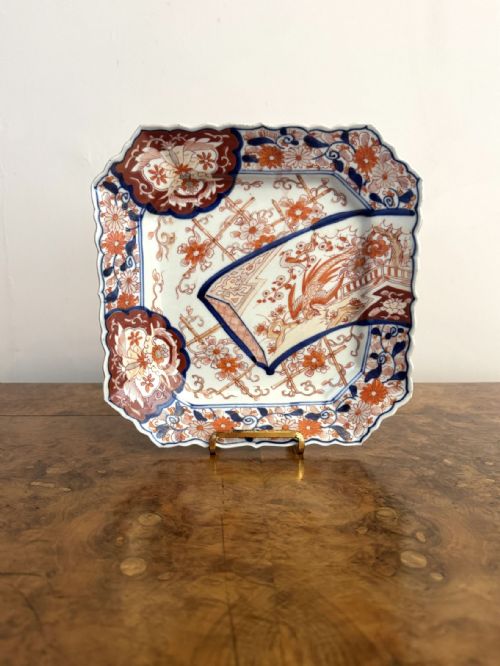
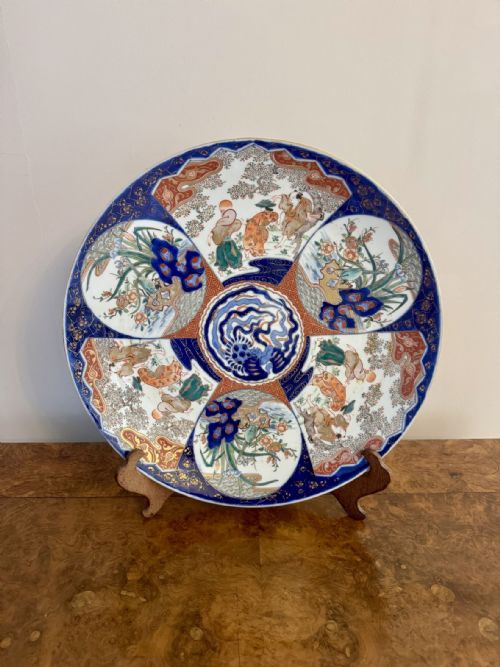
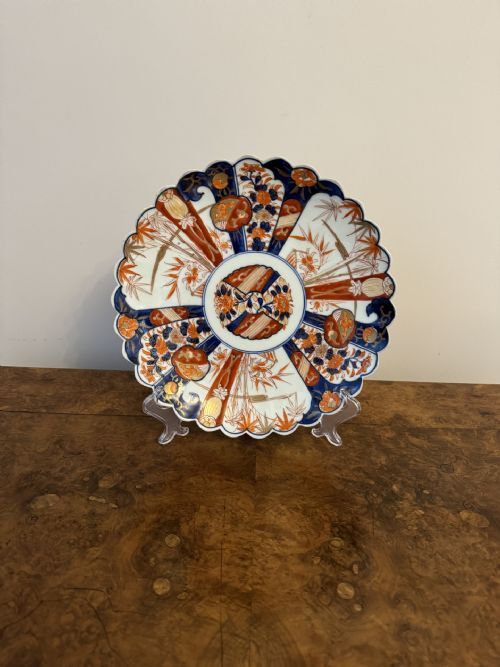
These meiji porcelain plates bring the hand-painted birds, florals and rich cobalt palettes of late nineteenth-century workshops directly into the room.
Meiji Porcelain Plates
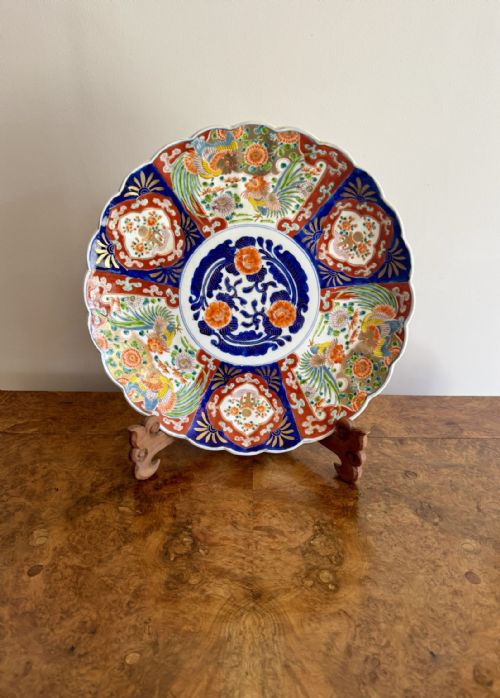
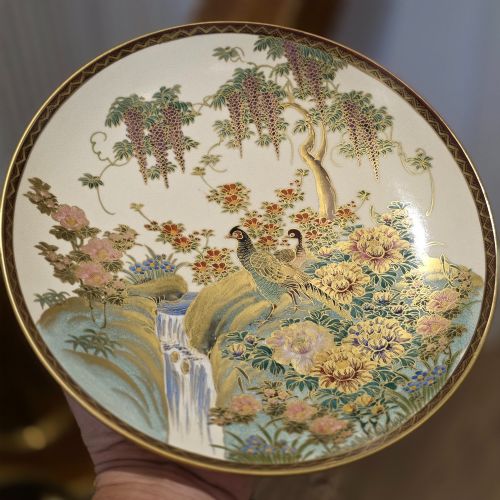
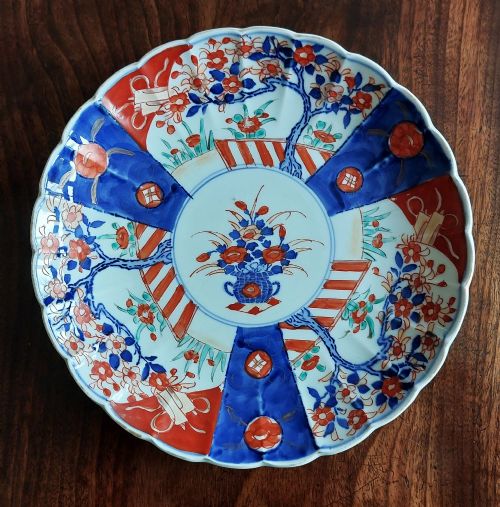
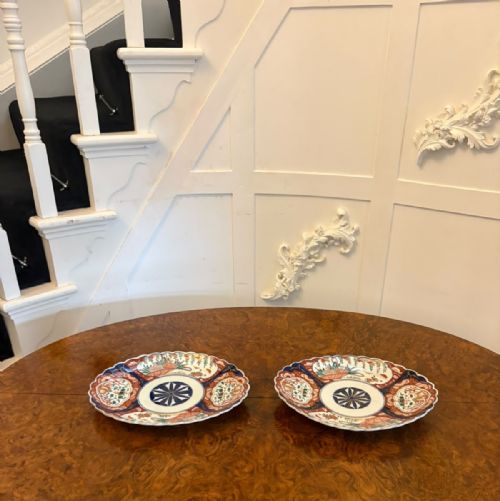
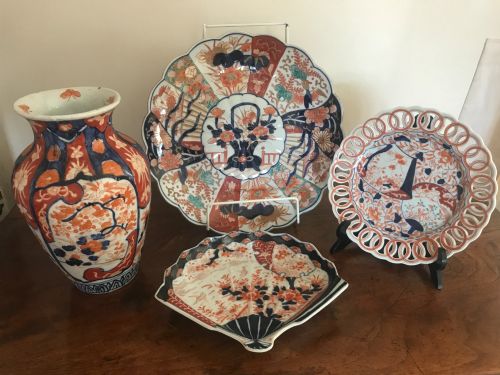
Meiji porcelain plates encompass decorative dishes, chargers and wall plates originating from Japanese kilns during the late nineteenth and early twentieth centuries. The selection here leans heavily towards Japanese Imari pieces, alongside examples bearing Arita, Kutani and Satsuma styles.
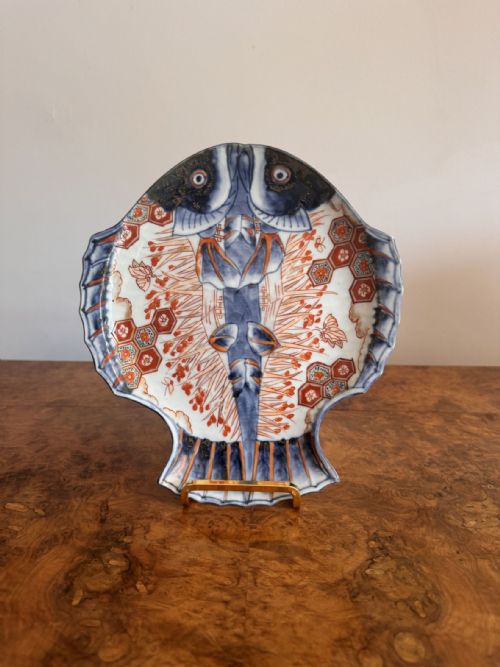
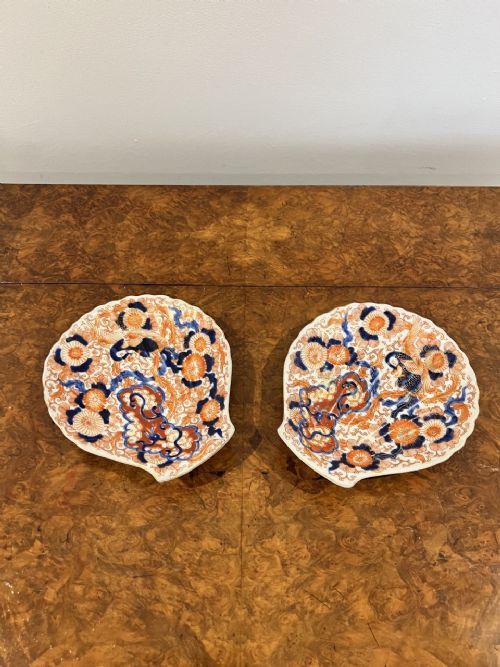
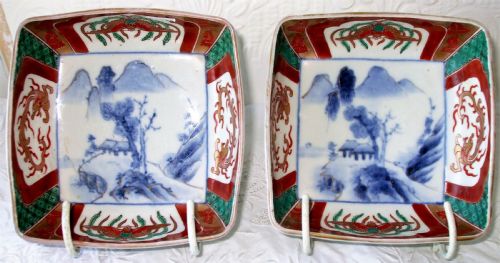
Makers shaped these ceramics into round formats, scalloped edges, oval platters, square profiles and animal silhouettes such as fish and shells. Chargers and large display plates dominate the available forms, accompanied by pairs and sets intended for visual impact.
Periods recorded across the inventory stretch from the mid nineteenth century through the Victorian era into the early twentieth century, capturing the transitional phase into the Taisho period.
Materials and Technique
Potters built these items using porcelain and earthenware bodies, applying cobalt underglaze, enamel paint and glaze to create the characteristic surface patterns. Gold leaf, gilt and gilding highlight specific motifs across various chargers and plates.
Hand-painted floral and bird designs appear alongside moriage relief work on Satsuma wares, demonstrating the skilled brushwork and glazing techniques utilised by period artisans.
Fish-shaped porcelain gives new meaning to the phrase catch of the day on the sideboard.
Distinctions in Quality
Quality rests upon the precision of the hand-painted detailing, particularly in the rendering of exotic birds, floral arrangements and complex geometric borders. Crisp cobalt underglaze lines and clean application of enamel separate standard production items from superior examples.
The physical form dictates distinction as well, with unusual shapes like fish, shells and squares demanding greater skill from the potter than simple round plates. Preservation of original gilding and gold leaf further elevates the standing of a charger.
Koshida
The Meiji Porcelain Plates Glossary
- Imari
- A traditional Japanese style of porcelain featuring a distinct palette of cobalt blue and iron red, frequently accented with gold leaf. This aesthetic defined much of the export ware produced during the Meiji period.
- Charger
- A large decorative plate or dish intended primarily for display on a wall or sideboard rather than for practical dining use. These substantial pieces showcase the most intricate hand-painted compositions.
- Moriage
- A decorative ceramic technique involving the buildup of clay slip to create raised, textured patterns on the surface. It appears on Satsuma wares alongside enamels and gilding.
- Arita
- The Japanese town and surrounding region renowned as the birthplace of Japanese porcelain production. Kilns here produced substantial quantities of export chargers and plates.
- Scalloped Edge
- A decorative rim shaped into a series of interconnected curves rather than a plain circle. This contour frequently characterises Meiji period display dishes.
Meiji Porcelain Plates: Frequently Asked Questions
How do I display a large charger safely?
Large chargers require sturdy plate hangers designed to distribute weight evenly across the rim. Wall placement should avoid direct sunlight to protect the enamel colours and gold leaf over time.
For surface display, use a heavy-duty wooden or metal stand positioned on a stable piece of furniture away from heavy traffic areas.
What is the difference between Imari and Kutani?
Imari porcelain typically utilises a palette of cobalt blue and iron red combined with white porcelain and gold detailing. The patterns often incorporate dense brocade motifs and floral arrangements.
Kutani ware relies on a different visual approach, frequently featuring bold green, purple, yellow and red enamels over a distinct earthenware or porcelain body.
Can I use these antique plates for serving food?
Historic decorative plates and chargers from this era were primarily created for display and visual ornamentation. Using them for dining risks damaging fragile surface enamels, gilding and older ceramic bodies.
Gentle dusting with a soft, dry cloth is the recommended method for maintaining the surface without introducing moisture or abrasive friction.
How do I date a Meiji period plate?
Dating relies on stylistic markers, material composition and historical context spanning the late nineteenth and early twentieth centuries. Pieces often reflect the shifting trade relationships and aesthetic preferences of the Meiji and Taisho eras.
Comparing the cobalt underglaze tone, enamel thickness and edge shaping against documented examples helps narrow down the production window.