
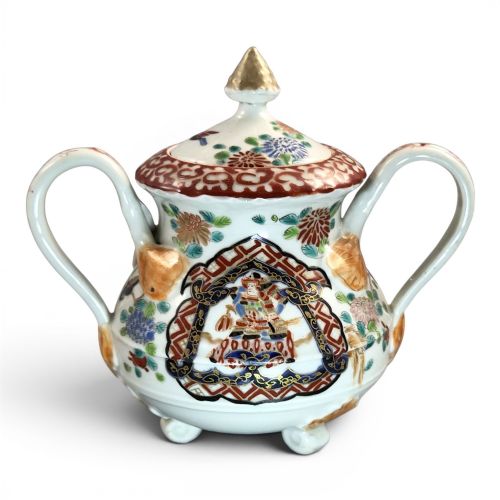


Meiji Period Lidded Jar
These meiji period lidded jar pieces bring intricate Japanese craftsmanship into a room, offering both decorative presence and historical depth for the collector.
Meiji Period Lidded Jar
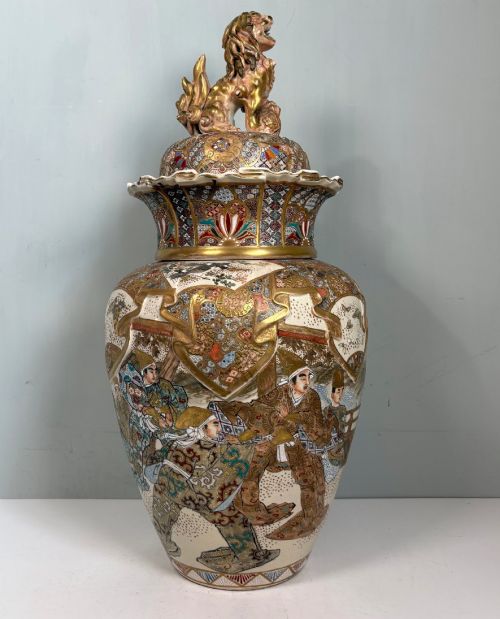
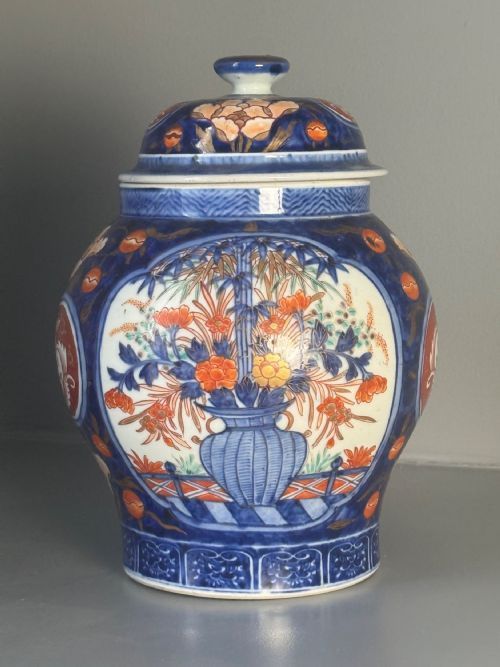
A meiji period lidded jar search leads directly to covered vessels created during late nineteenth and early twentieth century Japan. These works span distinct regional styles, most frequently appearing as Japanese Imari porcelain or Satsuma earthenware.
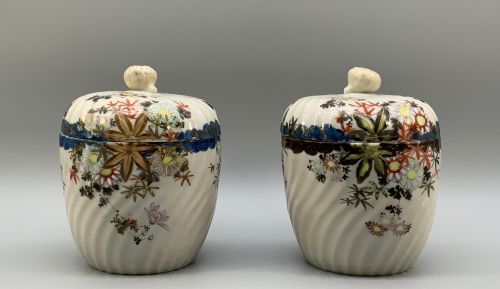
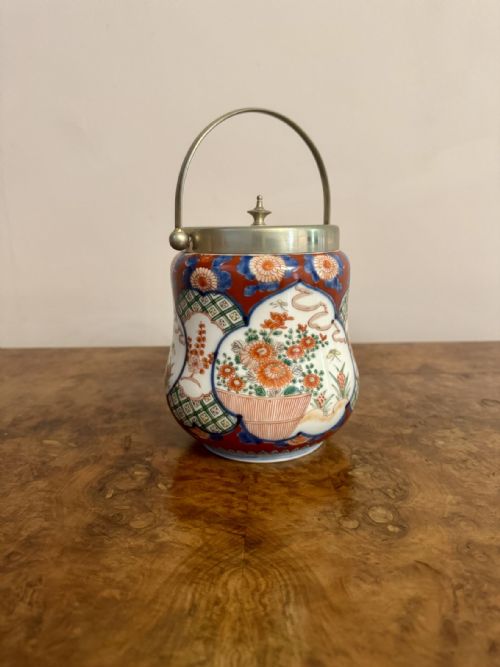
The inventory on this page ranges from large baluster vases and ginger jars to biscuit barrels and smaller covered pots. Many examples arrive in pairs, decorated with traditional floral motifs, samurai figures, or complex panels.
Origins stretch across specific Japanese production centres such as Arita and Kyoto studios, alongside pieces bearing specific workshop marks like Fukagawa or Shozan. The forms serve both purely decorative functions and practical storage roles within domestic interiors.
How they were made
Makers utilised porcelain and earthenware as the primary ceramic bodies, shaping them into octagonal balusters, ginger jars, and gourd pots. These surfaces received meticulous decoration through hand-painted glazes, often combining iron red and cobalt blue with gold leaf and gilding.
Alternative constructions involve metalwork, exemplified by cloisonne enamel on copper foundations and mixed metal working featuring silver, gold, and bronze. Kiln firing techniques fixed the rich enamel palettes and underglaze designs, ensuring lasting colour stability across centuries.
Object forms recorded on this page include ginger jars, baluster vases, biscuit barrels, gourd pots, sugar bowls, and bronze boxes.
What varies in quality
Quality rests upon the precision of the hand-painted detailing, the crispness of the porcelain form, and the complexity of the glaze palette. Superior pieces display finely registered Imari patterns or densely worked Satsuma panels involving extensive gold leaf application.
The presence of identifiable marks, such as a Fukagawa or Shozan signature, elevates an object by linking it to a recognised workshop. Furthermore, the survival of a matching cover in pristine condition completes the aesthetic integrity of the vessel.
Fukagawa Mark·Shozan Kyoto Studio·Arita
The Meiji Period Lidded Jar Glossary
- Imari
- A traditional Japanese porcelain style originating in Arita, distinguished by a palette of cobalt blue, iron red, and gold. These pieces often feature intricate floral and geometric panel designs.
- Satsuma
- A type of Japanese earthenware characterised by a crackle-glaze ivory body heavily decorated with polychrome enamels and gilding. Satsuma pieces frequently depict figurative scenes involving samurai or court figures.
- Cloisonne
- A decorative metalwork technique where enamel paste is applied within compartments created by soldered wire on a copper base. The object is then fired and polished to a smooth finish.
- Baluster
- A vase form featuring a rounded body that tapers toward the base and swells out before rising to a narrower neck. This architectural shape provides substantial visual stability for large lidded jars.
- Ginger jar
- A ceramic vessel characterised by a wide shoulders and a domed lid, originally designed for storing spices. In later decorative contexts, these jars became symmetrical centrepieces for interior displays.
Meiji Period Lidded Jar: Frequently Asked Questions
What were lidded jars used for?
These vessels originally served practical storage purposes for household goods, spices, or dry foods within traditional Japanese interiors. Over time, many transitioned into purely ornamental objects displayed on stands or mantels.
Larger covered jars and ginger jars provided dramatic focal points in reception rooms. Smaller lidded pots and biscuit barrels functioned on tables for serving or holding confectioneries.
How do I live with these pieces?
These jars integrate well into traditional and modern interiors alike, bringing rich colour and historical texture to wooden sideboards or open shelving. Placing them away from direct sunlight protects the delicate enamel and gold leaf detailing over time.
Pairs look striking when arranged symmetrically on either side of a fireplace or console table. Single large baluster vases work effectively as standalone floor or table centrepieces.
What is the Meiji period?
The Meiji period spans the reign of the Emperor Meiji from 1868 to 1912, marking an era of immense cultural and artistic output in Japan. During this time, Japanese craftsmen adapted traditional techniques for international export markets.
Objects from this era reflect a bridge between traditional aesthetics and new decorative demands from Western collectors. This historical window accounts for the wide variety of signed studios and innovative mixed metal techniques found today.