


Japanese Temple Jar Lid
A Japanese temple jar lid protects large ceramic vessels from dust and loss, bringing traditional Asian craftsmanship to a collector's display.
Japanese Temple Jar Lid
A Japanese temple jar lid belongs to ceramic covered vases, ginger jars, and lidded urns originating from various periods including the Edo and Meiji eras. These pieces often arrive as part of matching pairs or individual grand vessels designed to sit prominently in a room.
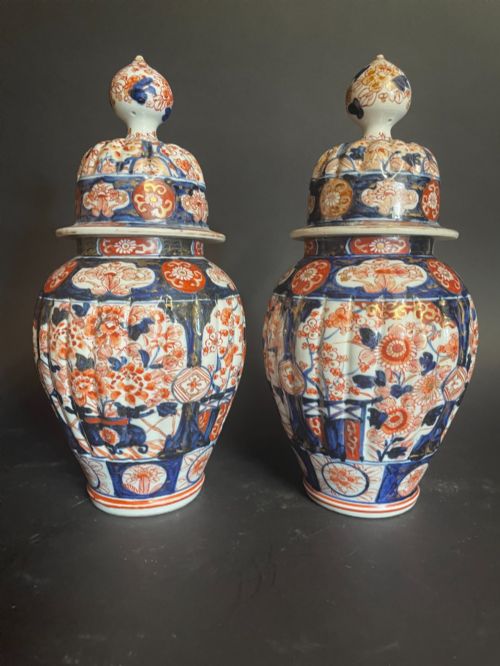
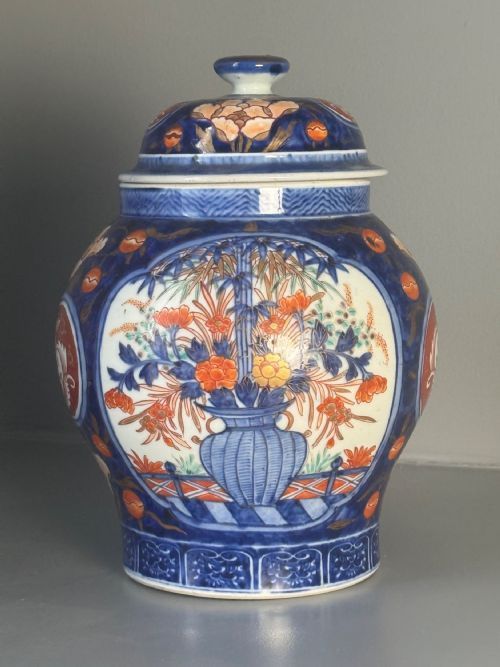
The most common version met on this page is the Japanese Imari porcelain lidded vase, typically dating from the nineteenth century. These items display the characteristic blue and iron-red palette associated with Arita production.
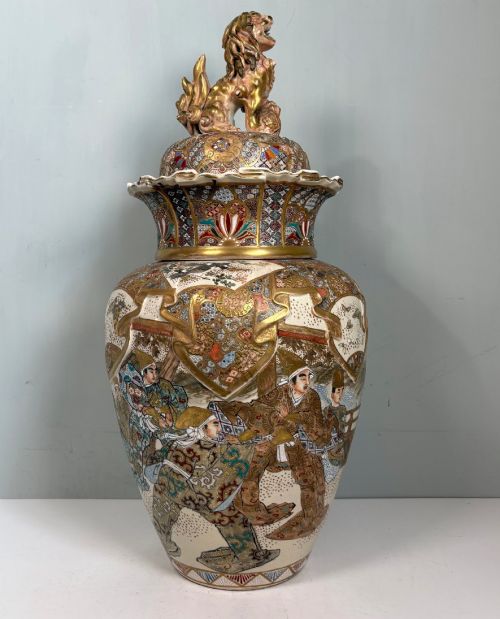
Buyers also encounter Satsuma and Kutani varieties alongside cloisonne examples featuring fitted covers. Each form serves to complete the silhouette of tall baluster or octagonal bodies.
Materials and methods
Potters shaped these vessels from high-fired porcelain and earthenware before applying mineral glazes and underglaze blue pigments. Artisans then added intricate overglaze enamels, often incorporating gilt or gold leaf details across the ceramic surface.
Cloisonne examples utilised metal wires soldered to a base to form compartments filled with coloured enamel pastes. Firing melted these glass powders into smooth decorative bands that matched the accompanying lids.
Ceramic covers sometimes outlive their original jars by centuries, finding new matches across different rooms and continents.
Standards of execution
The distinction between tiers rests on the crispness of the painted brushwork and the precision of the porcelain potting. Superior examples display sharply defined Imari patterns and finely balanced lids that fit the vessel neck correctly.
Purity of the glaze and restraint in the gilding separate standard production from exceptional pieces. The weight of the porcelain body and the depth of the iron-red and cobalt tones indicate the skill of the kiln workshop.
Fukagawa·Samson
The Japanese Temple Jar Lid Glossary
- Imari
- A style of Japanese porcelain decorated in underglaze blue, iron red, and gold. This aesthetic originated in Arita and heavily influenced European porcelain production.
- Satsuma
- Earthenware pottery decorated with finely crackled ivory glaze and elaborate polychrome enamels. These pieces frequently depict figural scenes and floral motifs.
- Kutani
- Japanese coloured porcelain distinguished by bold green, yellow, purple, and red pigments. The style developed in Ishikawa prefecture.
- Baluster
- A vase shape with a rounded body that tapers toward the base and flares at the neck. This form provides stability for large decorative covers.
- Cloisonne
- Enamelwork created by soldering metal wires to a body to partition different coloured pastes. The object undergoes firing and polishing to achieve a smooth finish.
Japanese Temple Jar Lid: Frequently Asked Questions
What is a temple jar lid used for?
These ceramic covers seal large storage jars and ornamental vases to keep dust from settling inside the body. They complete the symmetrical silhouette of tall vessels displayed in formal rooms.
Historically, such jars held spices, tea, or medicinal herbs, requiring a secure top. Today, surviving lids preserve the completeness and aesthetic balance of antique ceramic pairs.
How do I date a Japanese ceramic lid?
Dating relies on examining the characteristics of the porcelain body, the composition of the glaze, and the style of decoration. Nineteenth-century pieces often show specific Imari palettes and potting techniques tied to the Meiji period.
Earlier eighteenth-century examples display different cobalt shades and heavier potting. Comparing the clay body under the rim with documented pieces helps confirm the era of manufacture.
Are these lids removable?
Most lids lift off independently to reveal the interior neck of the jar or vase. They sit on a flange designed to hold the cover securely in place without fixing mortar.
Collectors should handle them carefully because the finial on top provides a natural grip that can be prone to stress. Checking the underside ensures the rim fits the corresponding vessel opening.
How do I care for antique porcelain lids?
Antique porcelain and enamel require gentle dusting with a dry, soft cloth rather than liquid cleaners. Avoiding abrasive sponges protects the delicate overglaze enamels and gilding.
Keeping the pieces away from direct sunlight and temperature fluctuations prevents stress on the ceramic body. Lifting the jar and lid separately ensures safe handling during relocation.