


Japanese Arita Ware Vase
These japanese arita ware vase examples bring centuries of kiln mastery into your room, offering the bold colours and hand-painted motifs that collectors prize.
Japanese Arita Ware Vase
When you search for a japanese arita ware vase, you encounter pieces that span centuries of ceramic production in Hizen province. The examples available here range from early eighteenth-century vessels to later Meiji period creations.
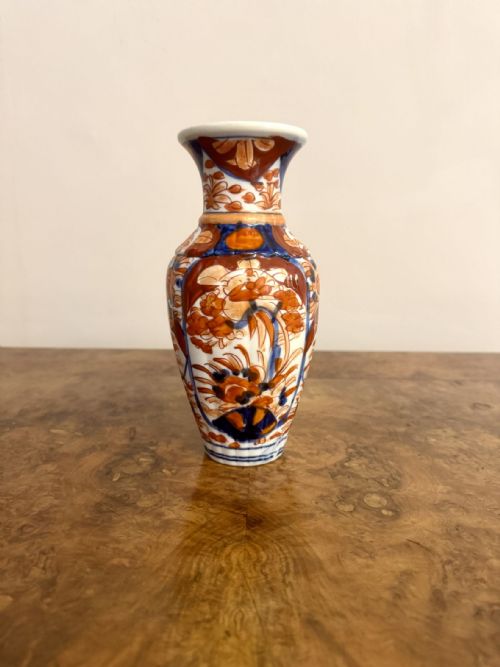
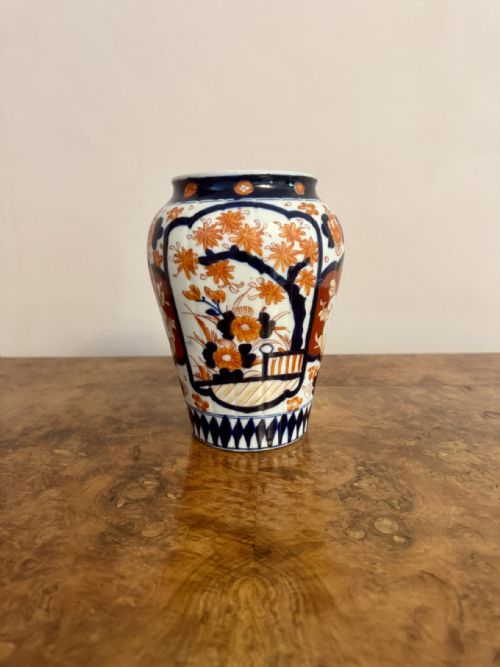
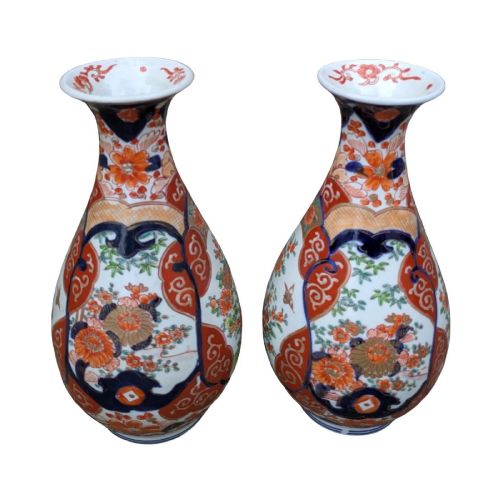
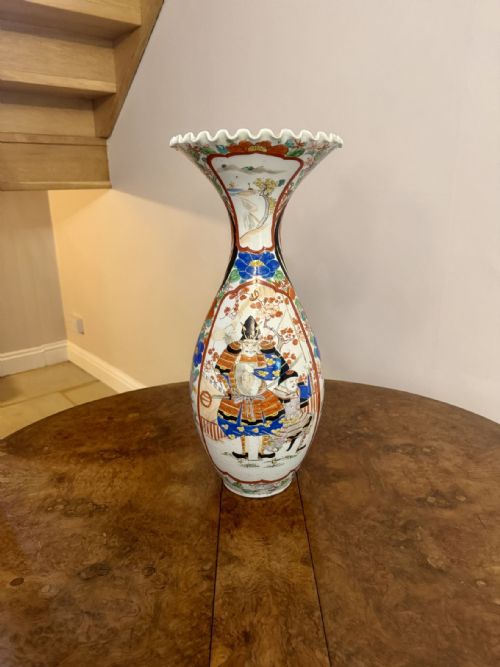
You will see various forms in these listings, including bottle-shaped vessels, hexagonal bodies, lidded jars, and two-handled containers. Many follow the traditional Japanese Imari palette with its distinct cobalt blue and iron red decoration.
The objects include individual cabinet pieces as well as larger decorative vases and matched garnitures. These items represent both domestic output and historical export wares destined for European markets.
Materials and Craftsmanship
The makers formed these vessels from local ceramic materials and fired them to create a durable porcelain body. Artisans then applied underglaze cobalt oxide before the initial firing to achieve deep blue tones.
Overglaze enamel colours, including iron red, were added alongside details in gold leaf or gilt during a subsequent firing stage. This layered technique produced the rich surface decoration characteristic of the tradition.
The listings span porcelain production from the seventeenth-century Edo period through to the Meiji era.
Factors That Determine Quality
The crispness of the hand-painted decoration separates standard production from superior examples. Finely executed brushwork in the cobalt and enamel layers displays greater control and detail.
The weight, throwing consistency of the porcelain body, and complexity of the vase shape also influence the piece. Hexagonal forms, matched garnitures, and pieces retaining rich gilt or gold leaf demonstrate higher ambition in manufacture.
Fukagawa
The Japanese Arita Ware Vase Glossary
- Arita
- The Japanese town in Hizen province where porcelain production began in the early seventeenth century. It remains the historic centre of Japanese ceramic manufacture.
- Imari palette
- A decorative style featuring underglaze cobalt blue combined with iron red and gold overglaze. This colour scheme was developed for both domestic use and export.
- Meiji period
- The era of Japanese history lasting from eighteen sixty-eight to nineteen twelve. Pieces from this time often exhibit high technical refinement and complex export designs.
- Garniture
- A set of three or more matching vases designed to be displayed together on a mantelpiece or cabinet. These matched groups were popular in both Edo and Meiji interiors.
- Cobalt oxide
- The mineral pigment used beneath the glaze to produce deep blue painted designs on porcelain. It withstands high kiln temperatures without losing definition.
Japanese Arita Ware Vase: Frequently Asked Questions
How do I date a Japanese Arita vase?
Dating relies on stylistic clues, potting characteristics, and the historical palette used on the porcelain body. Earlier pieces often show simpler forms from the Edo period, while Meiji examples feature denser ornamentation.
Examining the foot rim and the application of the cobalt and enamel also helps determine the era of manufacture.
What is an Imari palette?
The term describes a distinctive colour combination of underglaze blue, iron red, and added gold leaf. This vibrant scheme was perfected in the Arita kilns and exported globally.
Potters used these contrasting tones to create rich, patterned surfaces across various vessel shapes.
How should I display a garniture set?
Garniture sets of three or more vases look best arranged together on a sideboard or mantelpiece to preserve their visual balance. Keeping the matching pieces in close proximity honours their original decorative purpose.
Ensure the surface is stable and out of direct, harsh sunlight to protect the enamel colours.
Are these vases suitable for holding water?
While these vessels were originally created as decorative objects or containers for dried arrangements, historic porcelain can be porous or fragile. It is generally safer to use them dry or with a discreet inner liner if utilised for fresh stems.
Treating the antique body with care preserves both the glaze and any delicate gilt details.