

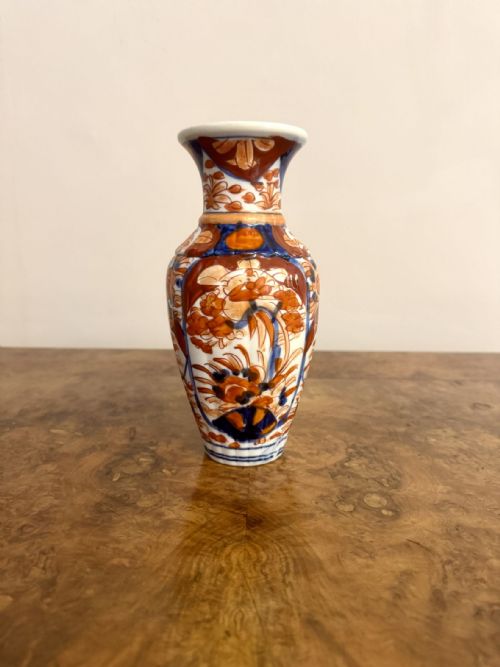
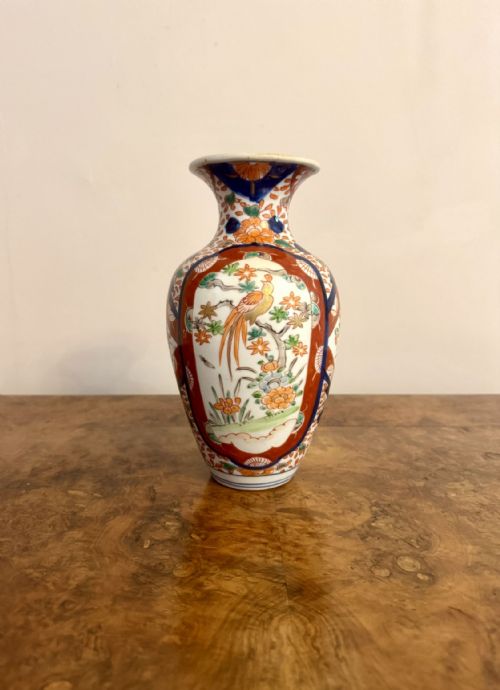


Imari Patterned Urn
An imari patterned urn brings striking palette and form together, offering a decorative anchor for traditional interiors.
Imari Patterned Urn
When you search for an imari patterned urn, you encounter vessels that bridge European and Japanese ceramic traditions. The pieces appearing here span centuries from the Georgian era through to the twentieth century, encompassing both imported works and domestic interpretations.
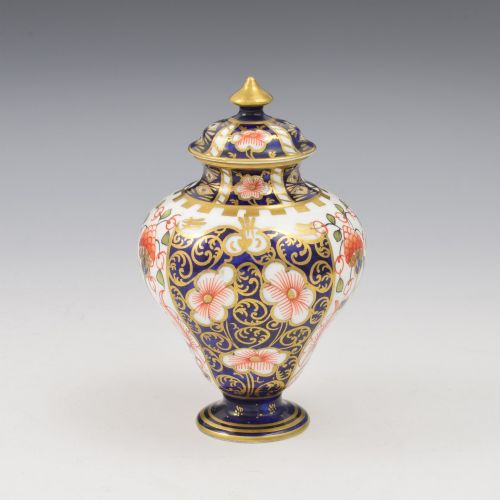
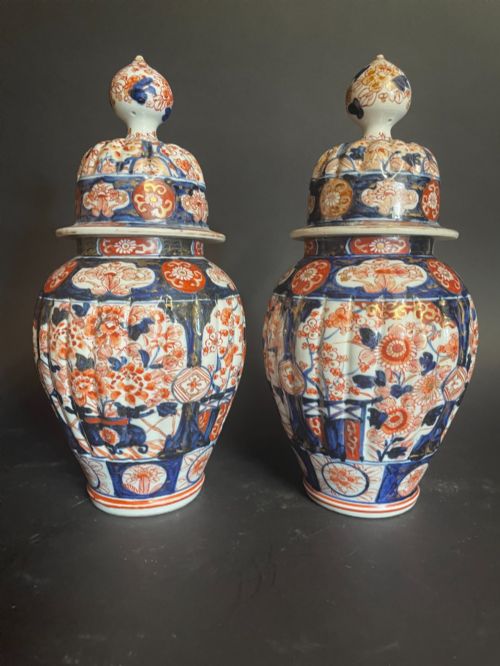
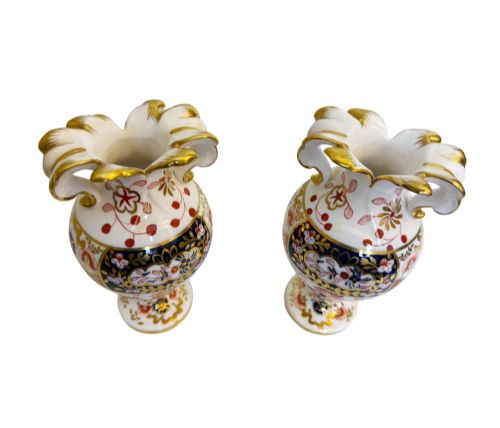
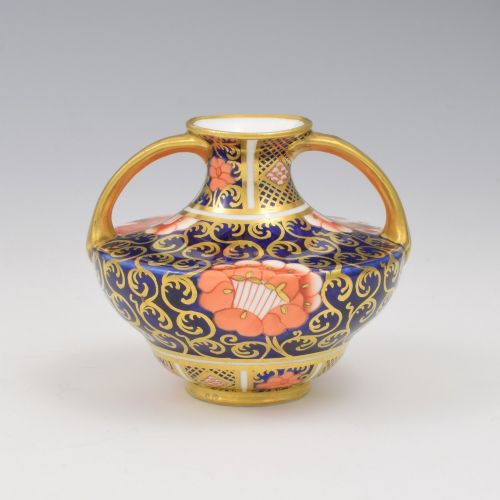
Most commonly, you meet porcelain or ironstone bodies taking the form of lidded vases, jars, and twin-handled urns. These display the characteristic red, blue, and gold palette associated with imari styles across various periods.
How they were made
Potters shaped these vessels using porcelain, ceramic, or ironstone, applying underglaze blue alongside iron-red enamel. Artisans then added gold leaf and gilt highlights to enrich the surface design.
Firing techniques varied from Japanese Edo and Meiji period kilns to English factories like Spode, Royal Crown Derby, and Chamberlain Worcester. Each maker utilised specialised glaze applications to achieve the distinctive sheen.
What varies in quality
Quality rests in the crispness of the hand-painted enamels and the precision of the gilding. Finer examples display meticulous brushwork that remains sharp and vibrant across complex geometric and floral motifs.
The weight and finish of the ceramic body also dictate distinction. Superior porcelain and ironstone exhibit smoother glazing, more balanced form, and well-preserved gold leaf without heavy rubbing.
Royal Crown Derby·Spode·Chamberlain Worcester·Masons Ironstone·Flight Barr And Barr·Samson
The Imari Patterned Urn Glossary
- Imari
- A style of ceramics originating in Japan featuring iron red, cobalt blue, and gold decoration. European factories subsequently copied and adapted these patterns.
- Ironstone
- A type of durable heavy earthenware patented in the nineteenth century. It served as a robust alternative to porcelain for large vases and jars.
- Gilt
- A thin layer of gold applied to the surface of porcelain or metal. It accentuates handles, rims, and panel borders on urns and vases.
- Baluster
- A vase shape with a rounded lower body that tapers towards the neck. This silhouette frequently appears among lidded jars and urns.
- Pot Pourri
- A vessel perforated with holes in the lid to release the scent of dried flowers. Several examples in this style feature imari patterns.
Imari Patterned Urn: Frequently Asked Questions
How do I date an imari patterned urn?
Dating relies on maker marks, ceramic bodies, and stylistic shifts between Japanese export periods and English factories. Ironstone pieces often point towards nineteenth-century production.
Porcelain weight and enamel tones also provide clues. Earlier Georgian and Edo pieces differ distinctly from Edwardian or later twentieth-century interpretations.
Where were these urns made?
The evidence includes works made in Japan across the Edo and Meiji periods alongside pieces produced by English potteries. Factories in Staffordshire and Worcester created their own versions of the style.
Japanese pieces arrived via trade, inspiring domestic manufactories to produce competing ironstone and porcelain designs.
How do I clean an imari patterned urn?
Dust gently with a soft, dry cloth to protect fragile enamel and gold leaf. Avoid harsh chemical cleaners that might strip the delicate gilt highlights.
Water immersion should be avoided, particularly for pieces with porous bodies or aged enamel surfaces. Professional conservation advice is recommended for stubborn grime.
Are these urns waterproof?
Many lidded jars, pot pourri vessels, and ice pails were not designed to hold water. Using them for floral displays requires caution to prevent moisture damage to the interior glaze.
Checking the interior for cracks or unglazed seams helps determine if a vessel can safely hold liquid.