







Blue White Imari Jar
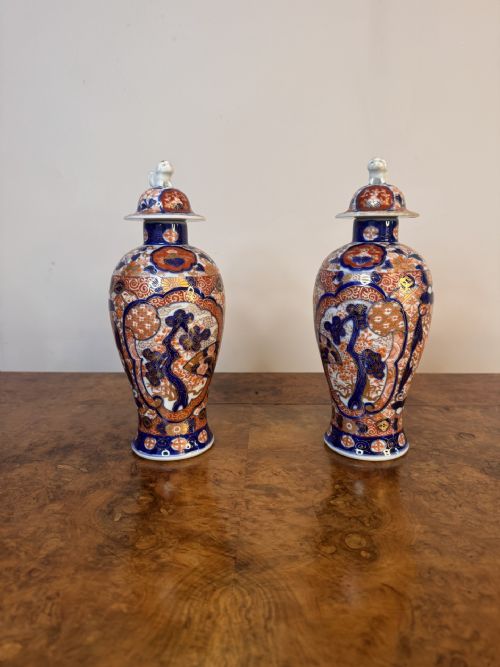
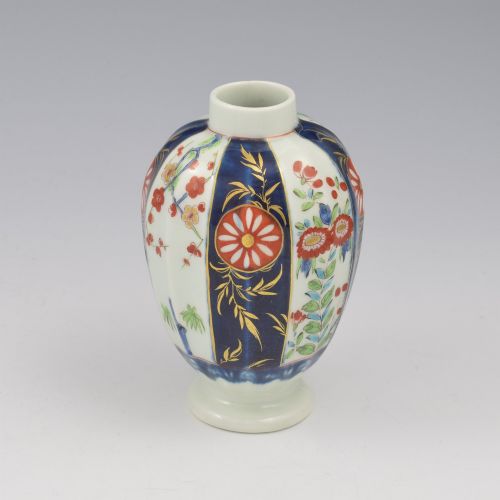
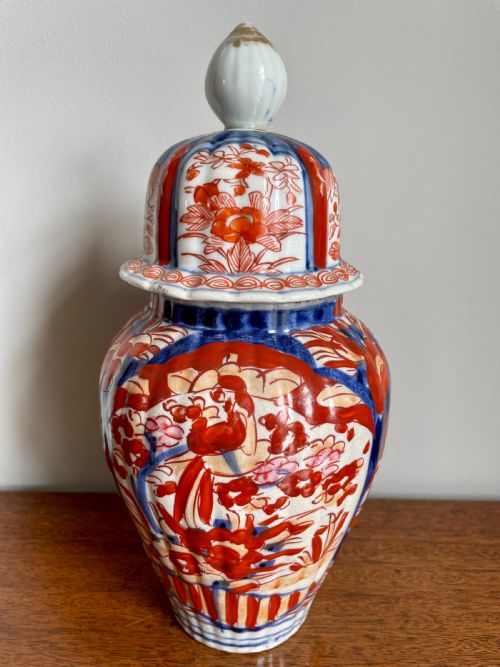
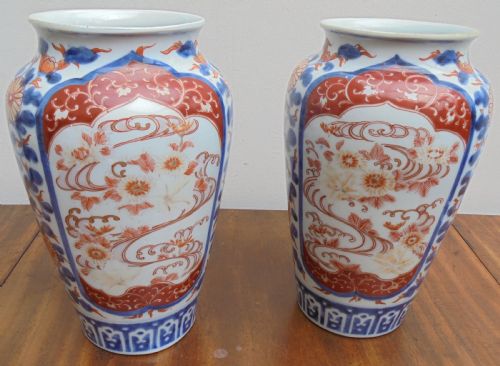
A blue white imari jar brings together rich cobalt painting, iron-red enamel and gold leaf on porcelain.
Blue White Imari Jar
When you search for a blue white imari jar, you encounter pieces spanning the seventeenth century through to the Edwardian era. The selection includes Japanese Arita porcelain alongside English pieces produced in the Georgian period and nineteenth century.
Forms range from lidded vessels and tea canisters to pot pourri jars and converted table lamps. You find items decorated in the Japanese Edo and Meiji periods, as well as English Chinoiserie and Regency styles.
The objects most frequently met on this page are Japanese Arita Imari vases and jars from the eighteenth and nineteenth centuries. These sit alongside ironstone and soft-paste porcelain interpretations made by English makers.
Materials and construction
The primary material across the listings is porcelain, complemented by ironstone and soft-paste porcelain. Makers applied underglaze blue and enamel colours directly to the ceramic body.
Decoration often incorporates rich gold leaf details over the glaze, alongside hand-applied enamel pigments. Lidded vessels and vases frequently feature shaped covers designed specifically for the jar body.
Blue White Imari Jar Retail Price Guide 2026
Typical asking prices for blue white imari jar among the pieces listed under this phrase on Sellingantiques today, from the lower quarter to the upper quarter. They describe what is for sale here now, not the wider market.
Listings span multiple centuries, incorporating hard-paste porcelain, ironstone and soft-paste porcelain across Japanese and English traditions.
Judging quality in these pieces
Quality rests upon the crispness of the underglaze blue painting and the precision of the enamel work. Stronger examples display deeply saturated cobalt tones paired with well-preserved gold leaf highlights.
The sophistication of the form and the clarity of the ceramic body separate standard production from finer pieces. Earlier eighteenth-century vessels show finer potting techniques compared to later mass-produced wares.
Dr Wall·Masons Ironstone
The Blue White Imari Jar Glossary
- Imari
- A style of Japanese porcelain featuring a palette of underglaze blue, iron-red enamel and gold leaf. It originated in Arita and heavily influenced European ceramic production.
- Arita
- The Japanese town renowned as the birthplace of porcelain production in the country. Arita wares supplied domestic markets and European export trade for centuries.
- Ironstone
- A heavy, durable type of ceramic developed in the nineteenth century as a robust alternative to porcelain. English factories utilised this material for decorative vases and tableware.
- Tea canister
- A small lidded vessel originally designed to store loose tea leaves securely. These containers often feature cylindrical or shaped bodies suited to domestic display.
- Soft-paste porcelain
- A ceramic composition fired at lower temperatures than hard-paste porcelain. It was widely used by eighteenth-century English factories before true hard-paste porcelain recipes became standard.
Blue White Imari Jar: Frequently Asked Questions
What is a blue white imari jar?
A blue white imari jar is a lidded or open ceramic vessel decorated in the traditional Japanese palette of cobalt blue, iron-red enamel and gold leaf. These pieces range from seventeenth-century Japanese Arita exports to later European interpretations.
They serve primarily as decorative objects for display on mantelpieces, side tables or within cabinet collections. Some examples were originally produced to hold dry goods like tea or herbs before evolving into purely decorative items.
How do I date an imari jar?
Dating relies on examining the ceramic body, the pigments and the stylistic manner of the decoration. Eighteenth-century pieces typically exhibit finer potting and distinct cobalt shades, while nineteenth and twentieth-century examples show different manufacturing marks and enamel textures.
Comparing the potting style and glaze characteristics against documented pieces helps establish whether a jar belongs to the Edo period, the Georgian era or the later Meiji period.
How do I care for antique porcelain?
Antique porcelain and enamel decoration require gentle handling and stable indoor environments. Dusting with a soft, dry cloth is sufficient for routine maintenance.
Avoid exposing painted and gilded surfaces to harsh cleaning agents, excessive moisture or direct sunlight. Secure the lids carefully when moving lidded jars to prevent chipping the rims.