
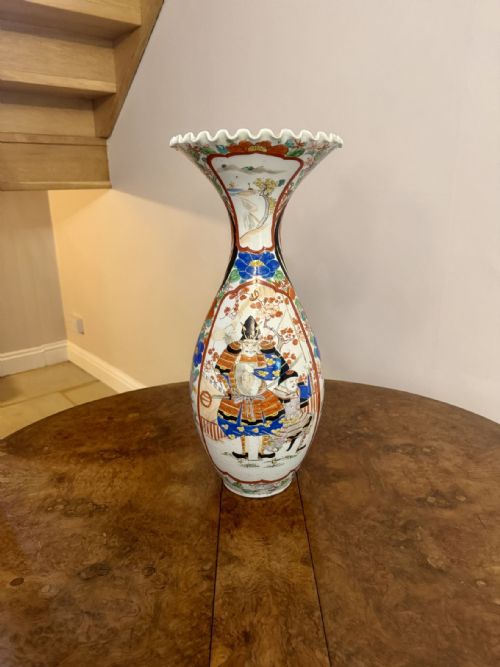
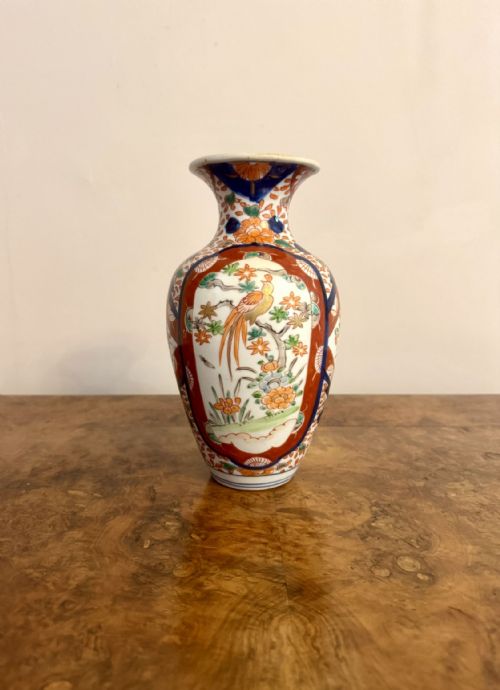


Meiji Period Imari Urns
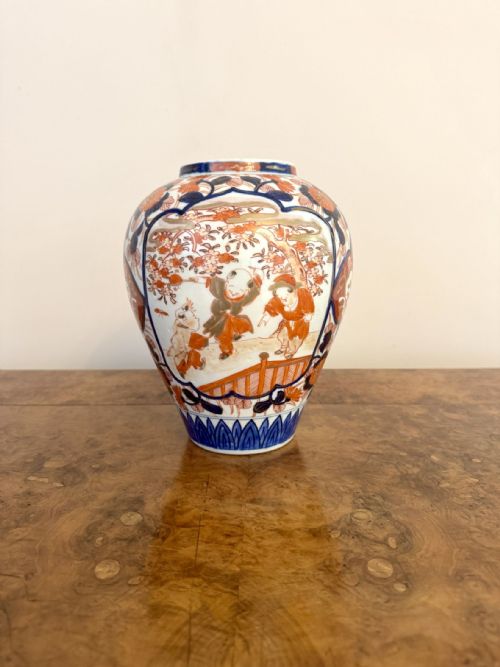
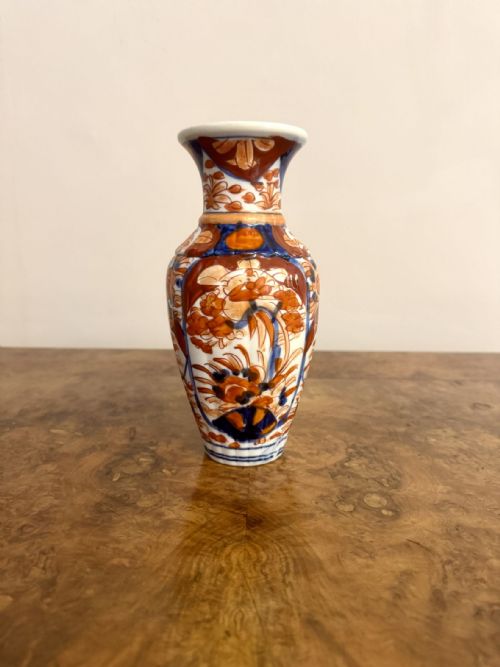
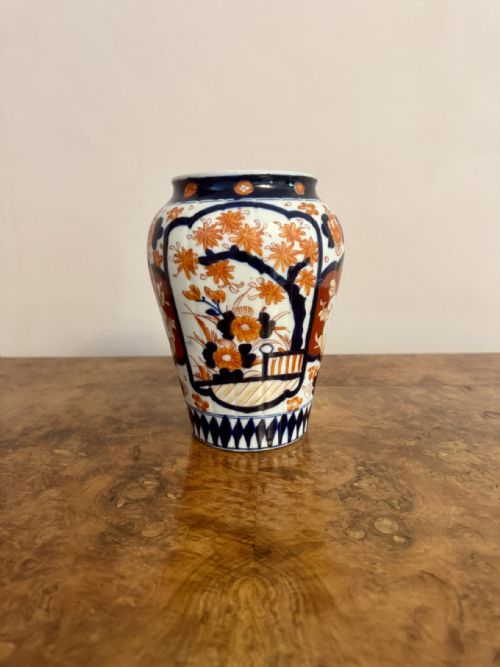
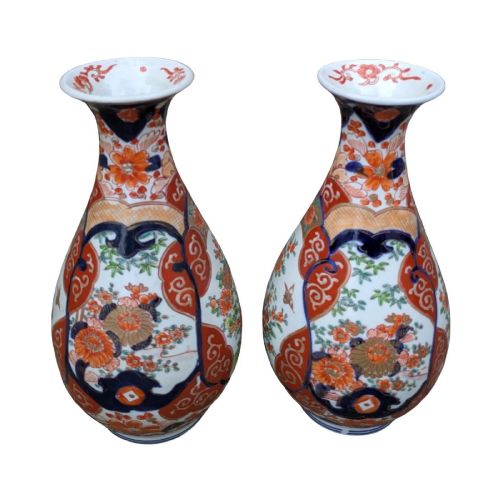
Meiji period imari urns bring rich cobalt and gold decoration into a room, made in Japan during the late nineteenth and early twentieth centuries.
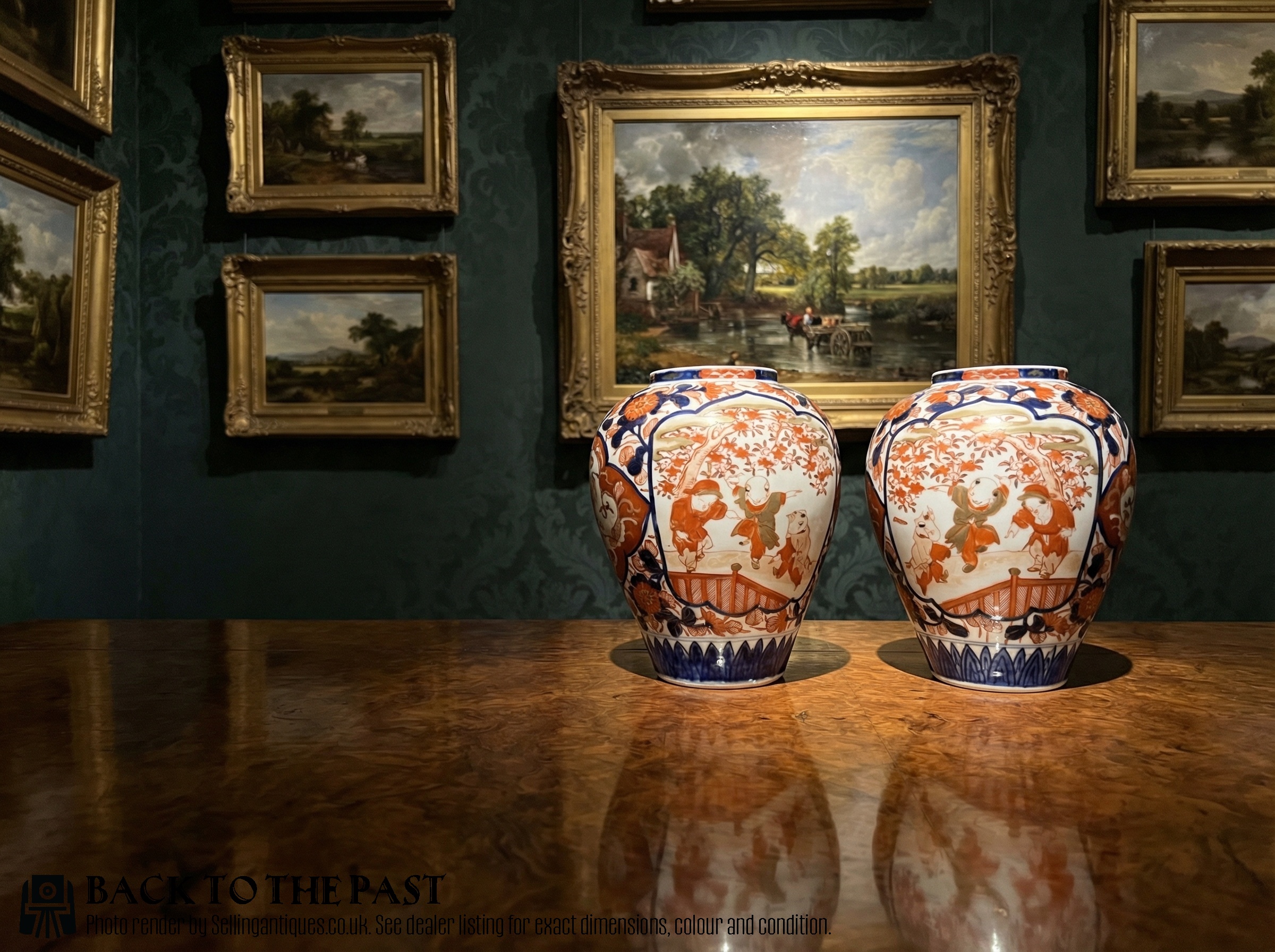
Meiji Period Imari Urns
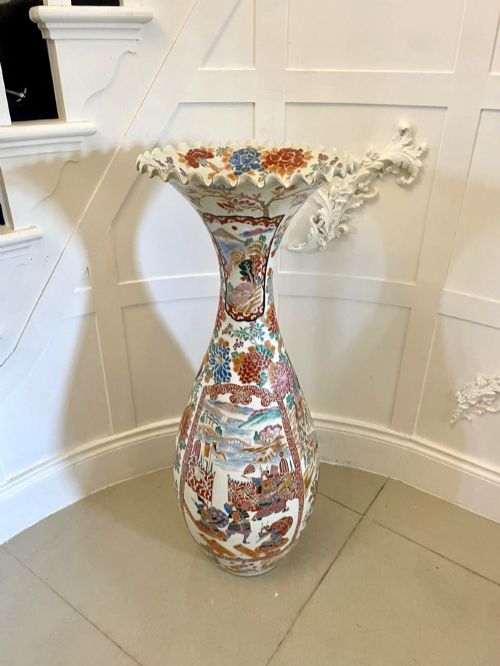
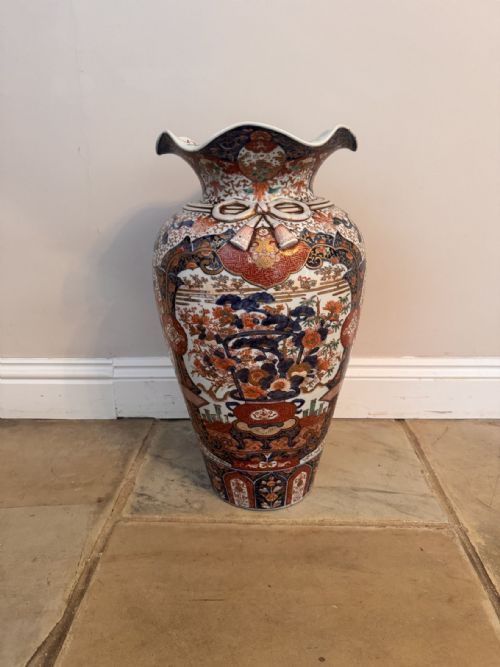
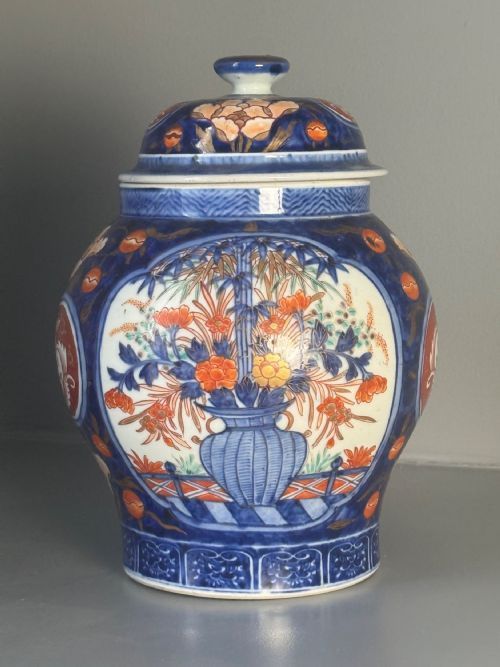
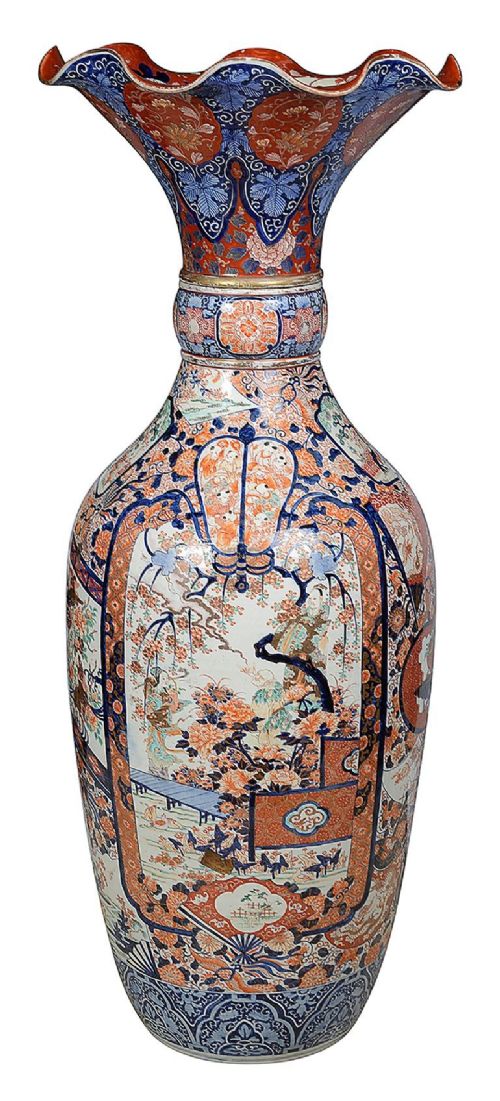
Meiji period imari urns span floor-standing vases, covered ginger jars, and lidded vessels originating in Japan. These pieces reflect the pottery traditions associated with the Meiji era and surrounding decades.
Buyers will most frequently encounter large floor vases, shaped vessels, and pairs of decorated jars. The inventory includes distinct forms such as double gourdes, octagonal balusters, and incense burners.
The objects date from the nineteenth century into the early twentieth century, spanning Victorian and Edwardian periods of trade and collection. They serve as decorative focal points in domestic interiors.
How They Were Made
Artisans formed these vessels from white porcelain, applying underglaze cobalt blue and iron red pigments before the primary firing. Overglaze enamels and gilding were subsequently added in supplementary firing stages to build up the characteristic palette.
Gold leaf and gilt details highlight specific areas of the painted surface, creating contrast against the dark blue and rust red motifs. The combination of glaze layers gives the porcelain its finished depth and sheen.
Listings feature porcelain vessels decorated with cobalt enamel, gold leaf, and gilt across the nineteenth and early twentieth centuries.
What Varies in Quality
The precision of the hand-painted cobalt and enamel work separates standard production pieces from finer examples. Artisans who executed crisper lines and more complex panel designs achieved greater visual clarity on the porcelain body.
Scale and form dictate the presence of large floor-standing vases and balanced pairs against smaller single vessels. Intact covers on ginger jars and urns preserve the original silhouette intended by the maker.
The Meiji Period Imari Urns Glossary
- Imari
- A style of Japanese porcelain decorated in cobalt blue, iron red, and gold. It originated in the town of Arita and was exported through the port of Imari.
- Meiji
- The period in Japanese history spanning from eighteen sixty-eight to nineteen twelve. This era saw the opening of trade with Western markets and large-scale ceramic production.
- Koro
- A Japanese incense burner, typically fitted with a pierced cover. These vessels often appear in porcelain alongside standard decorative jars.
- Baluster
- A vase form characterised by a rounded body that tapers toward the base and swells outward below a narrower neck. This shape provides a stable foundation for intricate surface decoration.
- Gourde
- A double-bulb vessel shape resembling a traditional water carrier. Potters utilised this flowing silhouette for specialised display pieces.
Meiji Period Imari Urns: Frequently Asked Questions
How do I date a Meiji imari urn?
Dating relies on stylistic markers, materials, and documented production eras spanning the late nineteenth and early twentieth centuries. Pieces often align with nineteenth century manufacturing techniques or Edwardian importation periods.
Changes in cobalt tones and enamel application help establish the chronological context of individual porcelain items.
Were these urns made for export?
Many imari pieces created during this era were produced specifically for international trade markets in Europe and America. Western demand influenced the scale and decorative formats of large floor vases and garnitures.
Export production also included covered ginger jars and matched pairs designed for domestic display mantelpieces.
How should I clean porcelain surfaces?
Dusting with a dry, soft cloth maintains the glazed surface without disturbing delicate overglaze gilding and enamel details. Harsh cleaning agents can wear away the applied gold leaf and painted iron red accents.
Keeping the porcelain away from direct moisture preserves the stability of the historical materials.
What is a ginger jar?
A ginger jar is a covered storage vessel featuring a broad shoulders and a straight or slightly tapered mouth. Originally utilised for transporting spices, they became purely decorative ornaments in Western interiors.
Examples from this period feature characteristic imari panel patterns across the porcelain body and matching lid.