

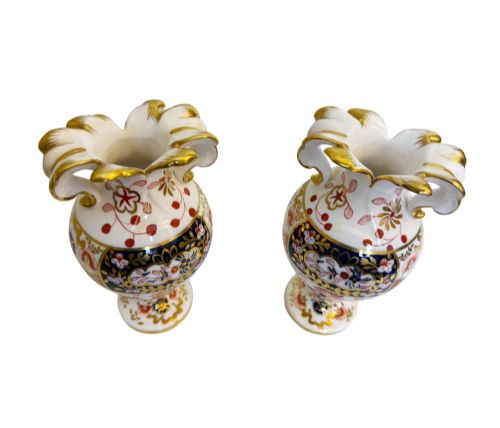


Pair Decorative Imari Urns
These pair decorative imari urns bring rich palettes and striking forms to a mantelpiece, offering the distinctive character collectors seek.
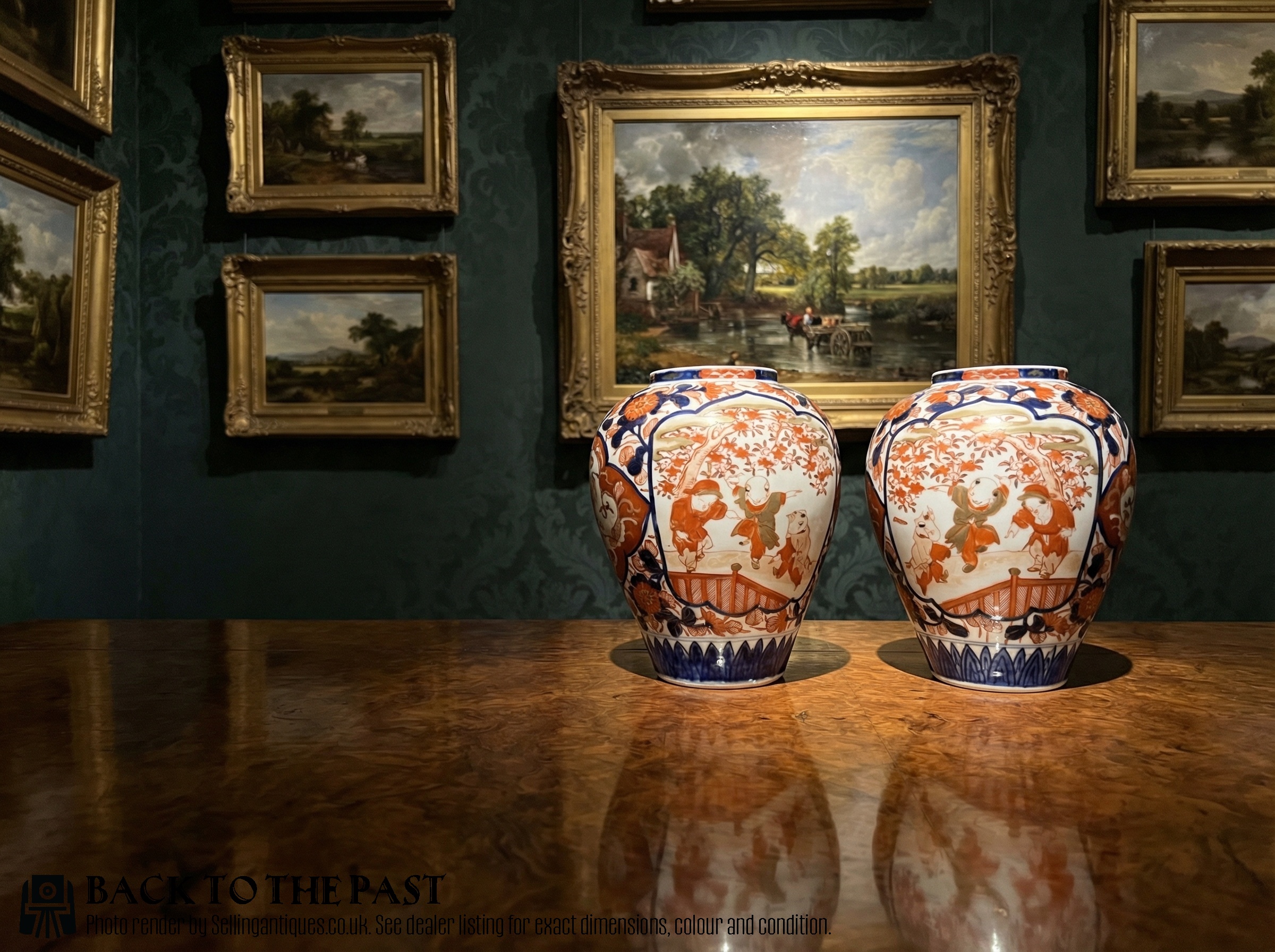
Pair Decorative Imari Urns
When you search for pair decorative imari urns, you are looking at matched vessels defined by bold colour palettes and intricate patterns. These pieces span the nineteenth century, including Japanese export wares and English interpretations.
The selections on this page range from lidded jars and baluster vases to twin handled vessels and pots. Origins vary between Japanese workshops of the Meiji and Edo periods and European makers producing ironstone and porcelain.
You will encounter monumental examples alongside smaller cabinet pieces. The unifying element is the distinctive aesthetic shared across Japanese Imari and related nineteenth century styles.
Materials and construction
Makers shaped these vessels from porcelain, ceramic, and ironstone, building durable bodies suited to detailed surface decoration. Artisans then applied enamel pigments alongside gold leaf and gilt highlights to create rich visual depth.
Hand-painting techniques brought varied motifs to the surfaces of vases and lidded jars. Firing processes ensured the vibrant blues, reds, and metallic accents adhered firmly to the ceramic base.
The listings on this site span the nineteenth century, featuring porcelain, ironstone, and ceramic materials decorated with enamel and gold leaf.
Assessing quality and execution
Quality in these vessels rests on the precision of the hand-painted details and the crispness of the enamel work. Superior examples display carefully balanced compositions where the iron red and cobalt blue pigments sit cleanly against the porcelain ground.
The handling of gilt or gold leaf also distinguishes finer pieces, showing steady lines and well-preserved metallic lustre. Potter's control over the potting form, whether a baluster vase or a lidded jar, determines the overall elegance of the silhouette.
Spode·Mason's·Fukagawa
The Pair Decorative Imari Urns Glossary
- Imari
- A style of Japanese porcelain featuring a distinct palette of cobalt blue, iron red, and gold leaf. It originated in the town of Arita and influenced European potteries throughout the nineteenth century.
- Baluster
- A vase form characterised by a rounded body that tapers toward the base and swells near the lower centre. This shape provides a stable and balanced canvas for detailed surface patterns.
- Ironstone
- A type of durable heavy earthenware patented in the nineteenth century. It served as a robust alternative to porcelain for decorated vases and jars.
- Meiji Period
- An era in Japanese history spanning from 1868 to 1912 noted for prolific export arts. Pieces from this time often exhibit elaborate hand-painted decoration and high technical skill.
- Gilt
- A thin layer of gold applied to the surface of ceramic or porcelain vessels. It adds decorative highlights that catch the light alongside enamel colours.
Pair Decorative Imari Urns: Frequently Asked Questions
What defines pair decorative imari urns?
These items are matched vessels featuring characteristic cobalt blue and iron red decoration, often enhanced with gold leaf. They encompass both Japanese export wares and European ceramic interpretations from the nineteenth century.
Collectors prize them for their vibrant palettes and formal symmetry. The category includes lidded jars, baluster vases, and twin handled vessels.
How were these vessels used?
Historically, matched pairs served as symmetrical garniture ornaments on mantelpieces, sideboards, and cabinets. Their striking presence anchored formal room displays.
Today, they function primarily as decorative focal points in interiors. Their robust porcelain and ironstone construction allows them to endure as display objects.
How do I style them at home?
Place a matched pair symmetrically on a console table, sideboard, or mantelpiece to create visual balance. Their rich colours pair well with dark wood furniture and neutral backgrounds.
Keep them out of direct sunlight to protect the enamel and gilt surfaces. Handle them carefully by the body rather than the covers or handles when moving.
How can I tell periods apart?
Nineteenth-century pieces often reflect specific manufacturing traits, such as the heavy body of ironstone or the refined porcelain of Japanese Meiji production. Stylistic details shift between traditional Japanese motifs and Victorian European adaptations.
Examining the base and the application of the enamel colours helps reveal the origin. Comparing the hand-painted brushwork offers further clues to the date of manufacture.