
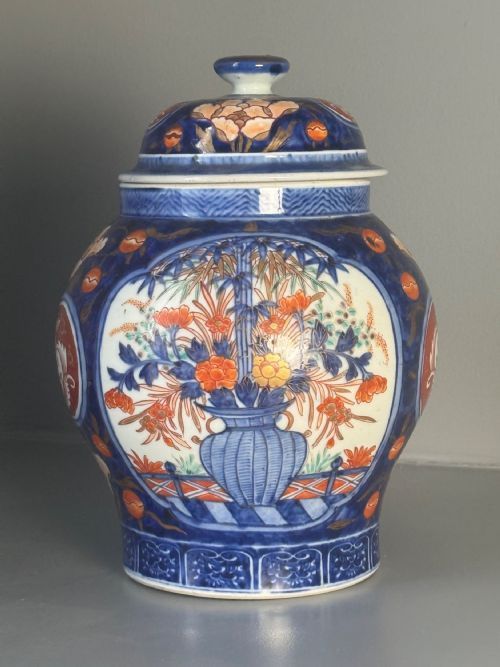
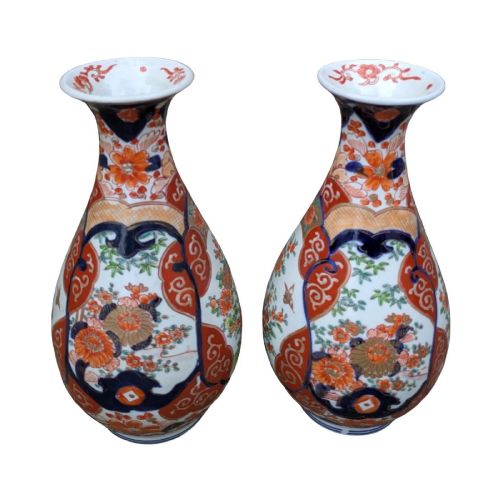


Traditional Japanese Baluster Vases
Traditional Japanese baluster vases are graceful, swelling vessels prized for their striking palettes and classic forms, offering a genuine focal point for any interior.
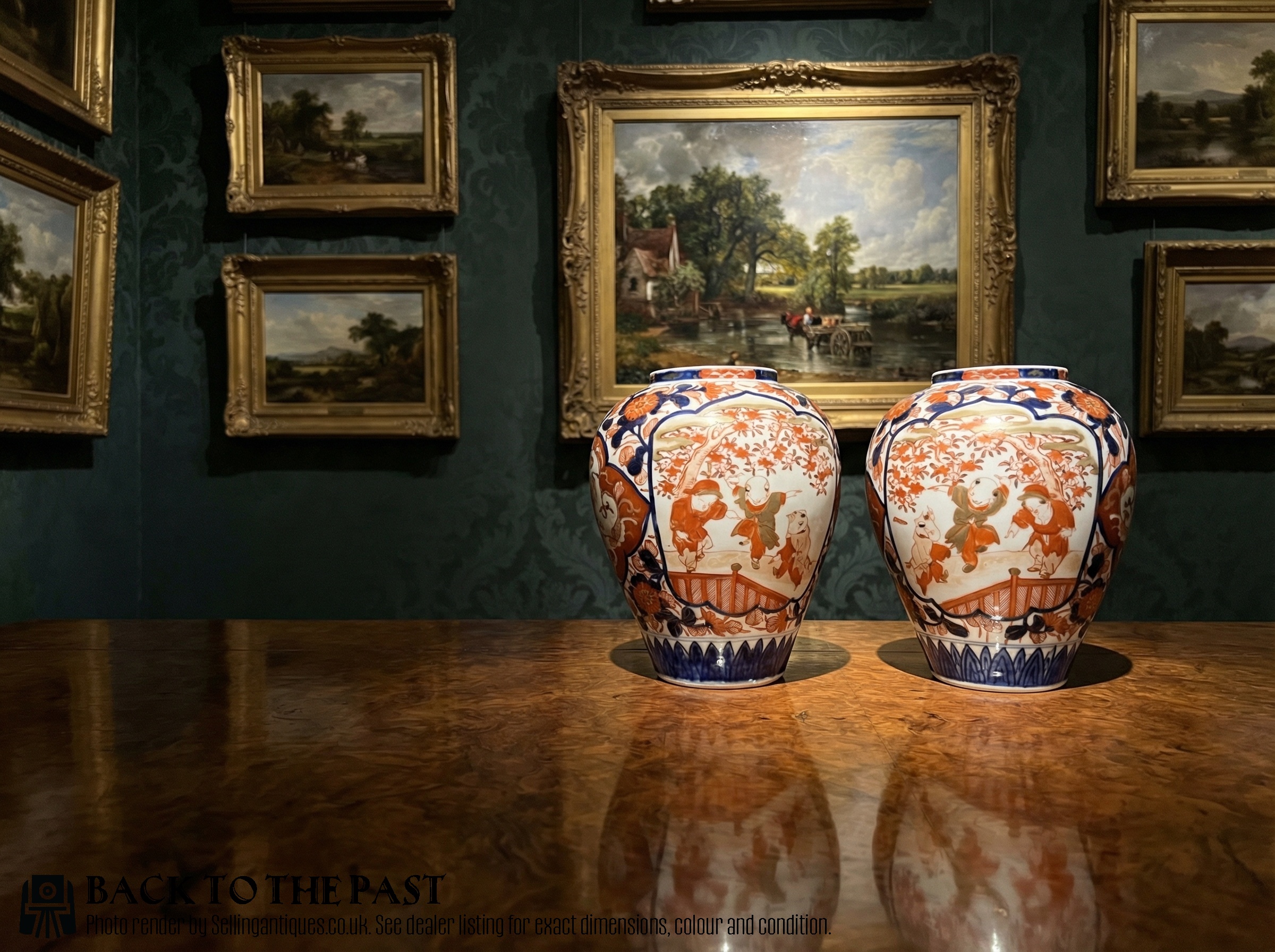
Traditional Japanese Baluster Vases
Traditional Japanese baluster vases encompass a range of curved, swelling ceramic and bronze vessels originating from the nineteenth and early twentieth centuries. These pieces frequently manifest as matched pairs or individual decorative statements, incorporating regional styles such as Imari, Satsuma, and Kutani.
The primary forms on this page span classic baluster silhouettes, hexagonal shapes, and occasional conversions into table lamps. They reflect the diverse output of the Meiji period and nineteenth-century workshops, ranging from modest domestic ornaments to large decorative vases.
Buyers seeking traditional Japanese baluster vases will encounter rich cobalt blues, iron reds, and gilded highlights characteristic of Imari wares, alongside the detailed enamel work of Satsuma and Kutani production. Each form showcases the distinct aesthetic priorities of its period of origin.
How they were made
The manufacture of these vases relies on porcelain and earthenware bodies shaped into swelling baluster profiles or geometric hexagonal forms. Artisans applied glazes and detailed hand-painted enamels, often incorporating gold leaf to achieve intricate decorative surfaces.
Certain pieces utilise bronze casting to form substantial metal vases and subsequent table lamps, demonstrating alternative material capabilities within Japanese workshops. Hand-painted techniques dominate the ceramic inventory, requiring precise brushwork across complex floral and figurative motifs.
The documented styles on this page concentrate on Japanese Imari, Meiji period production, and Kutani traditions.
What varies in quality
Quality in traditional Japanese baluster vases rests upon the precision of the hand-painted brushwork and the clarity of the enamel and glaze application. Finer examples display disciplined control over cobalt blue and iron red pigments, with generous yet controlled use of gold leaf.
The scale and ambition of the piece also dictate its standing, with large vases and balanced pairs demanding greater technical skill from the potter and painter. Furthermore, the crispness of moulding in hexagonal shapes and bronze castings distinguishes standard production from superior workshop output.
The Traditional Japanese Baluster Vases Glossary
- Baluster
- A vase form characterised by a rounded body that tapers towards the base and flares slightly at the neck. This silhouette echoes the architectural baluster column.
- Imari
- A style of Japanese export porcelain featuring a distinctive palette of underglaze blue, iron red, and gold, often produced during the nineteenth century. The patterns typically combine floral and brocade motifs.
- Meiji Period
- The era in Japanese history spanning from eighteen sixty-eight to nineteen twelve, noted for extensive international trade and high-level decorative arts production. Vases from this time display notable technical proficiency.
- Kutani
- A style of Japanese coloured porcelain and earthenware known for vibrant enamel glazes and detailed pictorial scenes. These wares often incorporate rich greens, yellows, and purples alongside gilding.
- Satsuma
- Earthenware pottery featuring a fine crackle glaze decorated with elaborate enamel designs and raised gilding. Originating in Satsuma Province, these pieces frequently depict traditional figures and landscapes.
Traditional Japanese Baluster Vases: Frequently Asked Questions
What is a baluster vase?
A baluster vase is a vessel featuring a curved, swelling body that resembles the shape of an architectural baluster. This profile provides stability while offering a broad surface for detailed painted decoration.
Such forms have been utilised for centuries to display complex botanical and geometric patterns, making them prominent decorative objects in both Japanese and Western interiors.
How do I identify Imari style?
Imari style is readily identified by its characteristic palette, which relies heavily on deep cobalt blue underglaze, iron red, and supplementary gold leaf. The designs often feature intricate panel layouts and floral motifs.
Originating from the port of Imari, this aesthetic became a staple of nineteenth-century Japanese export ware, prized for its visual richness and decorative presence.
Were these vases made for export?
Many nineteenth-century and Meiji period vases were created specifically for international markets, reflecting a growing global demand for Japanese decorative arts. Workshops adapted traditional forms and motifs to suit foreign interior tastes.
This export focus accounts for the prevalence of large decorative vases and matched pairs found across international collections today.
How do I care for antique vases?
Antique ceramic and bronze vases require gentle handling and placement away from direct sunlight to preserve delicate enamel colours and gold leaf accents. Dusting with a soft, dry cloth is usually sufficient for routine maintenance.
For pieces converted into table lamps, regular electrical checks by a qualified professional ensure safe operation alongside their decorative display.