


Meiji Period Cloisonne Charger
When you handle a meiji period cloisonne charger, you hold heavy copper and wire worked into fierce dragons or quiet cranes from the late nineteenth century.
Meiji Period Cloisonne Charger
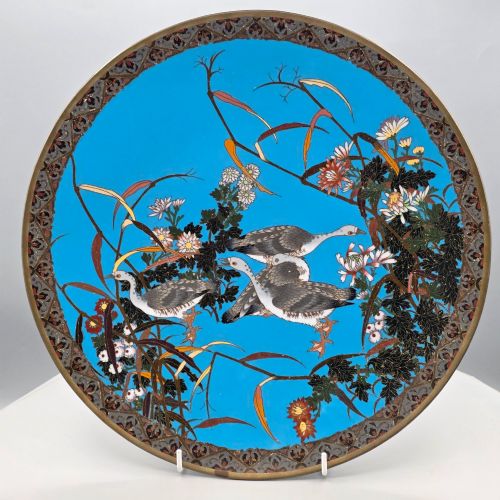
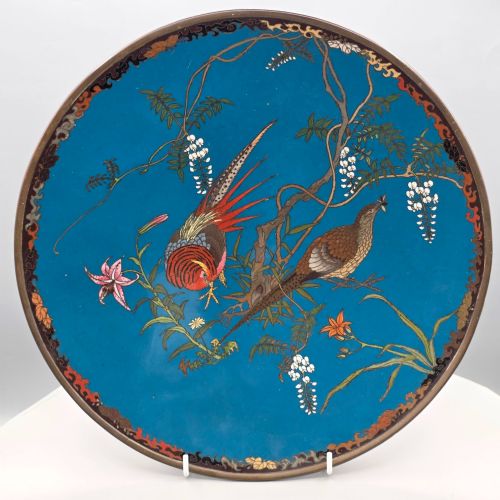
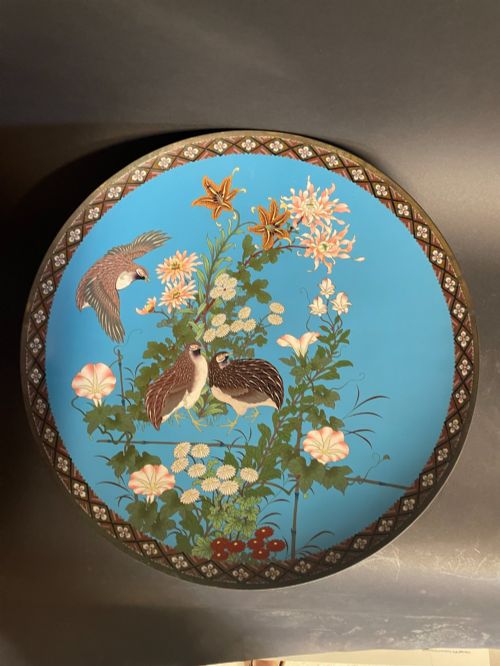
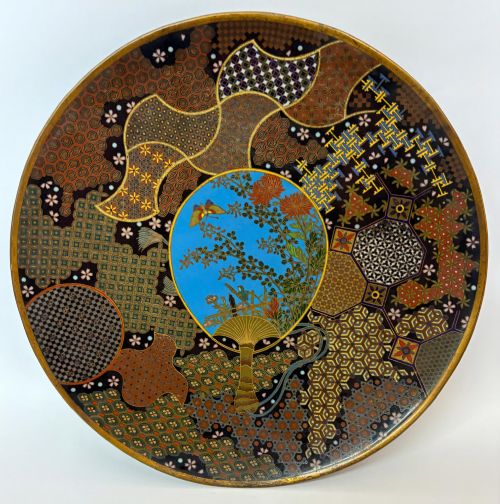
A meiji period cloisonne charger is a wide decorative plate or tray made in Japan during the late nineteenth century. These objects include large circular dishes, square trays, and octagonal forms designed for display rather than dining.
The most common examples encountered on this page date from the 1870s to the 1900s, though earlier pieces from the Edo period appear occasionally. Makers rendered diverse subjects upon the metal surfaces, ranging from dragons and phoenixes to geese, irises, and Mount Fuji.
How they were made
Coloured enamel pastes were packed tightly into these compartments before the entire dish was fired in a kiln and polished smooth. The resulting panels combine sturdy metal foundations with glossy vitreous layers that hold precise pictorial details.
Current listings feature copper, brass, and porcelain bodies, spanning production dates from the eighteen-sixties through the turn of the twentieth century.
What varies in quality
The distinction between standard domestic wares and top tier examples lies in the complexity of the wirework and the depth of the enamel palette. Pieces produced by skilled hands display remarkably fine cells that articulate complex feathers, scales, and landscapes without distortion.
Signature marks, specific forms like octagonal trays, and ambitious pictorial subjects such as leaping koi or battling samurai elevate certain works above basic floral dishes. The neatness of the final polish and the absence of cloudiness in the coloured pastes further separate superior items from ordinary production.
Kinkozan
The Meiji Period Cloisonne Charger Glossary
- Charger
- A large decorative plate or dish intended for display on a wall or stand rather than for serving food. These items typically measure thirty centimetres or more across.
- Cloisonne
- A decorative metalwork technique where thin wire partitions create cells filled with enamel paste. The surface is then fired and polished to a flat finish.
- Totai Shippo
- A specific Japanese variant of cloisonne where enamel is applied over a porcelain body rather than metal. Artisans frequently paired this method with simulated tree bark textures.
- Ho-o
- A mythical bird or phoenix depicted frequently in Japanese decorative arts. These creatures appear with elaborate tails and spread wings across many nineteenth century dishes.
- Mon
- A Japanese badge or crest used to identify families or clans. These circular heraldic motifs sometimes form part of the background decoration on enamel trays.
Meiji Period Cloisonne Charger: Frequently Asked Questions
How were cloisonne chargers displayed?
These decorative plates were manufactured primarily for display in domestic interiors during the Meiji era, both in Japan and for export to Western markets. Owners typically placed them on wooden stands or mounted them upon walls to showcase the colourful enamel designs.
Because they functioned as ornamental art rather than utilityware, the dishes avoided the wear associated with dining. Their robust copper and enamel construction ensures they remain stable when exhibited today.
How do I date a Meiji charger?
Pieces are generally attributed through a combination of stylistic clues, wire characteristics, and recorded periods ranging from the 1860s through to 1900. Earlier works from the 1870s often employ distinct colour palettes and robust copper foundations compared to the finer, more controlled wirework seen around the turn of the century.
Signed pieces or those associated with specific workshops provide clearer chronological markers. However, many surviving examples rely on period attribution based on manufacturing techniques and materials.
Are all these pieces circular?
While the traditional charger is a wide round dish, the listings include several alternative geometric forms. Artisans also produced square trays, octagonal trays, and medium plates alongside the standard circular chargers.
These varied shapes utilised the same copper foundations and wirework techniques. Square and octagonal variants offer a different visual balance while maintaining the rich enamel decoration characteristic of the period.