
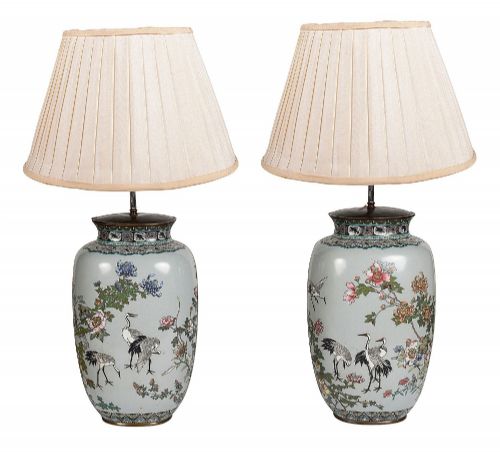


19th Century Japanese Cloisonne
These pieces of 19th century japanese cloisonne bring vibrant metallic wirework and intricate enamelling into any interior.
19th Century Japanese Cloisonne
The objects vary from monumental temple water dispensers and substantial wall plates depicting dragons, koi, and phoenixes to domestic vessels and converted table lamps. Most examples originate from workshops operating in the latter half of the nineteenth century, showcasing distinct stylistic transitions from earlier traditional motifs to bolder, highly detailed pictorial designs.
Materials and Technique
Artisans constructed these pieces using a base of copper, brass, or bronze, occasionally applying enamel directly over porcelain or earthenware cores known as totai shippo. Thin metal ribbons, or cloisons, were soldered onto the metallic surface to form intricate cellular compartments that mapped out the intended design.
These individual cells were subsequently filled with coloured vitreous enamel pastes before undergoing multiple firings in a kiln to fuse the glass. The finished surface was then ground down and polished until the metal wires and hardened enamel lay flush, creating a smooth, luminous panel.
The listings span from the mid-nineteenth century Edo period through the Meiji era, incorporating copper, bronze, wood, and porcelain materials.
Assessing Quality
The distinction between standard commercial output and superior craftsmanship lies in the meticulousness of the wirework and the depth of the enamel palette. Masterpieces display microscopic precision in the arrangement of the metal cloisons, where lines remain perfectly uniform and curves appear entirely fluid without distortion.
Surface finish and complexity of subject matter further separate the tiers of production. Top-tier examples exhibit flawless polishing, rich colour gradation, and ambitious pictorial themes such as leaping koi or detailed dragons, whereas simpler pieces rely on repetitive floral motifs and heavier, more visible solder lines.
The 19th Century Japanese Cloisonne Glossary
- Cloisonné
- An enamelling technique where metal wires are soldered to a metal body to create compartments for coloured glass paste. These cells are fired and polished to produce a decorative surface.
- Totai Shippo
- A variation of cloisonne where the enamel is applied over a porcelain or earthenware core instead of solid metal. This technique creates lighter vessel bodies while maintaining traditional wirework designs.
- Champlevé
- An older method where troughs or cavities are carved directly into the metal surface to hold enamel paste, rather than soldering wires on top. This is frequently seen on earlier small items like netsuke.
- Meiji Period
- The era in Japanese history spanning from 1868 to 1912, noted for the opening of trade and a dramatic flourishing of decorative arts destined for export. Pieces from this time show exceptional technical ambition.
- Charger
- A large decorative plate intended for display on a wall or sideboard rather than for dining use. These often serve as the primary canvas for elaborate pictorial cloisonne scenes.
- Ho-o
- A mythical bird or phoenix frequently depicted in Japanese design, symbolising fire, justice, and obedience. It appears prominently on high-status chargers and palace vases.
19th Century Japanese Cloisonne: Frequently Asked Questions
How do I clean antique cloisonne?
Dust surfaces gently with a soft, dry brush to prevent accumulation in the wire recesses. Avoid using chemical polishes, abrasive cloths, or liquid cleaners, as these can damage the delicate vitreous enamel and discolour the exposed metal wires.
Keep pieces away from direct sunlight and areas of high humidity to protect the integrity of the base materials. Regular, gentle maintenance preserves the original polish and prevents deterioration of the soldered joints.
Were these pieces made for export?
Many of the large chargers, palace vases, and decorative objects produced during the late nineteenth century were specifically created for international exhibitions and Western markets. Japanese metalworkers adapted traditional techniques to satisfy a surging global appetite for ornate oriental craftsmanship.
Despite their export destination, these items maintained rigorous domestic standards of artistry and technical execution. The fusion of traditional iconography with European scale resulted in the impressive decorative items found today.
How can I tell Meiji period pieces apart?
Meiji period items typically display a higher degree of technical perfection, utilising finer copper wires and an expanded palette of translucent and opaque enamels. The designs often feature dynamic naturalistic subjects, including swimming koi, dragons, and birds rendered with photographic realism.
Earlier Edo period examples tend to show heavier construction, more stylised geometric or floral patterns, and a restrained use of colour. Examining the weight of the metal base and the fineness of the wirework provides clear indicators of production date.