


Cloisonne Decorative Platter
A cloisonne decorative platter brings intense colour and meticulous metalwork into a room, capturing the pinnacle of late nineteenth-century artistry.
Cloisonne Decorative Platter
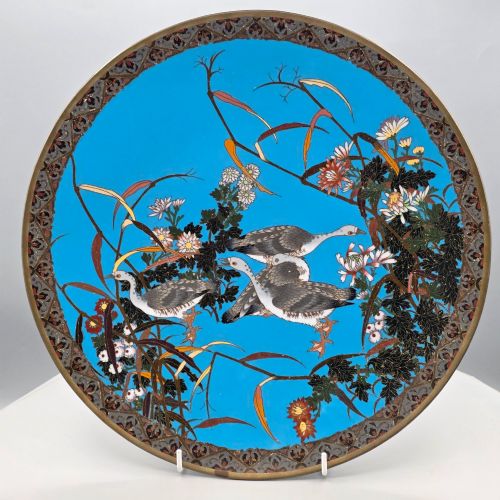
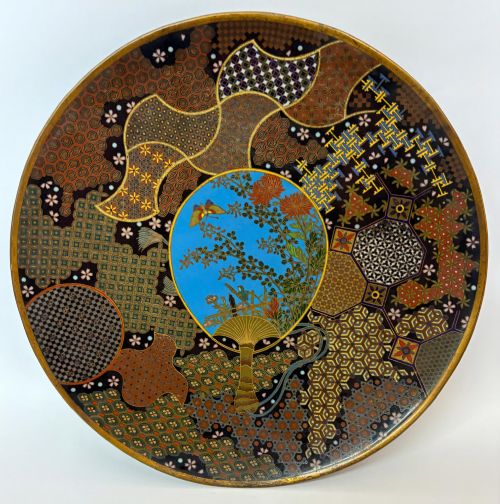
A cloisonne decorative platter represents a distinct category of heavy metal vessels created primarily during the Meiji period and the late Edo period. These items appear as large decorative chargers, medium plates, and octagonal or square trays designed for display rather than dining.
The pieces you encounter most frequently on this page originate from Japan, spanning dates from the 1850s through to 1900. Makers focused their compositions on natural subjects such as geese, chrysanthemums, koi, iris, owls, and dragons, alongside auspicious symbols and Mount Fuji.
Larger examples often measure up to fifty centimetres across, providing a substantial canvas for detailed avian and reptilian motifs. Smaller plates display similar dedication to landscape and floral subjects executed with fine wirework.
Materials and technique
Makers formed the foundational body using copper, bronze, brass, or porcelain, shaping them into broad chargers and deep trays. Some specialised pieces utilise totai shippo, incorporating tree bark textures or cinnabar lacquer.
The characteristic design emerges through the application of brass or silver wire soldered onto the base to form distinct cells, known as cloisons. Craftsmen then filled these compartments with coloured enamel paste before firing and polishing the surface smooth.
Listings span several decades of production from the 1850s to 1900, capturing the transition from the late Edo period into the Meiji era.
Distinguishing quality
The fineness of the wirework largely determines the tier of a piece, with tighter and more intricate metal grids demanding greater skill. Density and complexity of the enamel infill separate standard decorative plates from exceptional masterpieces.
Subject matter and composition influence the visual impact, where balanced depictions of subjects like phoenixes or leaping koi demonstrate superior design discipline. Signed works by recognised makers also indicate a higher level of workshop output.
Kinkozan
The Cloisonne Decorative Platter Glossary
- Cloisonne enamel
- A technique where metal wires are soldered to a metal base to create compartments which are filled with vitreous enamel and fired. This method produces intricate geometric and pictorial designs across the surface of the plate.
- Charger
- A large ornamental plate intended primarily for display on a wall or cabinet rather than practical service. These vessels provide the expansive surface area necessary for complex narrative scenes.
- Totai shippo
- A wire-based enamelling method on a translucent or semi-translucent base, sometimes described as wire-less or transparent cloisonne. It allows light to pass through portions of the decorative body.
- Ho-o bird
- A mythical Chinese and Japanese phoenix representing auspicious qualities, fire, and the sun. This creature appears frequently with extended tail feathers upon major chargers.
- Mon
- A traditional Japanese heraldic badge or crest used to identify families or clans. These symbols often anchor the composition of mid-period plates.
Cloisonne Decorative Platter: Frequently Asked Questions
How were cloisonne decorative platters used historically?
These items functioned primarily as display pieces for reception rooms, intended to demonstrate the wealth and refined taste of the owner.
Craftsmen created them to hang on walls or rest on dedicated stands rather than to hold food or liquid.
How do I care for a cloisonne plate at home?
Keep the piece away from direct sunlight to protect the stability of the coloured enamels over decades of display.
Dust the surface gently with a soft, dry cloth and avoid liquid cleaners or abrasive materials that might scratch the metal wire.
What distinguishes Meiji period pieces from earlier ones?
Meiji period items often exhibit heightened technical precision in wire placement and a broader palette of enamel colours.
Earlier nineteenth-century pieces from the late Edo period tend toward bolder compositions with slightly heavier copper foundations.
Are signed pieces more desirable?
Signature marks stamped or applied to the reverse or base indicate a specific workshop attribution or master artisan.
Signed examples provide clearer historical context regarding the origin of the manufacture.