




Oriental Cloisonne Plaque
An oriental cloisonne plaque brings intricate metalwork and vibrant enamels into a room, offering rich textures and traditional imagery from nineteenth-century workshops.
Oriental Cloisonne Plaque
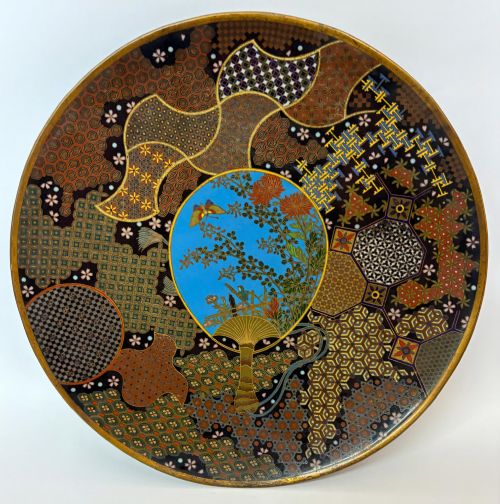
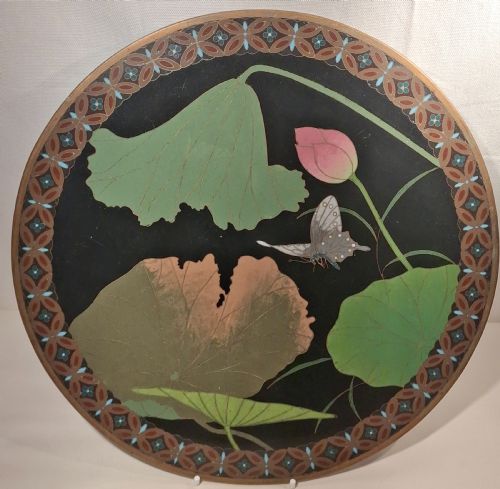
When you search for an oriental cloisonne plaque, you find circular chargers, decorative plates, and wide trays created across the nineteenth century. These pieces display distinct motifs ranging from single dragons and leaping koi to birds, butterflies, and samurai figures.
The selections on this page span the Meiji period, the late Edo period, and the Qing dynasty. Japanese Meiji examples and Chinese dragon chargers form the core of what is available to collectors today.
Materials and construction
Artisans built these works using copper, brass, or bronze as a base body for the metal vessel. Fine brass wire was shaped and soldered onto the surface to outline intricate pictorial designs and geometric compartments.
Coloured enamel paste was packed carefully into each created cell before the piece underwent firing and polishing. This technique produced smooth, vitreous surfaces where metal outlines separate vibrant pigments.
Current listings include pieces from the eighteenth century, the Qing dynasty, and the Japanese Meiji and Edo periods.
Standards of craftsmanship
Quality depends upon the precision of the wirework and the complexity of the subject matter. Finer plates display microscopic wire cells that form detailed feathers, scales, and facial expressions without visible flaws in the enamel.
Scale and ambition separate standard decorative items from masterworks. Massive chargers featuring dynamic dragons, leaping koi, or complex figural scenes represent the highest tier of historical production.
The Oriental Cloisonne Plaque Glossary
- Cloisonne enamel
- A decorative metalwork technique where thin wire creates raised partitions that hold coloured glass paste.
- Charger
- A large ornamental plate or shallow dish designed primarily for display rather than service.
- Meiji period
- A historic Japanese era spanning from eighteen sixty-eight to nineteen twelve noted for exceptional metalwork.
- Edo period
- A preceding era in Japanese history stretching from sixteen hundred and three to eighteen sixty-eight.
- Qing dynasty
- The final imperial dynasty of China, lasting from sixteen forty-four to nineteen eleven.
Oriental Cloisonne Plaque: Frequently Asked Questions
How were these chargers displayed?
Historical pieces were often placed on wooden stands or mounted directly for interior decoration.
Their large diameters and vibrant colour palettes suited formal reception rooms.
What motifs appear on these plaques?
Common subjects include leaping koi, dragons, birds sitting on branches, and samurai figures.
Auspicious symbols and chrysanthemums also feature prominently across nineteenth-century examples.
How do I distinguish Japanese from Chinese pieces?
Japanese items from the Meiji and late Edo periods frequently employ fine wirework depicting naturalistic birds and fish.
Chinese Qing dynasty examples tend to utilise robust bronze or brass bases with powerful dragon motifs.
What sizes do these decorative plates reach?
Diameters vary from standard cabinet plates up to massive chargers measuring fifty centimetres across.
Larger trays require heavier copper or brass foundations to support the extensive enamel surface.