


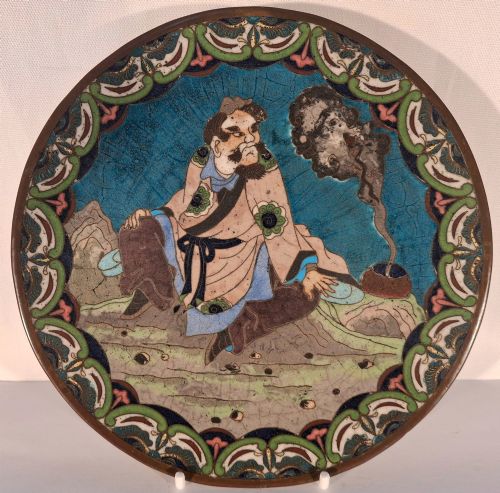
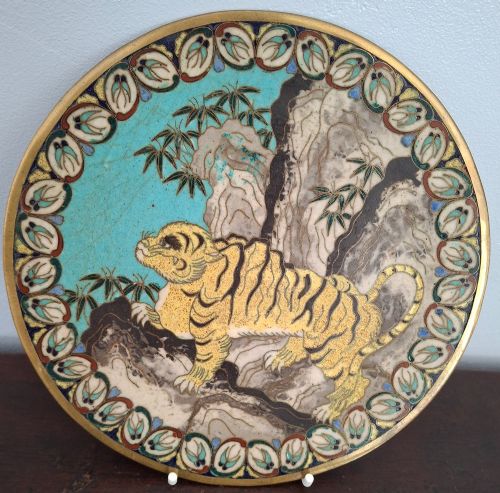
Turquoise Cloisonne Plate
These turquoise cloisonne plate pieces bring vibrant enamelled colour and intricate wirework into a room.
Turquoise Cloisonne Plate
A turquoise cloisonne plate combines metal foundations with detailed enamel cells to create striking decorative chargers, dishes, and plaques. The selections found here span the Meiji period, late Edo period, and Qing dynasty, showing both Japanese and Chinese origins.
Most examples you meet on this page date from the nineteenth century, particularly around eighteen ninety and nineteen hundred. They take the form of medium plates, large chargers, and decorative plaques depicting birds, flowers, samurai, demons, and dragons.
Materials and construction methods
These pieces are built using copper or brass as a base metal foundation. Artisans solder fine wire onto this metal surface to outline the desired patterns and compartments.
Workers fill the resulting cells with cloisonne enamel paste before firing the metal base and glass paste at high temperatures. The prominent turquoise background enamel surrounds detailed motifs of fauna and figures.
Turquoise Cloisonne Plate Retail Price Guide 2026
Typical asking prices for turquoise cloisonne plate among the pieces listed under this phrase on Sellingantiques today, from the lower quarter to the upper quarter. They describe what is for sale here now, not the wider market.
Listings feature copper and brass foundations decorated with wire and enamel.
Assessing quality and craftsmanship
The fineness of the wirework and the complexity of the subject matter distinguish simpler dishes from exceptional chargers. Masterpieces often portray detailed narrative scenes such as samurai and demons, or intricate natural subjects like birds sitting on branches.
Scale also divides the range, with massive chargers reaching fifty centimetres across demanding greater skill from the maker. Signed works add a layer of distinction that elevates certain pieces above standard decorative items.
Kinkozan
The Turquoise Cloisonne Plate Glossary
- Cloisonne Enamel
- An enamelling technique where fine metal wire forms compartments on a metal base to hold coloured glass paste. Artisans fire these pieces repeatedly to fuse the enamel to the copper or brass foundation.
- Charger
- A large decorative plate or platter intended for display rather than dining use. These substantial objects often measure significant widths and showcase complex pictorial motifs.
- Meiji Period
- A Japanese historical era spanning from eighteen sixty-eight to nineteen twelve marked by exceptional metalwork and enamel production. Pieces from this time frequently reach Western collectors through antique markets.
- Edo Period
- The period of Japanese history preceding the Meiji era, known for traditional craftsmanship and distinct artistic styles. Items surviving from the late portion of this time show early mastery of enamel techniques.
- Qing Dynasty
- The final imperial dynasty of China, noted for refined decorative arts including large enamel plaques and dragon motifs. Objects from this era utilise robust copper bases and vibrant background colours.
Turquoise Cloisonne Plate: Frequently Asked Questions
What is a turquoise cloisonne plate?
A turquoise cloisonne plate is a decorative metal dish featuring coloured enamel held within soldered wire compartments. The dominant turquoise background typically highlights pictorial subjects such as birds, flowers, or figures.
These objects serve primarily as decorative wall plaques or table chargers rather than functional tableware. They reflect skilled Asian metalwork and enamelling traditions from the nineteenth century.
How do I display a large charger?
Large chargers and plaques require sturdy wall brackets or specialised plate stands to support their substantial weight safely. Placing them away from direct sunlight protects the vibrant enamel colours from fading over time.
Because many examples measure significant widths, ensure the mounting surface provides adequate support. Grouping pairs or matching dishes creates a balanced decorative arrangement on a wall or cabinet.
How are Japanese and Chinese pieces told apart?
Japanese examples on this page often date from the Meiji or late Edo periods and frequently depict natural motifs like geese, ibis, and flowering branches. They can also feature distinct cultural subjects such as samurai and demons.
Chinese pieces from the Qing dynasty tend to showcase powerful imperial imagery, including dragons on large plaques. The overall style of the wirework and the specific subject matter help indicate the geographical origin of each item.
What causes the turquoise background colour?
The turquoise appearance results from mineral oxides mixed into the glass paste before it is fired within the wire cells. Artisans apply this coloured enamel powder to cover the copper or brass base completely.
Once heated in a kiln, the paste melts into a smooth, glossy surface that frames the finer details of the design. This distinct shade forms the primary visual canvas for the piece.