








Antique Japanese Charger Plate
An antique japanese charger plate brings rich Meiji period colour and intricate hand-painted detail into a room as a striking wall display or table centrepiece.
Antique Japanese Charger Plate
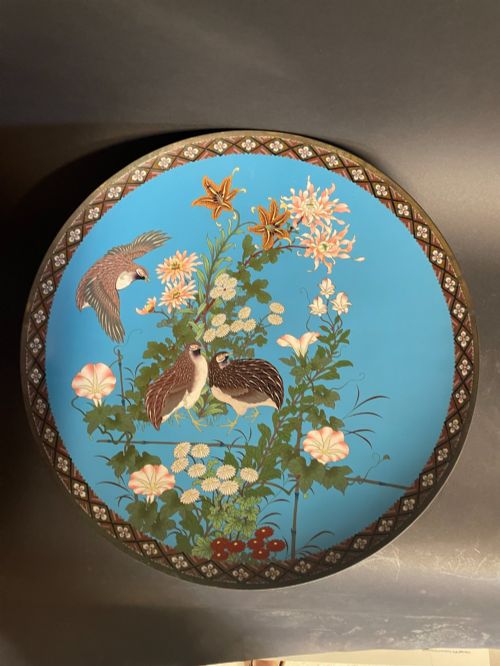
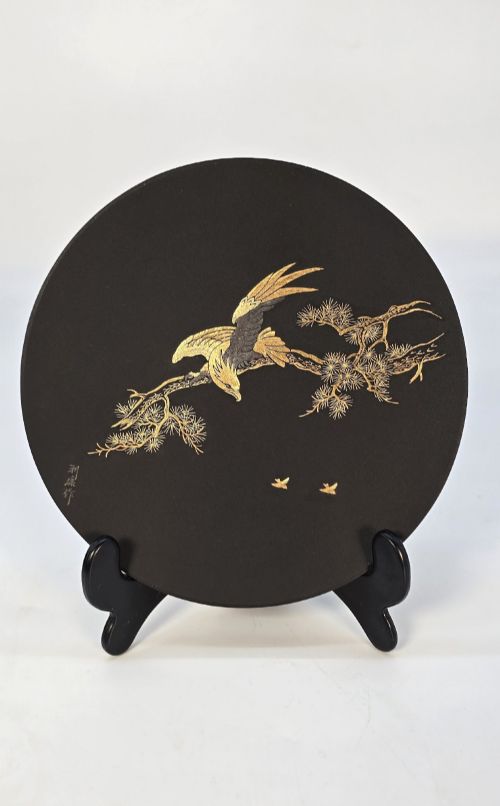
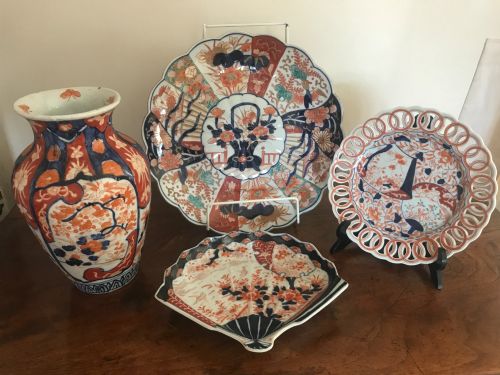
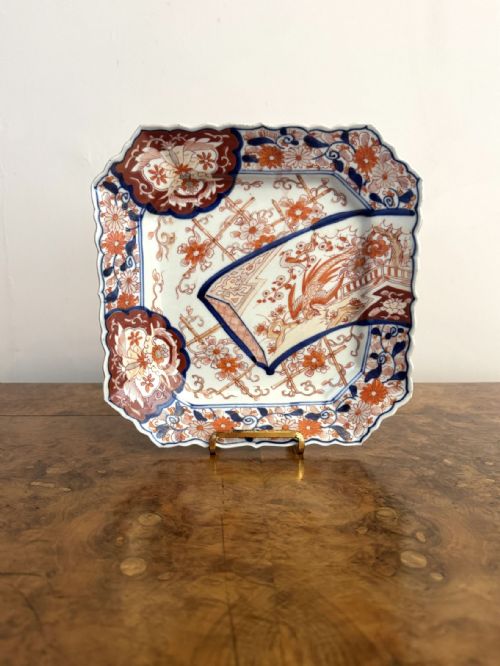
An antique japanese charger plate is a wide decorative dish intended for display rather than dining, appearing in forms such as circular chargers, large plates, square dishes, and hexagonal platters. When searching this phrase, a buyer encounters significant porcelain pieces from the nineteenth century alongside cloisonne enamel and patinated iron plaques. The selection spans the Meiji and Taisho periods, with numerous items attributed to the decades around nineteen hundred.
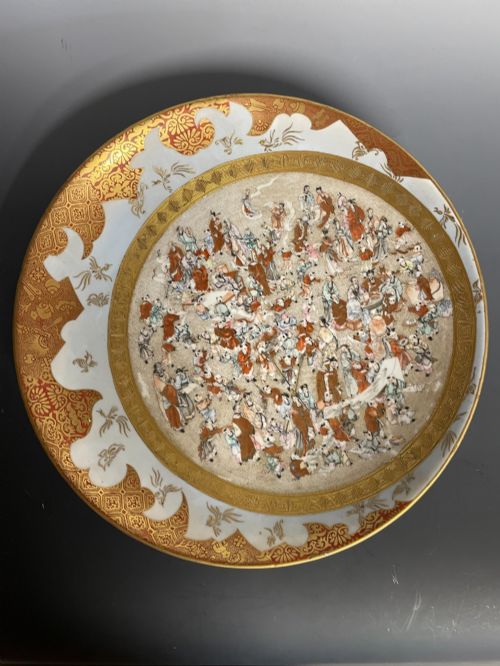
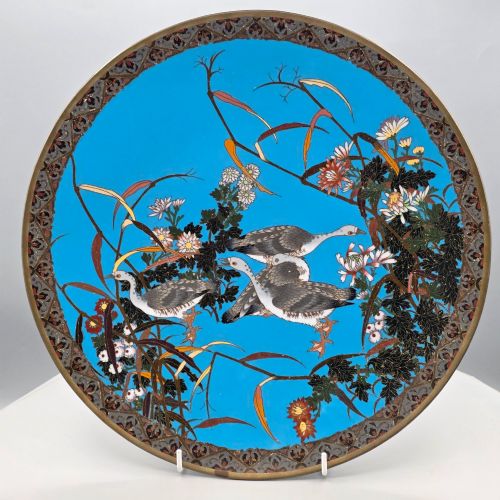
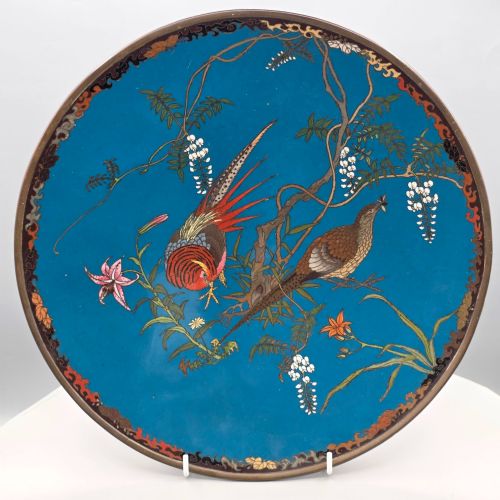
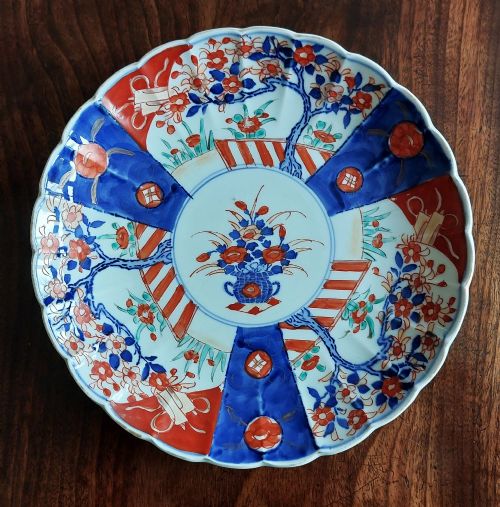
The most common examples on this page are Japanese Imari porcelain chargers and dishes, often featuring blue and white or polychrome hand-painted floral and bird designs. These items frequently present scalloped edges or geometric shapes like squares and hexagons. Alongside Imari wares, collectors find Satsuma pottery, Kutani porcelain, and detailed cloisonne enamel trays depicting birds, flowers, and koi.
Materials and construction techniques
The porcelain pieces are shaped from clay and decorated with hand-painted glazes, often combining cobalt blue, iron red, and gold leaf highlights. Makers of cloisonne enamel apply thin brass or copper wire onto metal bases to form cellular compartments, which are then filled with coloured enamel pastes and fired. Iron plaques utilise patinated metal surfaces inlaid with gold and silver details to depict traditional motifs.
Vessels such as Satsuma ware incorporate raised moriage enamel decoration to create tactile surface relief on ceramic bodies. The firing and glazing processes demand precise temperature control, resulting in durable ceramic surfaces and tightly sealed enamel cells that retain their vibrancy across generations.
Antique Japanese Charger Plate Retail Price Guide 2026
Typical asking prices for japanese charger plate among the pieces listed under this phrase on Sellingantiques today, from the lower quarter to the upper quarter. They describe what is for sale here now, not the wider market.
Listings feature items spanning the nineteenth and early twentieth centuries, recording periods from eighteen fifty through the Taisho era.
Distinctions in craftsmanship
Quality in an antique japanese charger plate is determined by the precision of the hand-painted brushwork and the complexity of the design layout. Finer porcelain items display crisp cobalt definition and balanced composition, whereas lesser examples show hurried lines and muddy pigment application.
In cloisonne pieces, superior execution is evident in the uniformity of the brass wire cells and the smooth polishing of the enamel surface without pitting. Marked pieces attributed to specific makers like Koshida represent higher artisan standards compared to unmarked commercial export wares.
Koshida
The Antique Japanese Charger Plate Glossary
- Charger
- A large decorative plate intended for display on a wall or sideboard rather than for practical table use. These substantial dishes measure significantly wider than standard dinner plates.
- Imari
- A traditional style of Japanese porcelain featuring cobalt blue and iron red underglaze painting, frequently augmented with gold leaf highlights. Originating in Arita, these wares became a staple of Meiji period export.
- Cloisonne
- A decorative metalwork technique where thin wire partitions are soldered to a copper or brass base to create cells filled with enamel. Craftsmen fire these vessels repeatedly to achieve a smooth vitreous surface.
- Satsuma
- A type of Japanese earthenware characterised by a pale, ivory-coloured cracked glaze decorated with polychrome enamels and gilding. Pieces often incorporate raised moriage details.
- Moriage
- A ceramic decoration technique where slip is piped onto the clay body to create raised, three-dimensional patterns before glazing and firing. This method adds noticeable texture to Satsuma and earthenware plates.
Antique Japanese Charger Plate: Frequently Asked Questions
What is an antique japanese charger plate used for?
These large decorative dishes were primarily created for display, intended to be mounted on walls or set upon stands in a reception room.
Their wide surfaces provided artisans with a grand canvas to showcase elaborate hand-painted export designs for international markets.
How do I identify a Meiji period piece?
Meiji period items date from eighteen sixty-eight to nineteen twelve, a time of prolific craft production and export expansion.
Look for detailed hand-painted motifs like birds, flowers, and landscapes executed on porcelain, Satsuma pottery, or cloisonne enamel.
What is the difference between Imari and Kutani wares?
Imari porcelain typically relies on a distinct palette of cobalt blue, iron red, and gold, often featuring symmetrical floral and geometric borders.
Kutani wares, by contrast, frequently employ bolder monochromatic green or multi-coloured enamel schemes depicting figurative scenes and natural studies.
How should I display a large charger safely?
Large chargers require sturdy wall hangers specifically designed for heavy ceramic plates to distribute the weight evenly along the rim.
When placing them on flat surfaces, utilise stable wooden display stands that secure the base and prevent tipping.