
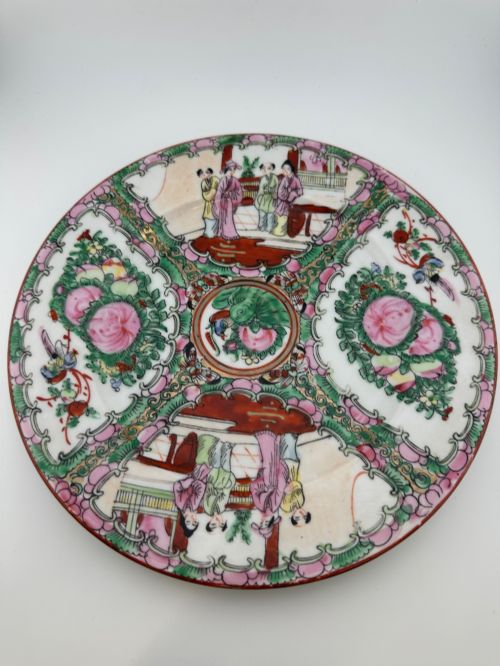
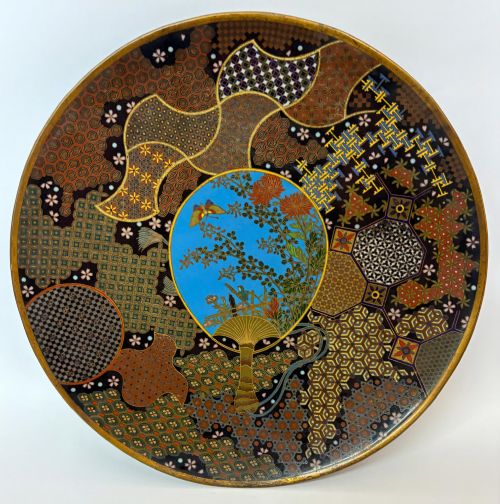


Japanese Enamel Display Platter
A japanese enamel display platter brings the meticulous metalwork and ceramic traditions of the Meiji and Edo periods straight to the wall or cabinet.
Japanese Enamel Display Platter
The most common examples encountered on this page date from the Meiji period, alongside select pieces from the late Edo period. They take the form of broad circular plates, often spanning significant diameters to showcase intricate subject matter.
Motive work across these platters draws heavily from traditional iconography, displaying rendered subjects such as dragons, koi fish, phoenixes, owls, and botanical arrangements like chrysanthemums. Certain pieces incorporate Buddhist figures or Mount Fuji within their compositional fields.
How They Were Made
Makers constructed these works using copper, brass, bronze, and porcelain as foundational bodies. Cloisonne enamel techniques dominate the selection, wherein metal wires create cellular grids that are subsequently filled with vitreous pastes and fired.
Alternative items utilise hand painted ceramic techniques, specifically associated with Kutani and Imari traditions on porcelain bodies. Totai shippo examples introduce enamel applied over porcelain surfaces to imitate cloisonne tree bark textures.
Object forms focus on decorative chargers, shallow bowls, and trays adorned with dragons, koi, birds, and botanical motifs.
What Varies in Quality
Quality rests upon the precision of the wirework and the complexity of the pictorial subject. Masterpiece items demonstrate exceptionally fine wire deployment and deeply layered enamel shading that bring natural or mythical scenes into sharp relief.
Scale and artist signatures also separate standard decorative ware from superior examples. Larger dimensions combined with signed panels indicate a higher degree of workshop ambition and technical execution.
The Japanese Enamel Display Platter Glossary
- Cloisonne Enamel
- A metalwork technique where fine wires form raised barriers on a copper or brass body, creating compartments for coloured glass paste. Firing fuses the enamel to the metal framework.
- Totai Shippo
- A specific Japanese technique involving cloisonne enamel applied directly onto a porcelain base rather than metal. This method produces unique textured finishes resembling tree bark.
- Charger
- A large decorative plate intended for display on a wall or sideboard rather than for serving food. These pieces form the structural core of the platter selection.
- Kutani
- A style of Japanese coloured porcelain characterised by hand painted pictorial scenes. These items utilise rich palettes often incorporating red and gold pigments.
- Imari
- A traditional Japanese porcelain style featuring distinct underglaze blue and overglaze red and gilt decoration. These wares originate from the town of Arita.
- Meiji Period
- The era of Japanese history lasting from eighteen sixty-eight to nineteen twelve, noted for intense artistic output and technical refinement in metalwork. Pieces from this time frequently carry workshop signatures.
Japanese Enamel Display Platter: Frequently Asked Questions
What is a japanese enamel display platter?
It is a large decorative vessel, typically a charger or shallow bowl, made in Japan during the nineteenth or early twentieth century. These objects use cloisonne enamel or hand painted porcelain to display detailed natural and mythical scenes.
They were created specifically for display rather than dining use. Artisans employed copper, brass, and porcelain bases to build elaborate pictorial surfaces.
How do I date a cloisonne charger?
Dating relies on stylistic shifts and manufacturing methods seen across the Meiji and Edo periods. Earlier nineteenth century pieces often feature heavier brass bases and distinct colour palettes compared to later works.
Signatures on the reverse or within the design field also help establish the workshop origin. Examining the fineness of the wirework provides further clues to the period of manufacture.
Where should I display these platters?
These platters suit placement on dedicated wall brackets, sturdy plate stands, or flat cabinet surfaces. Their substantial diameters and vibrant motifs make them effective focal points in a room.
Ensure adequate support is used given the weight of larger copper and enamel examples. Position them away from direct, harsh sunlight to protect the enamel colours over time.
Are these pieces signed by artists?
Certain advanced examples carry artist signatures or workshop marks embedded in the enamel or stamped on the base. These signatures denote pieces produced by skilled makers of the period.
Unsigned chargers remain common and represent the broader output of Japanese metalwork studios. Both signed and unsigned items display the same fundamental manufacturing techniques.