





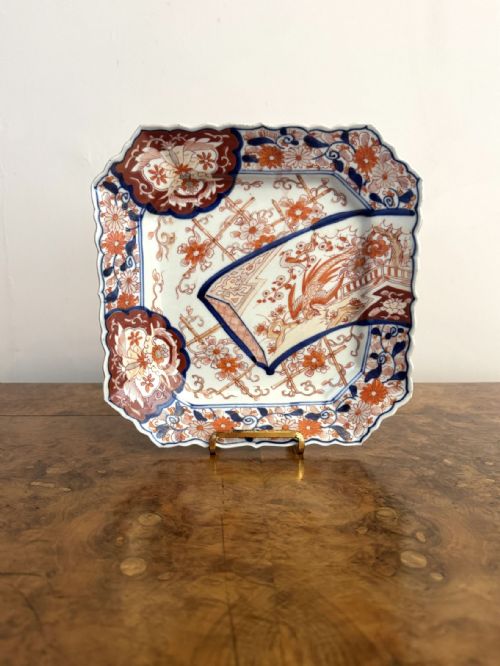


Meiji Imari Ceramic Dish
A meiji imari ceramic dish brings vibrant hand-painted colour and intricate design to a table, combining traditional Japanese artistry with enduring porcelain durability.
Meiji Imari Ceramic Dish
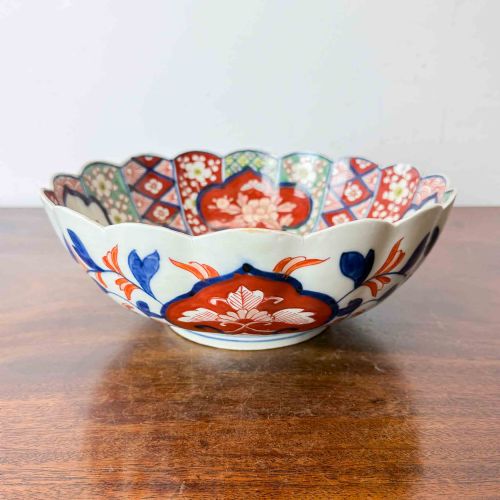
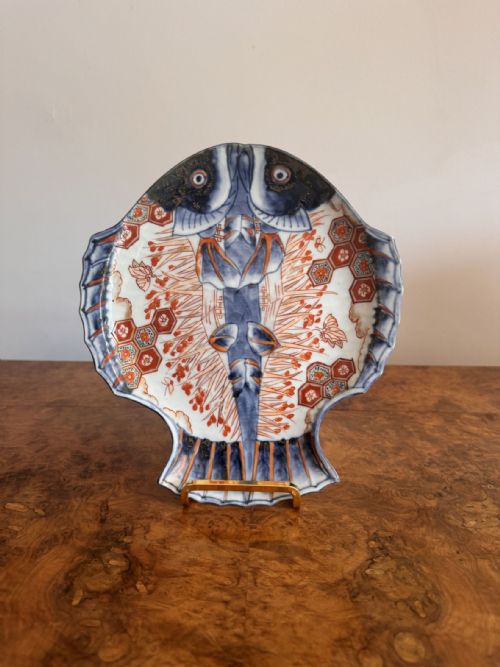
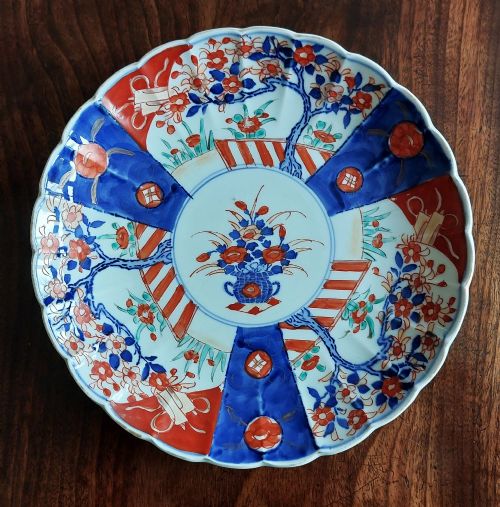
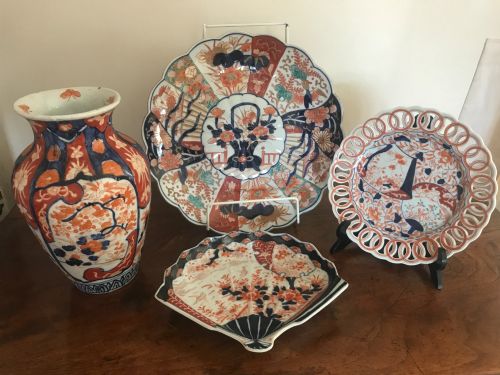
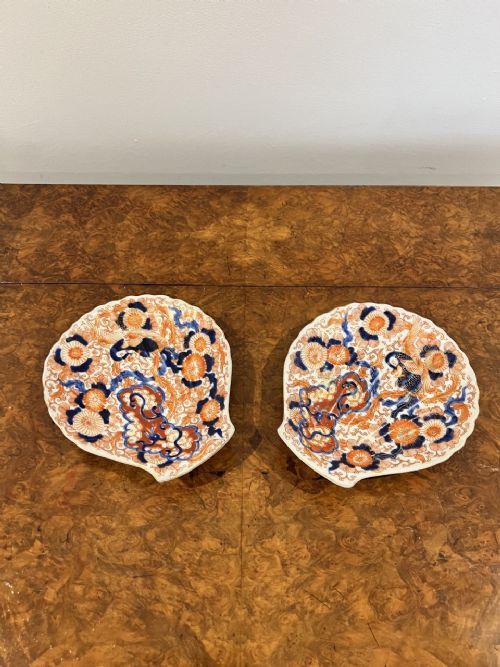
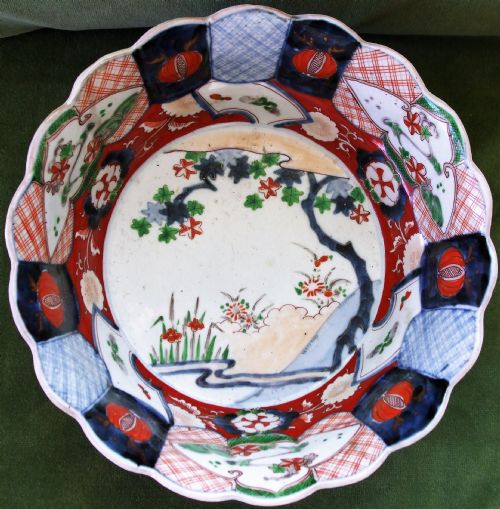
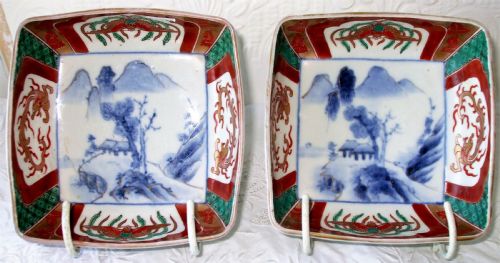
A meiji imari ceramic dish represents a distinct category of decorative tableware originating from Japan during the Meiji period and the wider nineteenth century. These objects include chargers, bowls, and plates shaped in circular, oval, square, scallop, shell, and fish forms.
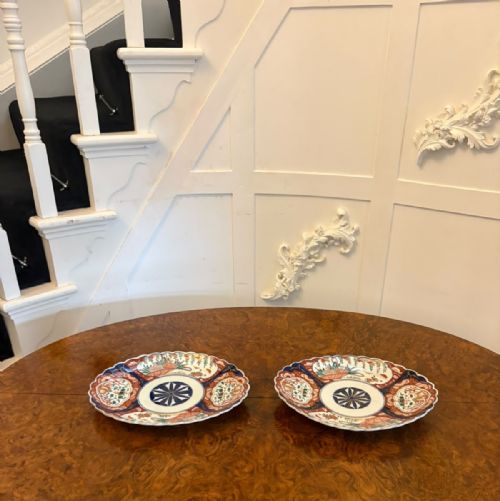
The pieces seen on this page span the late nineteenth century and the early twentieth century, taking the form of individual plates, matched pairs, and larger collections. Buyers encounter diverse decorative motifs featuring floral patterns and exotic birds rendered across porcelain surfaces.
How they were made
The physical foundation relies on hard-paste porcelain shaped into dishes, bowls, and chargers before undergoing high-temperature firing. Cobalt underglaze provides the deep blue baseline pigmentation characteristic of the ware.
Enamel colours and gold leaf or gilding are applied over the glaze in secondary decorative phases to build up intricate patterns. Artisans execute hand-painted floral and bird designs directly onto the porcelain body.
Some nineteenth-century makers turned flat porcelain into swimming fish and fluted shells, proving dinnerware could happily swim upstream.
What varies in quality
The standard of painting on a meiji imari ceramic dish separates ordinary production from superior examples, with finer pieces displaying precise brushwork and balanced compositions. The complexity of the moulded form, such as scalloped edges, fish shapes, or shell contours, also influences the character of the object.
The preservation of the overglaze enamel and gold leaf affects the visual impact of the design. Greater depth in the cobalt underglaze and careful application of gilding distinguish the more accomplished pieces in this category.
The Meiji Imari Ceramic Dish Glossary
- Imari
- A style of Japanese porcelain decorated in cobalt blue, iron red, and gold. It takes its port of export name from the town of Imari in Saga Prefecture.
- Meiji Period
- The era in Japanese history spanning from 1868 to 1912, marked by the reign of Emperor Meiji and increased international trade in ceramics.
- Charger
- A large decorative plate intended for display rather than standard dining use. These pieces often serve as central wall or table ornaments.
- Cobalt Underglaze
- A blue pigment applied to ceramic bodies beneath a transparent glaze before firing. It withstands high temperatures without losing colour definition.
- Overglaze Enamel
- Coloured glass decoration fused to the surface of a previously fired and glazed ceramic piece during a lower temperature secondary firing.
Meiji Imari Ceramic Dish: Frequently Asked Questions
What is a meiji imari ceramic dish?
A meiji imari ceramic dish is a porcelain plate, bowl, or charger produced in Japan during the late nineteenth or early twentieth century. These items are recognised by their distinctive painted decoration.
Such objects combine cobalt blue underglaze with red enamel and gilding to create intricate floral and bird designs.
How were these dishes used originally?
Many of these pieces functioned as decorative display items rather than utilitarian tableware. Large chargers and scalloped plates were often shown on walls or surfaces.
Smaller bowls and plates saw service in domestic settings, though their intricate hand-painted designs made them prized ornamental objects.
How do I care for antique porcelain?
Antique porcelain requires gentle handling and manual washing using mild soap and tepid water. Avoid harsh chemical detergents that can damage surface gilding and enamels.
Keep pieces away from sudden temperature shifts and direct heat sources to protect the historic glaze and structural integrity.
How can I tell the period?
Dating relies on stylistic indicators, manufacturing techniques, and recorded production eras such as the Meiji period or late nineteenth century. Examination of the porcelain body and pigment application provides further context.
Comparing forms like square plates, shell shapes, and fish dishes against documented examples helps confirm the timeframe.