




Gilt Porcelain Imari Bowl
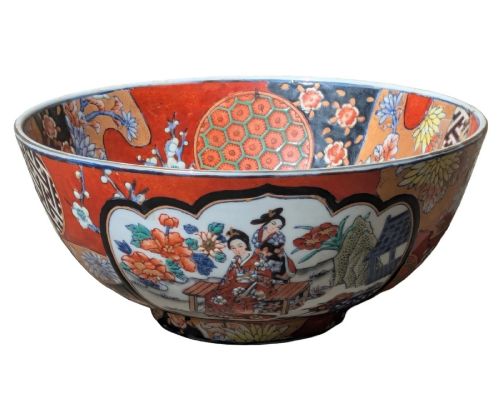
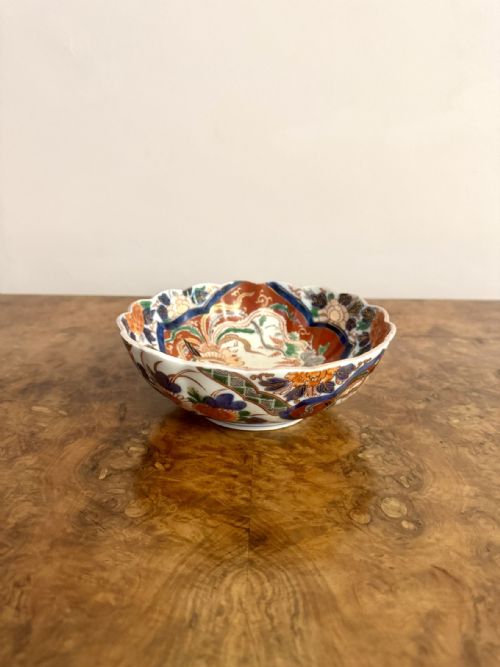
A gilt porcelain imari bowl brings rich cobalt blue and vibrant enamel decoration together with shining gold leaf.
Gilt Porcelain Imari Bowl
A gilt porcelain imari bowl unites traditional Japanese and European ceramic traditions in domestic decorative tableware. These pieces range from Japanese imports originating in the Meiji and Showa periods to English interpretations produced by Victorian and Regency potteries.
The form appears most frequently on this page as a decorative bowl or centrepiece, alongside complete tea services and sugar bowls. Buyers will encounter both deep decorative vessels and shallow chargers shaped for display or formal dining use.
Originating across the nineteenth and early twentieth centuries, these bowls demonstrate the enduring cross-cultural appeal of Japanese imari palettes combined with European gilding techniques. Each piece reflects the specific manufacturing standards of its period of origin, whether Japanese export ware or English bone china.
How they were made
Makers shaped these vessels from porcelain, bone china, and soft-paste porcelain, firing the ceramic body to create a durable base for decoration. Artisans then applied underglaze cobalt blue alongside colourful enamel pigments to build up the characteristic imari design.
Gold leaf and gilding were meticulously painted onto the surface, often highlighting rims, handles, and intricate motifs. This final application required precise hand-brushing before a secondary low-temperature fixative firing.
Gilt Porcelain Imari Bowl Retail Price Guide 2026
Typical asking prices for gilt porcelain imari bowl among the pieces listed under this phrase on Sellingantiques today, from the lower quarter to the upper quarter. They describe what is for sale here now, not the wider market.
Materials recorded across these items include enamel, bone china, soft-paste porcelain, and gold leaf.
What varies in quality
The refinement of the painted enamel and the density of the gold leaf application distinguish finer examples from standard production. Artisans who executed crisper underglaze cobalt lines and more substantial gilding achieved a greater visual depth across the surface of the bowl.
The weight and purity of the porcelain body, whether hard-paste Japanese export porcelain or English bone china, dictate the structural integrity and resonance of the vessel. Superior hand-painted execution elevates individual decorative bowls above mass-produced counterparts.
Royal Crown Derby·Royal Davenport·Flight Barr And Barr Worcester
The Gilt Porcelain Imari Bowl Glossary
- Imari
- A style of ceramic decoration originating in Japan, characterised by a palette of cobalt blue, iron red, and gold. This aesthetic heavily influenced European porcelain manufacturers throughout the nineteenth century.
- Gilding
- The application of gold leaf or gold dust to the surface of porcelain. It provides a metallic accent that catches the light around the painted motifs.
- Soft-paste porcelain
- A ceramic composition containing clay and glass frit, fired at lower temperatures than hard-paste porcelain. It produces a slightly warmer texture often found in earlier English tableware.
- Bone china
- A type of porcelain incorporating bone ash into the paste, increasing strength and translucency. English makers utilised this material extensively for nineteenth-century tea services.
- Centrepiece
- A large decorative vessel placed in the middle of a table or sideboard. These larger bowls command visual attention within a dining arrangement.
Gilt Porcelain Imari Bowl: Frequently Asked Questions
What is a gilt porcelain imari bowl?
A gilt porcelain imari bowl is a decorative ceramic vessel featuring traditional cobalt blue and enamel patterns accented with gold leaf. These pieces originate from both Japanese export workshops and English porcelain manufacturers.
Such bowls served both ornamental display functions and practical table uses within period homes, combining distinct cultural decorative styles.
How do I date an imari bowl?
Dating relies on examining the ceramic body, maker marks, and stylistic markers associated with periods like the Meiji era or Victorian reign. Japanese export pieces often reflect specific imperial periods, while English equivalents bear factory signatures.
Material composition, such as the use of soft-paste porcelain versus bone china, also helps establish the era of manufacture.
Were these bowls used daily?
Many bowls formed part of larger afternoon tea services or tableware sets intended for formal entertaining rather than rough daily use. Sugar bowls and tea sets saw regular service in middle and upper-class households.
Larger decorative bowls and chargers were typically reserved for display on sideboards and centre tables.
How do I display an imari bowl?
These bowls suit placement on wooden sideboards, mantelpieces, or dining tables where their reflective gilding catches natural light. Pairing them with complementary porcelain or placing them as a central focal point highlights their intricate patterns.
Their vibrant cobalt and red enamels contrast well against neutral interior backgrounds.