


Meiji Enamel Plate
When you search for a meiji enamel plate, you are looking at Japanese decorative chargers and trays from the late nineteenth century.
Meiji Enamel Plate
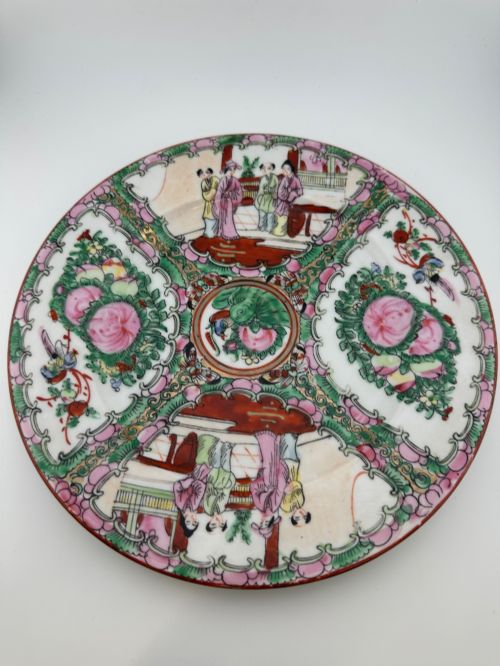
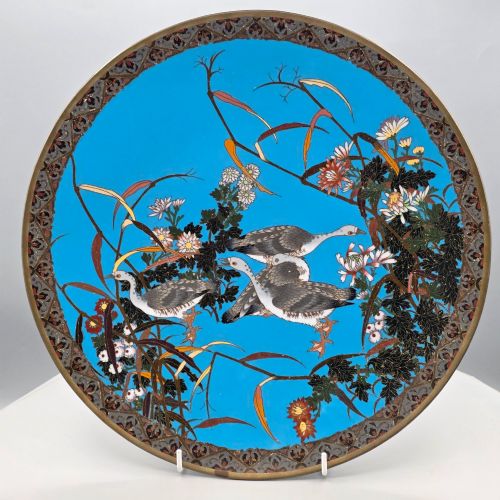
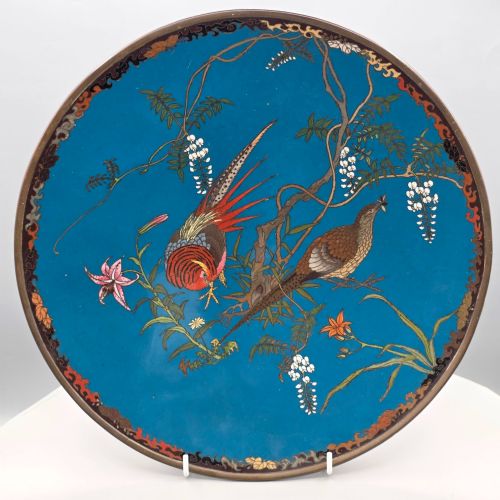
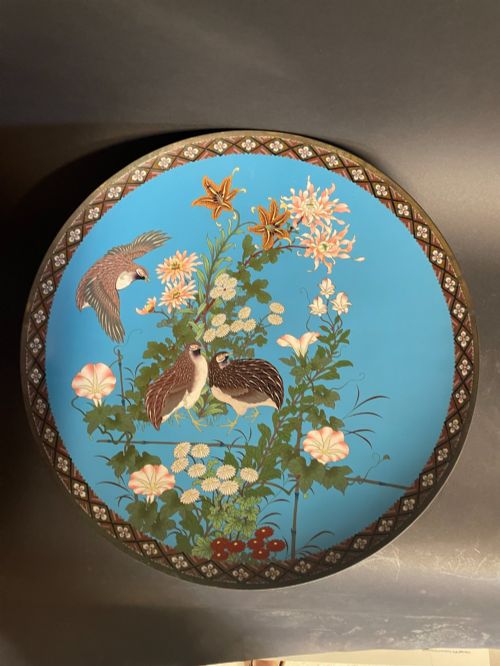
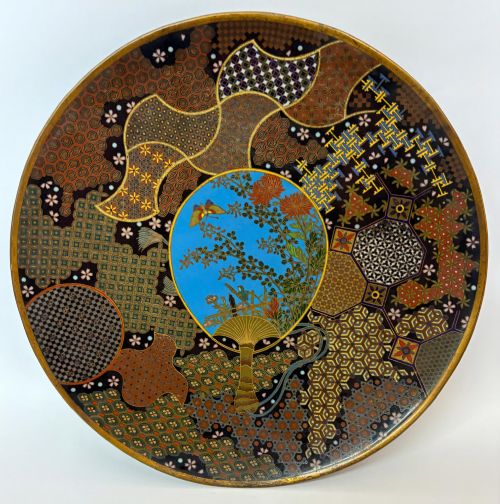
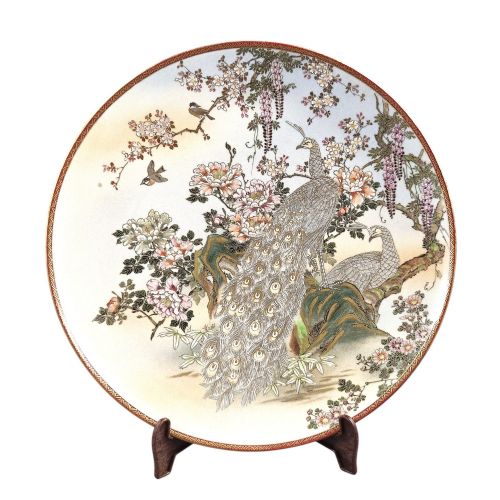
A meiji enamel plate generally takes the form of a large decorative charger, tray, or dish made during the Meiji period. The selection on this page centres on Japanese metalwork and ceramics decorated with cloisonne enamel, kutani, and satsuma wares.
The objects span several decades from the eighteen-sixties to the early twentieth century, reflecting the shift in production methods during the Meiji era. Many examples display detailed imagery of birds, dragons, landscapes, and figures.
Buyers will encounter circular chargers alongside square and octagonal trays. These pieces served primarily for display rather than domestic service.
How they were made
Metalwork pieces utilise a copper or brass base shaped into plates and chargers, onto which thin wire cloisons are soldered to form intricate compartments. These cells are filled with coloured enamel pastes and fired multiple times in a kiln before being polished to a smooth finish.
Ceramic variations such as totai shippo apply cloisonne enamel directly onto a porcelain body, sometimes mimicking tree bark textures. Other pieces rely on hand-painted kutani and satsuma earthenware glazed with detailed moriage decoration.
Several Meiji plates choose unusual subjects, featuring detailed frogs alongside butterflies, leaping koi, and leaping shrimp.
What varies in quality
Quality rests on the precision of the wirework and the complexity of the enamel palette. Pieces with tighter cloisonne grids and intricate pictorial subjects like dragons, phoenixes, or landscapes demand greater technical skill.
Signatures from noted workshops or artists introduce a layer of distinction. The overall finish, from the smoothness of the polished enamel surface to the depth of the metal base, separates standard production items from masterworks.
Shuzan for Yasuda·Meizan·Kinkozan
The Meiji Enamel Plate Glossary
- Cloisonne enamel
- A metalwork technique where thin wires are soldered to a base to create cells filled with enamel paste. This method defines the majority of the plates found in this collection.
- Charger
- A large decorative plate intended for display on a wall or stand rather than for dining. These objects frequently measure over thirty centimetres across.
- Totai shippo
- Cloisonne enamel applied over a porcelain or earthenware body instead of a metal base. This technique often incorporates textured surfaces resembling tree bark.
- Moriage
- A type of raised enamel or slip decoration used on Japanese ceramics to create a textured, three-dimensional effect. It appears frequently on satsuma wares from the period.
- Kutani
- A style of Japanese porcelain known for bold hand-painted designs and rich colour palettes. These pieces often feature figurative or natural scenes.
Meiji Enamel Plate: Frequently Asked Questions
How do I hang a heavy charger?
Large plates require robust, adjustable wall hangers designed to support the weight of copper or porcelain bodies without slipping.
Ensure the fixings are secured safely into wall studs rather than plaster alone to prevent accidental damage.
Were these plates used for dining?
Most pieces function entirely as decorative objects rather than tableware. Their intricate wirework and delicate enamel surfaces are unsuited to daily use.
Larger chargers were traditionally displayed on stands or hung on walls to showcase the artistry of the period.
How should I clean my enamel plate?
Dust the surface gently with a soft, dry cloth to remove particles. Avoid liquid cleaners and chemical solvents entirely.
Water and harsh agents can degrade exposed metal edges and older adhesives on fragile ceramic bodies.
What does a signature indicate?
Signatures on the reverse or base often point to specific workshops or master artisans operating during the Meiji era. These marks help historians trace the origin of particular decorative styles.
Not all pieces carry signatures, as many high-quality items left workshops unmarked.