


Meiji Cloisonne Charger
When you handle a meiji cloisonne charger, you hold a heavy metal disc containing intricate wirework cells filled with coloured enamel.
Meiji Cloisonne Charger
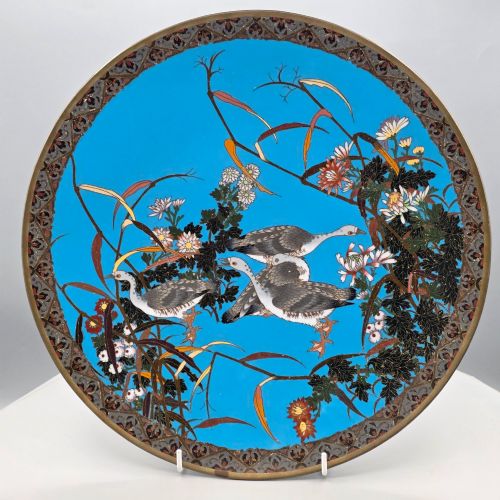
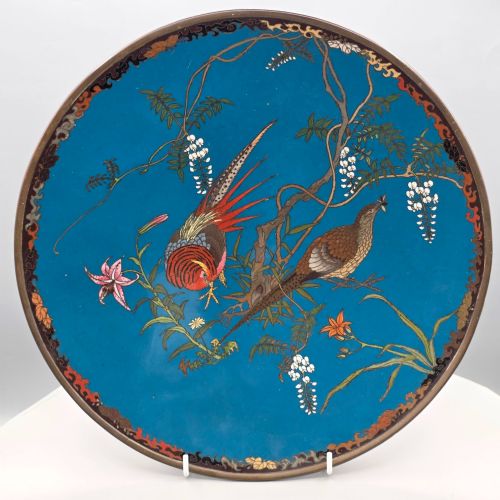
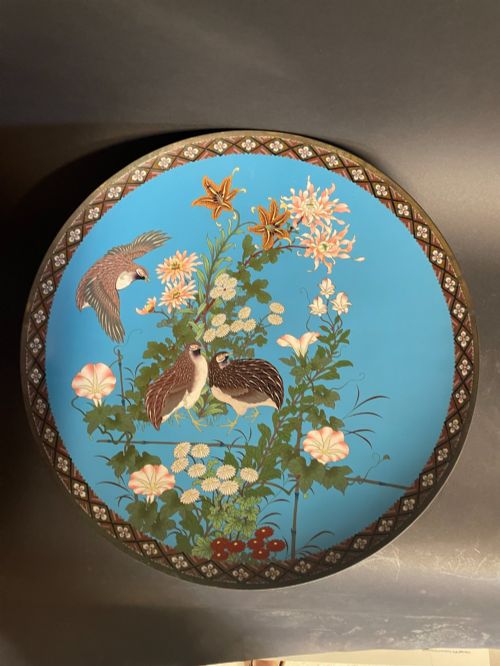
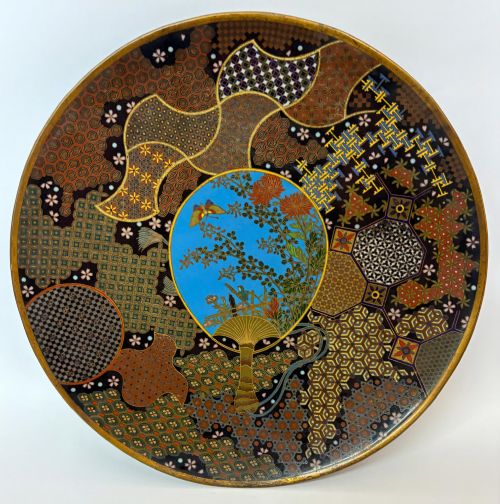
A meiji cloisonne charger is a large decorative plate, tray or dish originating from Japan during the nineteenth century, including the Meiji period and late Edo period. These vessels display flat or gently sloping surfaces designed for display rather than dining, often measuring over thirty centimetres across.
The objects frequently depict natural subjects such as birds, dragons, flowers and landscapes, alongside mythological figures like Buddhas and samurai. Most examples encountered here date from the 1860s through to 1900, showing substantial craftsmanship from workshops in regions like Nagoya.
How they were made
Artisans constructed the foundation using copper, brass, bronze or occasionally porcelain for Totai Shippo pieces, shaping them into plates and trays. Thin brass or copper wire was then bent into complex patterns to form individual cells, known as cloisons, across the metal surface.
Enamel paste filled these compartments before the piece underwent multiple firings in a kiln and extensive polishing to achieve a smooth finish. Some variants utilise a porcelain body coated in simulated tree bark texture alongside traditional enamel work.
The listings span six distinct decades from the 1860s to 1900, incorporating copper, brass, bronze, porcelain and enamel.
What varies in quality
The refinement of the wirework largely determines the caliber of a piece, with finer lines permitting more complex pictorial details such as feathers, scales and facial expressions. The density and subtlety of the coloured enamels also separate standard decorative items from masterworks.
Scale and ambition set the best examples apart, particularly exceptionally large chargers or square trays featuring difficult motifs like dragons, Mount Fuji or multiple birds. Signed works by notable makers indicate a higher tier of workshop production.
Kinkozan
The Meiji Cloisonne Charger Glossary
- Cloisonne
- Enamel decoration technique where metal wire forms small compartments on a base before paste is applied and fired. This method creates the distinctive cellular grid visible across the surface.
- Charger
- A large ornamental plate or platter intended for display on a wall, cabinet or stand. These objects dominate the available decorative forms.
- Totai Shippo
- Japanese ware utilising a porcelain body decorated with cloisonne enamel, often mimicking organic textures like tree bark. It combines ceramic shaping with metalwork cells.
- Ho-o
- A mythical bird or phoenix frequently depicted in Japanese design, symbolising auspicious occasions and imperial authority. These figures appear prominently on numerous plates.
- Mon
- A Japanese heraldic badge or emblem used to identify families, clans or shrines. They provide focal points within decorative panel borders.
Meiji Cloisonne Charger: Frequently Asked Questions
How were meiji cloisonne chargers displayed?
These large plates were typically exhibited on wooden stands or mounted on walls to showcase their intricate pictorial designs.
Their substantial weight and decorative subjects meant they served purely as ornamental centerpieces within domestic interiors.
What subjects appear on these chargers?
Common motifs include natural elements such as cranes, geese, koi, irises and chrysanthemums alongside dramatic landscapes featuring Mount Fuji.
Mythological themes involving dragons, ho-o birds, samurai and Buddhas also feature heavily across nineteenth-century examples.
How do you distinguish earlier pieces?
Earlier examples dating from the 1860s and 1870s often connect to the late Edo and early Meiji periods, displaying specific wire techniques and heavier metal foundations.
Later works towards 1900 tend to exhibit finer detail and different colour palettes developed as workshop production methods evolved.
What is Totai Shippo?
Totai Shippo describes items built on a porcelain core rather than a standard metal base of copper or brass.
These pieces frequently incorporate textured surfaces resembling tree bark alongside traditional enamel cloisonne compartments.