
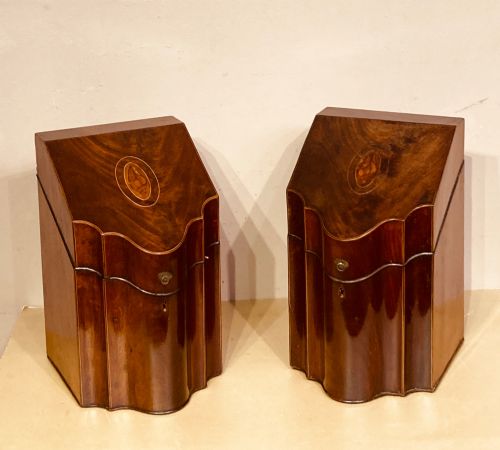
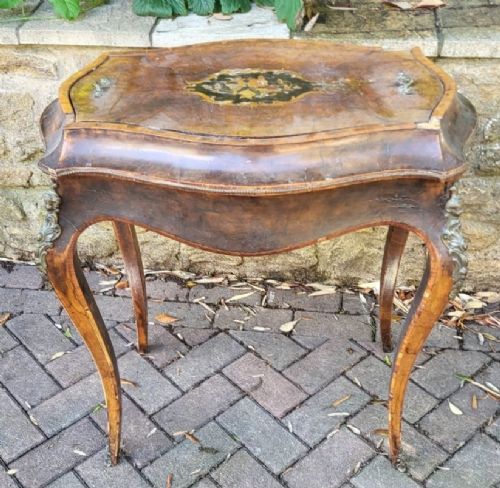
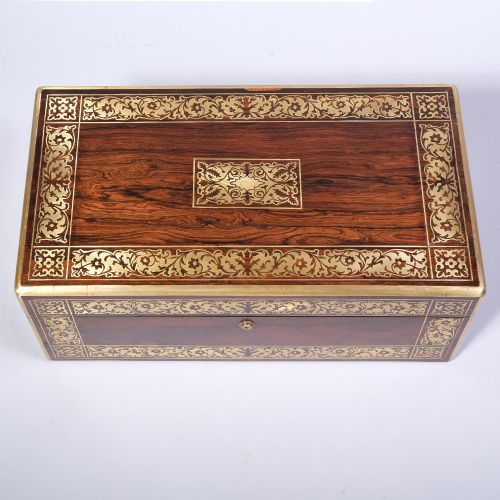
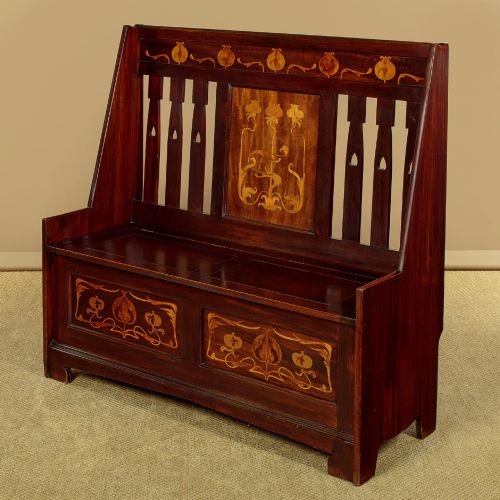
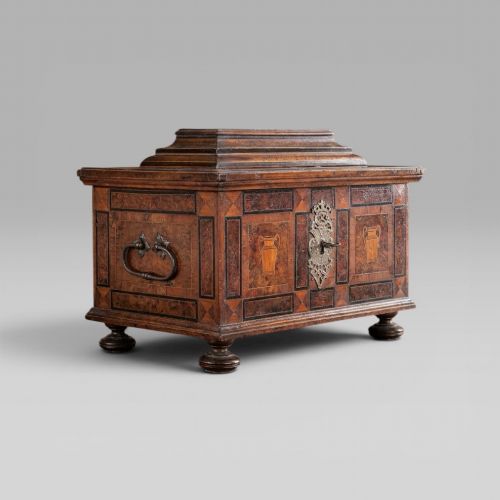
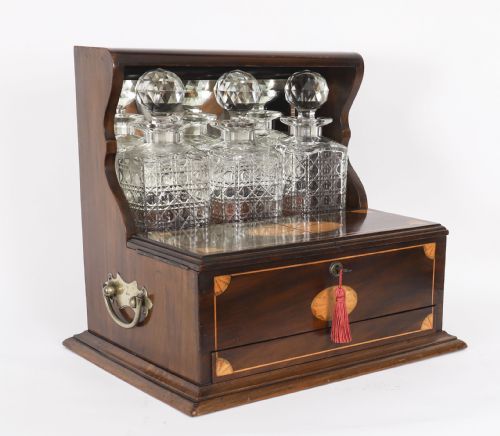
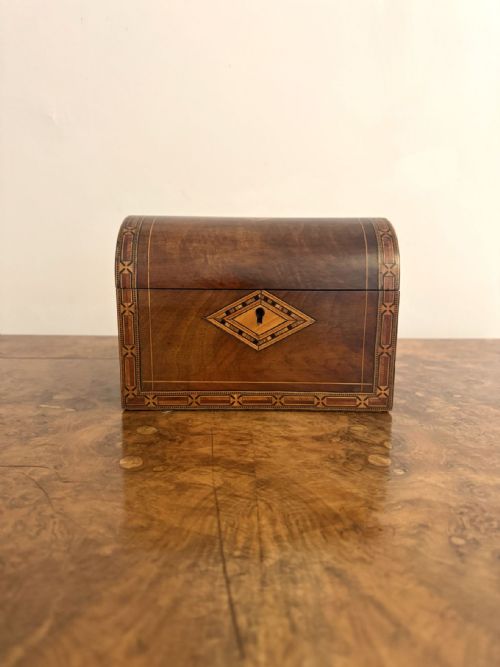
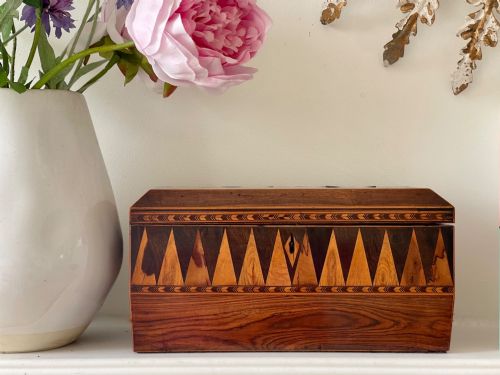
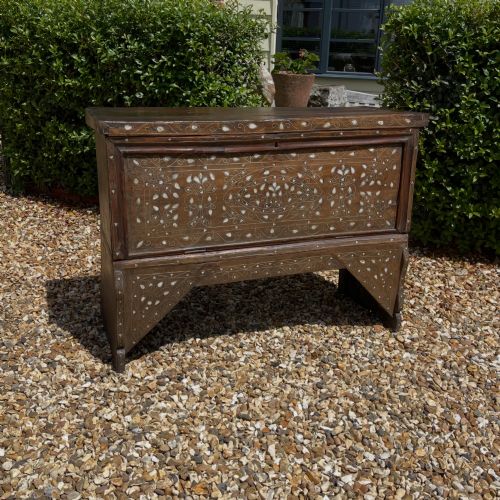

Marquetry Inlaid Wooden Box
These marquetry inlaid wooden box pieces combine meticulous craftsmanship with practical storage, offering a tangible link to centuries of decorative woodworking.
Marquetry Inlaid Wooden Box
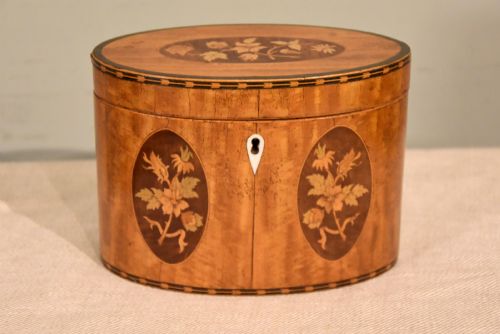
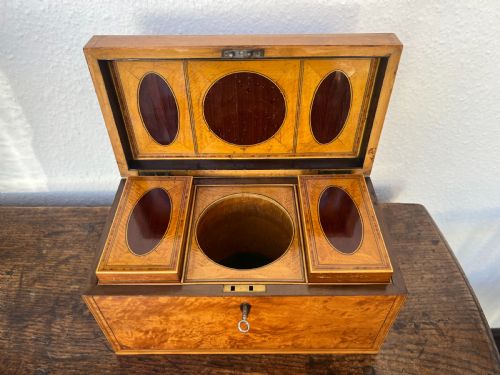
A marquetry inlaid wooden box serves multiple functional purposes, encompassing tea caddies, writing boxes, stationery boxes, and decorative caskets. Buyers searching this phrase encounter containers designed to hold specific valuables, from loose leaf tea to correspondence and jewellery.
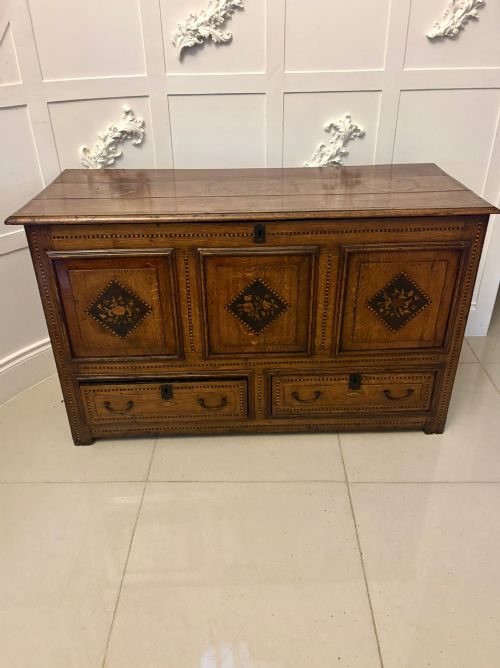
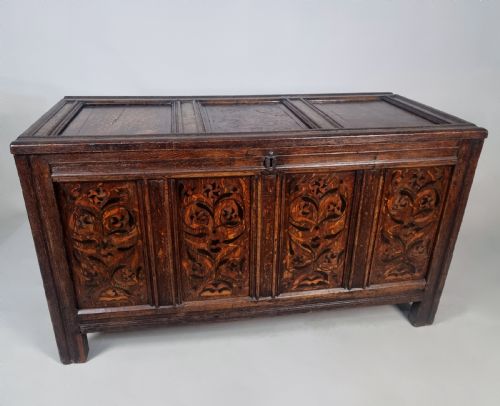
The versions most commonly met on this page span the Georgian, Victorian, and nineteenth-century periods, alongside earlier seventeenth-century coffers. These items frequently display distinct regional characteristics, such as Tunbridge Ware detailing or geometric wood inlay.
Forms range from compact snuff boxes and tea caddies to larger tantalus sets, games compendiums, and document chests. Each object reflects the prevailing interior tastes of its era, utilising domestic and exotic timbers to create patterned surfaces.
How They Were Made
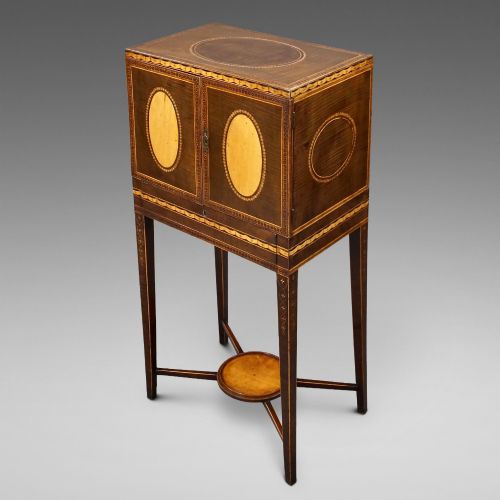
Craftsmen built these containers using sturdy carcass woods like oak, mahogany, walnut, and sycamore, which provided a stable foundation for decorative treatments. Surfaces were then adorned with contrasting veneers including satinwood, rosewood, harewood, and boxwood.
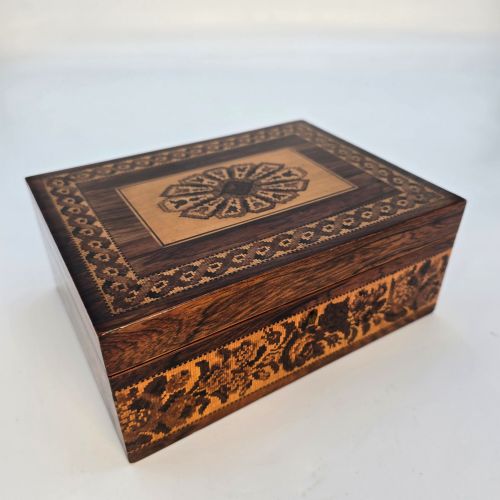
Intricate imagery and geometric patterns were achieved through precise cutting and fitting of wood veneer segments, sometimes supplemented by brass, bone, or shell inlay. Specialised techniques such as Tunbridge Ware mosaic work allowed makers to construct complex pictorial panels from thousands of tiny wood blocks.
A musical chair fitted with a Swiss mechanical movement lets someone sit down to an unexpected tune.
What Varies in Quality
Execution of the veneer work defines the upper tier of these pieces, where individual timber grains align seamlessly and minute details remain crisp. Lesser examples display simpler geometric banding with less precision in the interlocking wood sections.
The sophistication of the internal fittings, such as velvet-lined compartments, concealed drawers, and original crystal decanters or mixing bowls, separates standard containers from superior productions. The choice of base timber and the complexity of the exterior pictorial designs further elevate the standard of the work.
Edmund Nye·James Shoolbred and Co·Henry Hollamby·Langdorff and Fils
The Marquetry Inlaid Wooden Box Glossary
- Marquetry
- The art of applying pieces of veneer to a structural structure to form decorative patterns and pictures. This technique allows artisans to utilise contrasting natural wood colours to build complex pictorial designs.
- Tunbridge Ware
- A distinct form of British wood mosaic work originating from Kent, featuring microscopic wood blocks assembled to create geometric or pictorial motifs. These designs typically cover the exterior surfaces of small boxes and tea caddies.
- Tea Caddy
- A container specifically designed to store dry tea leaves securely, often featuring fitted interior compartments and a locking lid. Wealthy households utilised these boxes to protect an expensive commodity.
- Tantalus
- A locking beverage stand that holds decanters visible while preventing unauthorized access to the contents. The frame secures the stoppers in place until a key is turned.
Marquetry Inlaid Wooden Box: Frequently Asked Questions
What were tea caddies used for?
Tea caddies served to store expensive tea leaves safely under lock and key in the home. Servants or homeowners kept the precious leaves secure from household staff.
Inside, these boxes often featured two compartments for different teas, sometimes flanking a central mixing bowl for combining blends.
How do I date a wooden box?
Dating relies on construction methods, timber choices, and prevailing furniture styles visible across the exterior and interior fittings. Georgian pieces often show simpler mahogany or satinwood elegance, whereas Victorian examples introduce heavier burr walnut and complex Tunbridge ornamentation.
Hardware such as hinges, locks, and escutcheons also provides chronological clues when original to the piece.
What is Tunbridge Ware?
Tunbridge Ware is a specialised form of British woodworking defined by mosaic patterns constructed from thousands of tiny tinted wood blocks. These microscopic tiles form detailed pictorial scenes of castles, flowers, or geometric borders.
Items decorated this way were popular souvenirs and luxury goods during the nineteenth century.
How should I clean my box?
Maintenance requires gentle dusting with a soft, dry cloth to protect the delicate wood veneers and historic polish. Avoid liquid cleaners, moisture, and direct sunlight, which can cause the timber to warp or the old glue to fail.
Application of appropriate wax polish helps preserve the sheen of walnut, rosewood, and mahogany surfaces over time.