
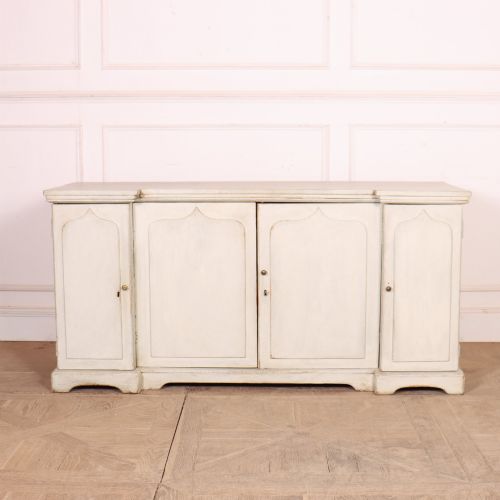
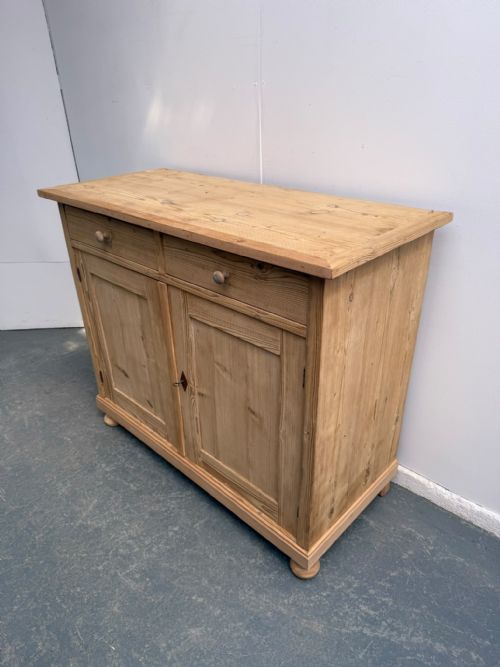
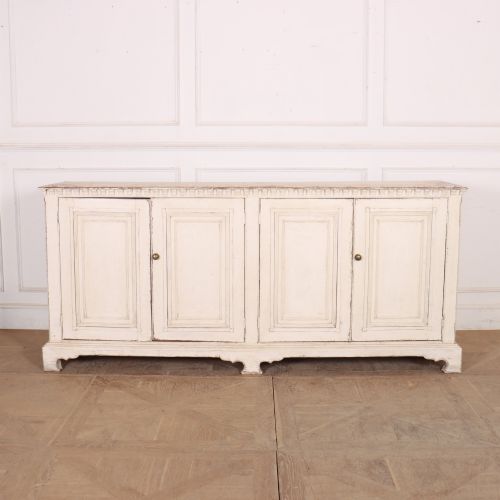
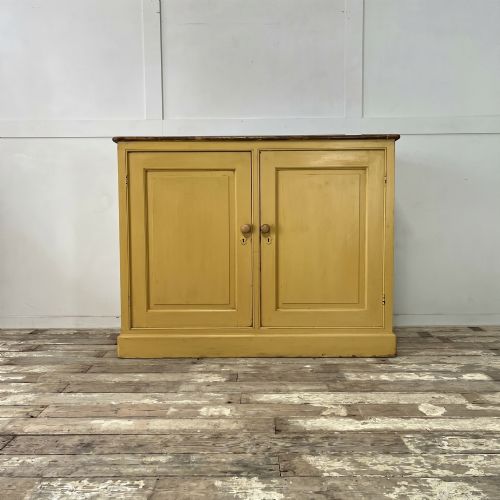


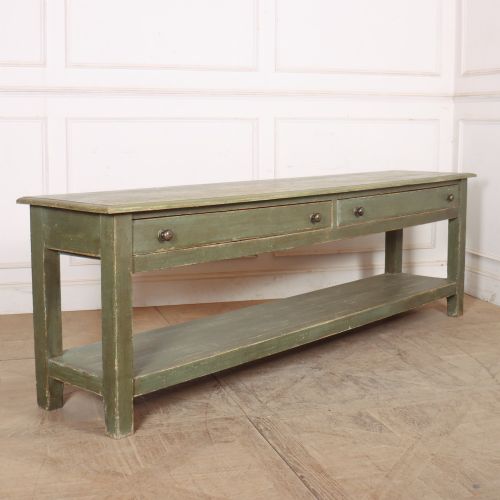


Large Painted Sideboard
A large painted sideboard brings heavy timber presence and generous storage into a room, drawn mostly from nineteenth century English and French country houses.
Large Painted Sideboard
When you search for a large painted sideboard, you encounter substantial utilitarian furniture designed for heavy domestic service, including dresser bases, serving tables, enfilades, and large cupboards. These pieces originate primarily from the nineteenth century, alongside examples from the eighteenth century and the early twentieth century.
The English and French country traditions dominate this selection, manifesting as potboard serving tables, housekeeper cupboards, and bank of drawers units. Pine and oak form the structural core of these items, finished with surface paint that ranges from worn original layers to later decorative coats.
Materials and construction
Carpenters built these pieces using solid timbers such as pine and oak, relying on traditional joinery for heavy daily use in kitchens, sculleries, and dining rooms. Brass hardware often furnished handles, hinges, and key escutcheons on drawers and doors.
Surfaces received layers of paint over wood, sometimes left to weather naturally or stripped down for waxing. The construction prioritised utility, resulting in sturdy frameworks that accommodated potboards, banks of drawers, and deep cupboards.
Forms include potboard serving tables, housekeeper cupboards, enfilades, and multi-drawer shop counters.
Distinctions in quality
The integrity of the original timber and the character of the surface finish distinguish one piece from another. Retaining an early or original painted surface elevates a sideboard, whereas later repainting alters the historical weight of the object.
Proportion and scale dictate the visual balance of these large forms. Pieces with intact brass furniture, sound internal shelving, and uncompromised structural joints hold greater coherence than those altered by later repairs or heavy restoration.
The Large Painted Sideboard Glossary
- Dresser base
- A low cabinet featuring drawers or cupboards beneath a flat top surface, used historically for food preparation and storage in large kitchens.
- Potboard
- An open slatted lower shelf fitted between the legs of a serving table or dresser base, designed originally for storing pots and heavy ceramics.
- Enfilade
- A long sideboard or cabinet with a line of doors or drawers along the front, originating in continental European dining rooms.
- Bread slide
- A pull-out wooden shelf integrated into the framework of a dresser base, traditionally used for cooling loaves of bread.
- Drapers table
- A long counter-height table fitted with numerous drawers, originally utilised in fabric shops before finding a second life as a sideboard.
Large Painted Sideboard: Frequently Asked Questions
Where did large painted sideboards come from?
These pieces originated in the domestic service areas of large English and French country houses, as well as provincial kitchens and shops. They served practical roles in food storage, linen keeping, and general household administration.
Over time, many migrated from working environments into domestic dining rooms and living spaces, retaining their utilitarian proportions and robust construction.
How do I style a large painted sideboard?
A substantial piece like this anchors a room, working well against plain walls where its painted finish can stand out. Balance the heavy timber top with lamps, ceramics, or large framed art.
Utilise the interior cupboards and drawers for dining storage, keeping the surface uncluttered to let the proportions and painted texture speak for themselves.
How do I tell an eighteenth century piece from a nineteenth century one?
Earlier pieces from the eighteenth century often display hand-planed timbers, pegged joints, and different proportions shaped by the tools and hardware of the period. Nineteenth century examples frequently incorporate machine-sawn elements alongside traditional joinery.
Examine the backboards, drawer construction, and fixings for clues about the manufacturing date and any later alterations.
What is the difference between an enfilade and a dresser base?
An enfilade is typically a continental European form featuring a continuous row of doors or drawers across a long front. A dresser base often combines drawers with an open potboard or enclosed cupboards below a flat working surface.
Both serve similar storage functions in a dining space, but their regional origins and internal layouts reflect different domestic traditions.