
Large Kitchen Table
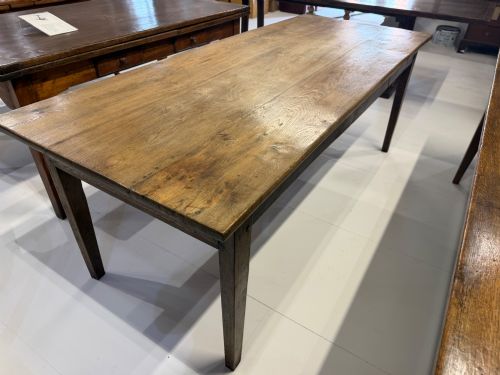
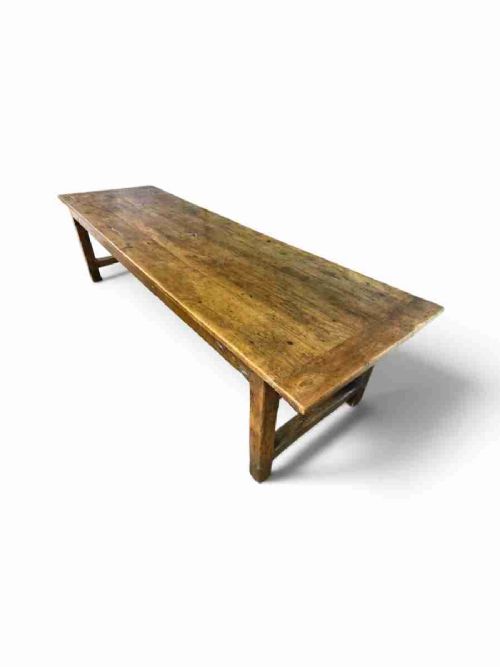
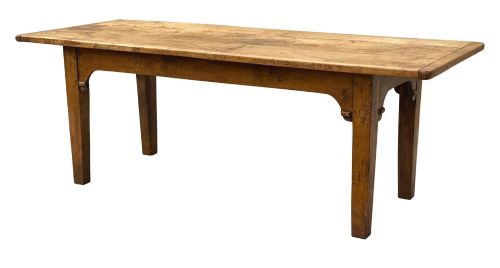
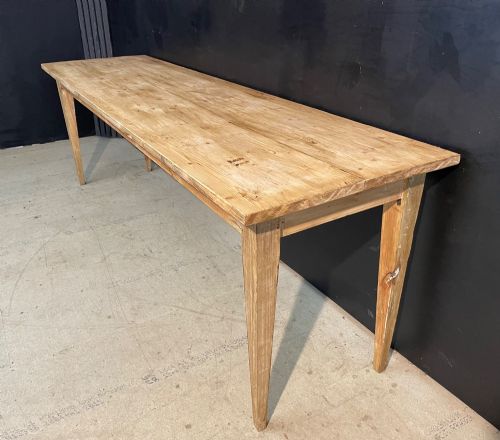
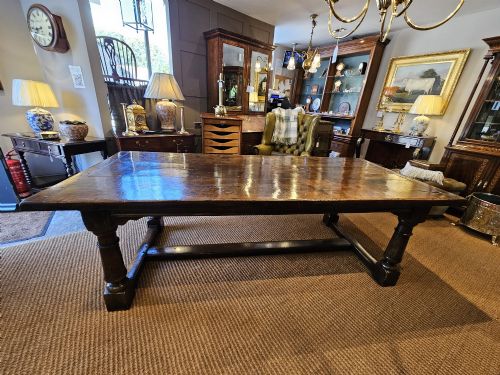
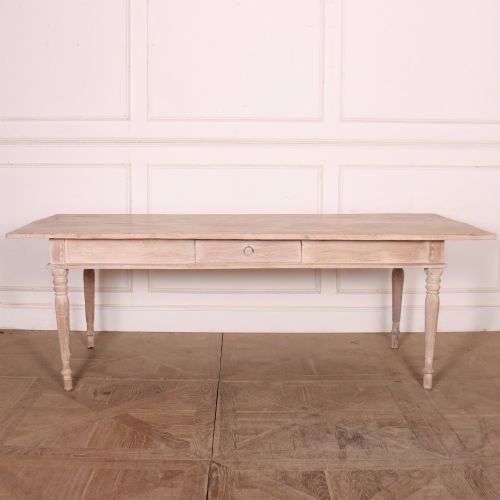
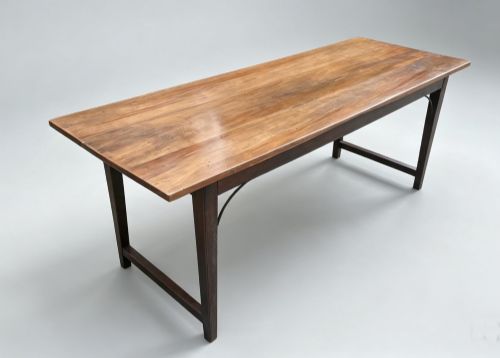
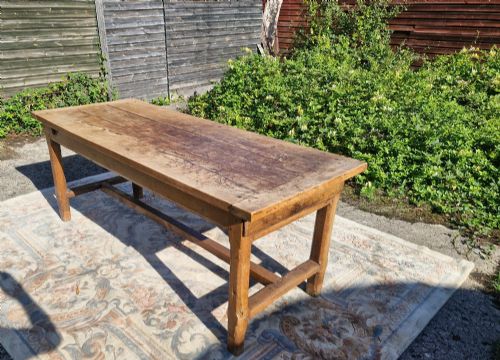
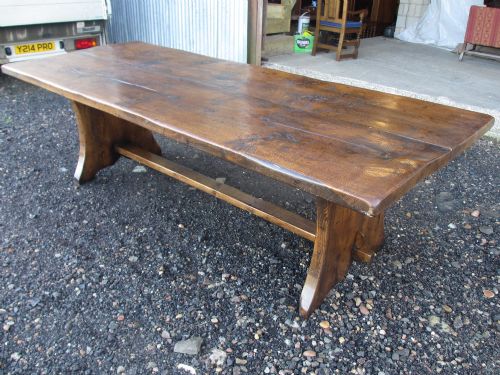
A large kitchen table anchors the entire room, offering the robust timber construction and generous proportions needed for daily domestic life.
Large Kitchen Table
A large kitchen table serves as the primary workspace and gathering place in domestic interiors, drawing on traditional forms designed for heavy daily use. When exploring these listings, buyers encounter substantial furniture built to accommodate multiple diners and active culinary preparation.
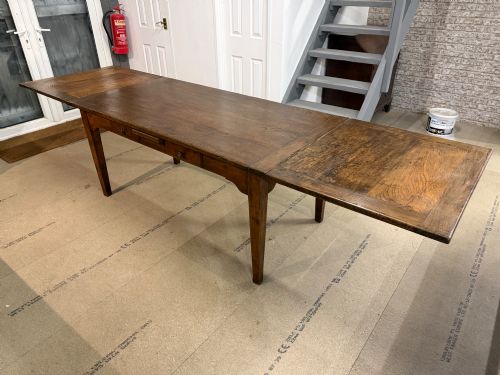
The selection ranges widely across periods, encompassing 18th century examples alongside Victorian, Edwardian, and early 20th century interpretations. Formats include refectory boards, harvest designs, and extending models equipped for varied seating requirements.
Origins span English, French, and Italian workshops, reflecting regional preferences in proportions and leg placement. Many pieces display rustic country or provincial styling, retaining the utilitarian character shaped by their original domestic or workshop environments.
Materials and Construction
Construction relies heavily on durable hardwoods such as oak, elm, and ash, alongside softer timbers like pine used for domestic utility. Timbers were selected for strength and straight grain, often fashioned into single or multi-board table tops supported by sturdy trestles or four-legged frames.
Joining techniques prioritised longevity, utilising pegged mortise and tenon joints to withstand constant movement and weight. Surface finishes typically involve natural wax or oil treatments, though historical painted surfaces and bleached wood finishes frequently appear across French and English examples.
Listings feature prominent 19th century oak and pine examples alongside 18th century pieces.
Judging Quality and Integrity
Quality rests primarily in the integrity of the timber and the permanence of the structure. Tables retaining their original boards without excessive shrinkage or modern timber replacement hold greater authority.
Subtleties of proportion and leg turning distinguish standard workshop output from finer country house commissions. The stability of the underframe and the depth of the timber top dictate how well the piece endures daily service.
The Large Kitchen Table Glossary
- Refectory table
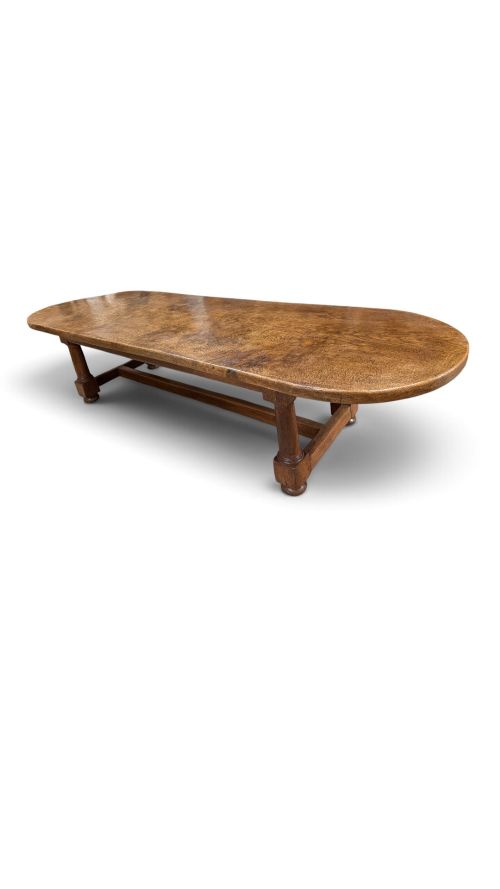
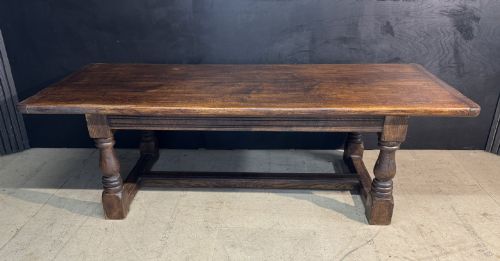
- A long, narrow dining table originally used in monastic refectories. These pieces feature stretcher-supported legs designed to provide stability over long spans.
- Harvest table
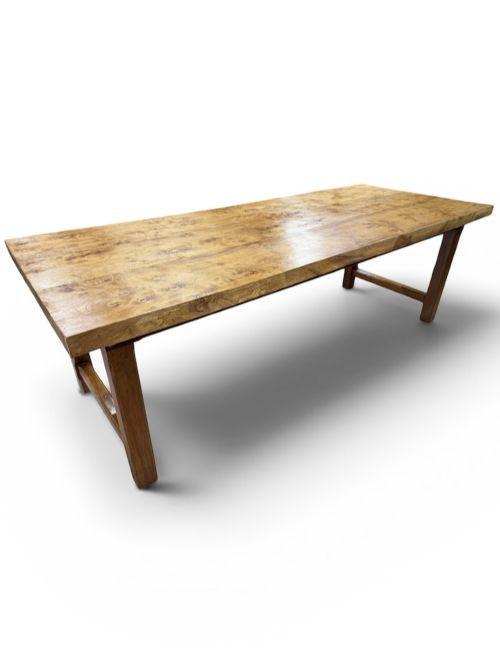
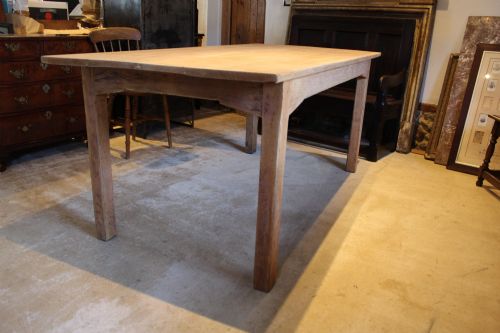
- A utilitarian table traditionally used during seasonal agricultural gatherings. They typically present lighter pine or fruitwood construction with generous length.
- Draw-leaf table
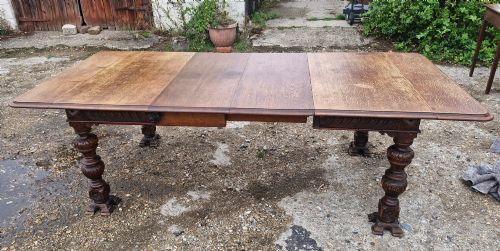
- An extending table incorporating concealed leaves beneath the main top. Users pull these leaves outward to lengthen the surface area instantly.
- Trestle ends
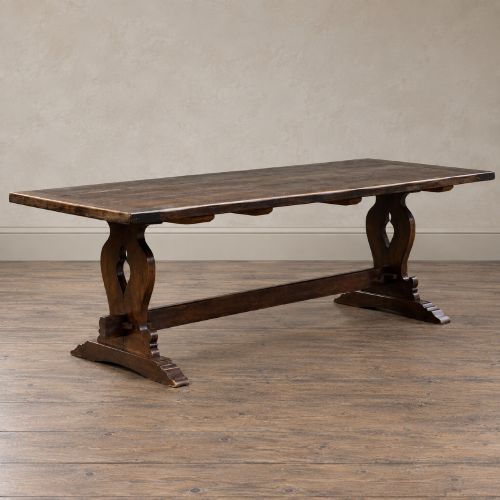
- Support structures comprising vertical posts joined to horizontal feet. This configuration maximises legroom along the length of the table.
- Plank top
- A table surface constructed from parallel boards running the full length. Single plank versions represent a scarcer and more desirable configuration.
Large Kitchen Table: Frequently Asked Questions
How do I choose the right size?
Consider both the available floor space in your room and the number of regular diners you intend to seat. Allow sufficient clearance around the perimeter for chairs to pull out comfortably.
Measure doorways and stairwells carefully prior to purchase, as these substantial timber frames cannot be easily disassembled.
Are these tables suitable for daily use?
These pieces were originally built for heavy domestic labour, making them exceptionally robust for modern family life. Hardwood surfaces handle regular meal preparation and dining with ease.
Routine maintenance involves simple wiping with a damp cloth and occasional waxing to nourish the historic timber grain.
How do I care for antique wood?
Protect the surface from excessive heat and moisture by utilising trivets and placemats during meals. Natural timber responds to humidity changes, so stable room temperatures prevent excessive movement in the boards.
Apply traditional beeswax periodically to maintain the lustre and protect the dry grain of older tables.
What is the difference between refectory and harvest tables?
Refectory tables generally utilise heavier oak frames with low stretchers, originating from formal dining halls and large country houses. They offer a formal architectural presence.
Harvest tables typically employ lighter pine or fruitwood construction intended for seasonal utility, presenting a more casual aesthetic.