


Large Japanese Porcelain Jar
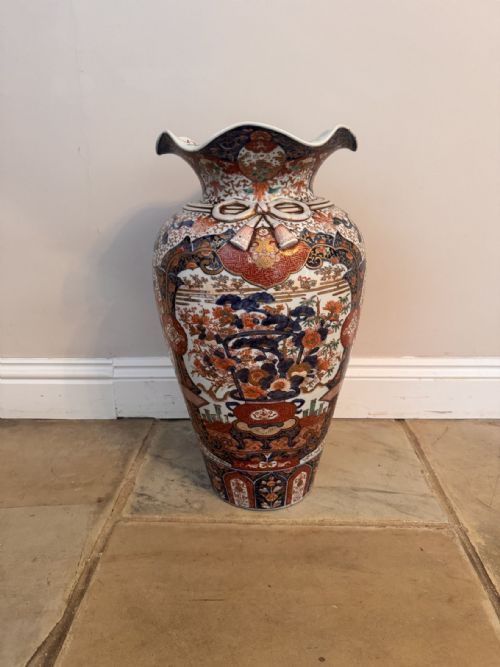
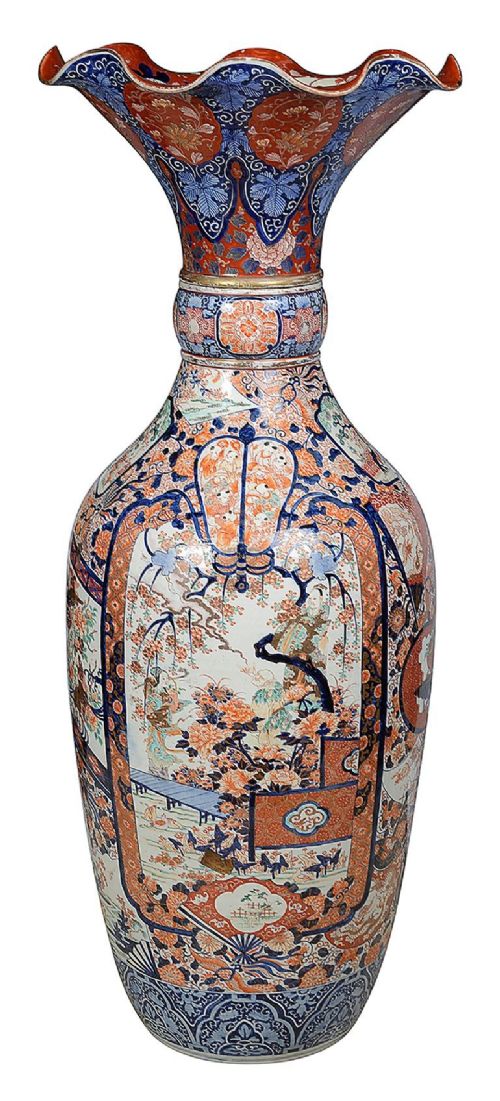
A large japanese porcelain jar brings heavy hand-painted iron-red and cobalt colour into a room, carrying the weight of nineteenth-century kilns.
Large Japanese Porcelain Jar
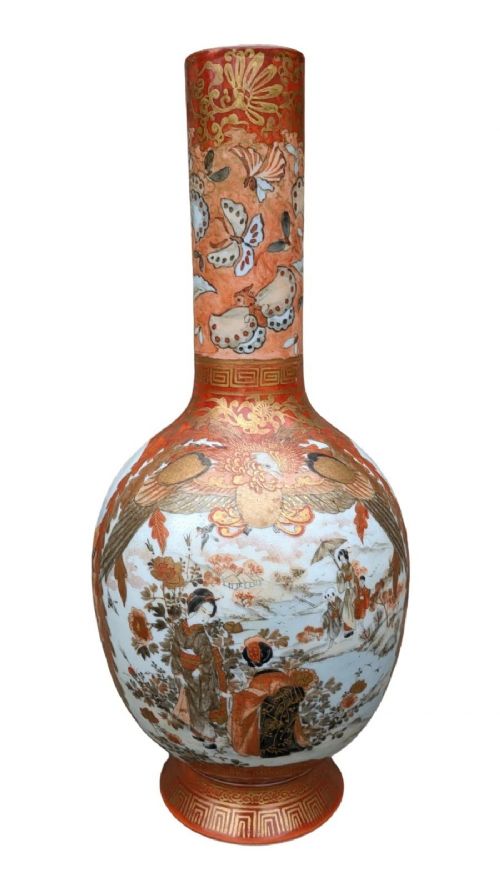
A large japanese porcelain jar typically arrives as an Imari patterned vessel, a Kutani creation, or a Satsuma lidded piece from the nineteenth century. These containers served variously as floor standing vases, ginger jars, lidded koro, and garden jardinières.
Makers produced these substantial vessels during the Meiji and Edo periods, often decorated with elaborate panels, bamboo patterns, or floral motifs. Pieces range from straightforward porcelain cylinders to complex lidded forms equipped with stands or converted to table lamps.
Materials and construction
Potters shaped these works from hard-paste porcelain and earthenware, applying cobalt blue, enamel, and gold leaf over white glazes. Artisans utilised gilding and brass elements to finish lidded jars and mounted vases.
The characteristic palette relies on underglaze blue combined with iron-red enamel and supplementary gilding. Firing took place in traditional kilns, after which detailed hand painting completed the surface decoration.
One particularly spirited nineteenth-century porcelain vessel is catalogued simply as amusing.
Judging the range
Superior examples demonstrate crisp definition in the hand painting and precise control of the Imari palette without blurring of the cobalt or enamel. The weight of the porcelain and the crispness of moulded details on lidded jars separate standard production from exceptional studio output.
Intricacy of the decorative panels and preservation of the gold leaf dictate the upper tier of these vessels. Surface wear on the enamel and chips to heavy porcelain rims distinguish ordinary decorative items from museum-grade pieces.
Makuzu Kozan·Samson
The Large Japanese Porcelain Jar Glossary
- Imari
- A traditional Japanese export style characterised by a distinct palette of cobalt blue, iron-red, and gold on porcelain. This aesthetic dominated nineteenth-century production.
- Kutani
- A style of Japanese pottery and porcelain known for bold colours and intricate pictorial designs. Pieces often feature dense patterns in gold and enamel.
- Satsuma
- A type of Japanese earthenware featuring a pale, ivory crackle-glaze finish. These vessels are frequently decorated with elaborate polychrome and gilt figures.
- Kakiemon
- A refined style of Japanese porcelain featuring asymmetrical enamel decoration on a milky white body. It influenced European potteries profoundly.
Large Japanese Porcelain Jar: Frequently Asked Questions
How do I date a large Japanese jar?
Examine the paste, glaze characteristics, and decorative palette to determine the era. Nineteenth-century examples often display deep cobalt combined with iron-red enamel.
Compare the base treatment and potting style against known Meiji and Edo period manufacturing standards.
Were these jars made for export?
Many large vessels were produced specifically for Western export markets during the late nineteenth century. Their scale and decorative impact suited European and American interiors.
Export pieces frequently incorporated lidded forms and dramatic Imari patterns designed to appeal to foreign tastes.
How should I clean a porcelain jar?
Dust the surface gently with a soft, dry brush to remove accumulated particles. Avoid harsh chemical cleaners that might damage vulnerable enamel or gold leaf.
Take care around unglazed rims and old repairs when handling heavy lidded vessels.
What is the difference between Imari and Kutani?
Imari porcelain relies on a strict palette of underglaze blue, iron-red, and gold on a hard porcelain body. Kutani ware typically employs a richer, denser array of enamel colours and gold.
Both styles originated in different manufacturing regions and served distinct decorative functions.