



Carved Wood Vase Stand
These carved wood vase stand examples elevate display pieces through traditional craftsmanship, offering sturdy, decorative platforms for vessels and plants.
Carved Wood Vase Stand
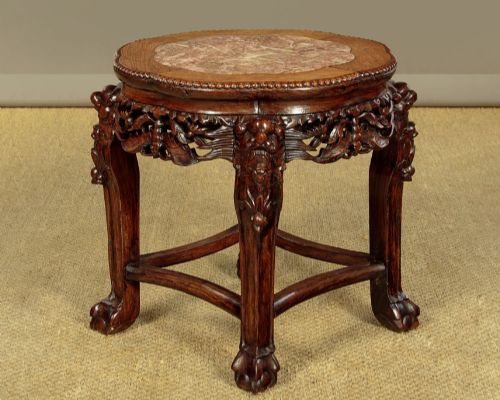
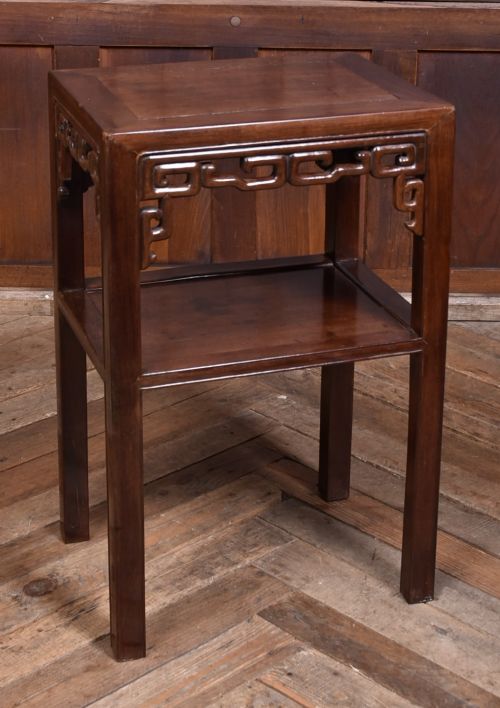
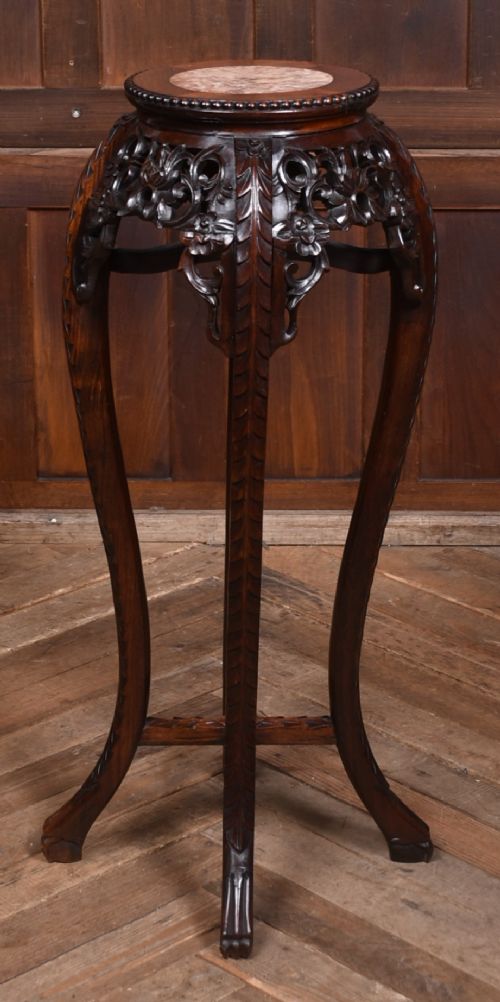
A carved wood vase stand serves to elevate decorative vessels, plants, and lamps within a room, fulfilling both practical and aesthetic purposes. When searching for a carved wood vase stand, buyers encounter forms ranging from low table surfaces to tall pedestals designed during the nineteenth and early twentieth centuries.
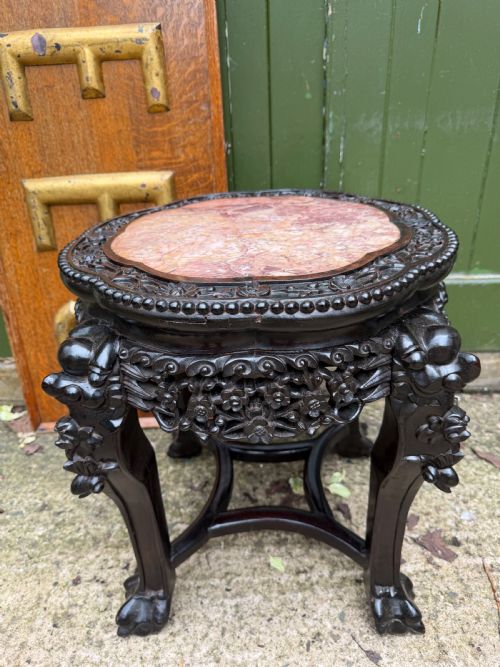
The selections on this page are predominantly Chinese export pieces associated with the Qing Dynasty, alongside Victorian and Edwardian examples. Common configurations include round or hexagonal tops, often incorporating inset marble panels, supported by intricately carved wooden frames.
Materials and Construction Methods
Craftsmen utilised dense timbers such as hardwood, rosewood, huali wood, and hongmu to construct these supports, ensuring durability under heavy ceramic loads. Artisans carved complex floral and geometric motifs directly into the timber, sometimes applying lacquer finishes for added surface protection.
Many examples feature inset variegated rouge marble tops fitted precisely into wooden grooves, combining smooth stone surfaces with carved wooden surrounds. Joinery techniques relied on traditional interlocking joints rather than modern metal fasteners, maintaining structural integrity across decades.
Current listings feature nineteenth-century Chinese hardwood stands alongside Edwardian plant pedestals and Victorian occasional tables.
Distinguishing Quality in Construction and Carving
Quality rests primarily on the depth and precision of the wood carving, where finer pieces display crisp, undercut details rather than shallow, mechanical tooling. The selection of timber also dictates grade, with dense hardwoods like huali and hongmu commanding greater appreciation than general softwood or basic timber substitutes.
The integration of inset marble panels demonstrates superior workmanship when the stone sits completely flush with the surrounding wood frame without gaps. Structural stability, balanced proportions, and the condition of original lacquer or polished finishes further separate standard utilitarian stands from exceptional examples.
The Carved Wood Vase Stand Glossary
- Hongmu
- A dense, dark tropical hardwood traditionally used in fine Chinese furniture and vase stands. It accepts intricate carving without splintering.
- Huali wood
- A prized scented hardwood from the rosewood family utilised in Qing Dynasty pieces. Its rich grain patterns enhance the decorative appeal of stands.
- Jardiniere stand
- A tall or low table specifically designed to support heavy plant pots or floral arrangements. These pieces frequently feature water-resistant marble tops.
- Qing Dynasty
- The final imperial dynasty of China, spanning from the seventeenth to the early twentieth century. Many carved stands originate from the late phase of this period.
- Cloisonne
- An enamel technique where metal wire creates compartments on a base object, sometimes accompanying wooden stands in display pairings.
Carved Wood Vase Stand: Frequently Asked Questions
What were carved wood vase stands originally used for?
These stands functioned primarily to elevate prized ceramic vessels, bronze urns, and heavy planters above floor level to protect them from dampness and accidental knocks.
By raising the objects, makers and owners also drew the eye to intricate porcelain details and created balanced focal points within traditional interiors.
How do I identify a Qing Dynasty vase stand?
Identification relies on observing dense hardwoods such as hongmu or huali, combined with traditional Chinese carving motifs like prunus, dragons, or key-fret borders.
Many genuine examples also incorporate heavy inset marble tops and traditional joinery methods without modern metal screws or nails.
Can these stands support heavy modern table lamps?
Hardwood and marble-top stands were engineered to bear the substantial weight of large porcelain vases and potted plants, making them robust enough for lamps.
The heavy timber frames and solid legs provide a stable base, provided the surface area matches the footprint of the lighting fixture.
Why do some stands feature marble inserts?
Marble tops provided a cool, heat-resistant, and moisture-proof surface suitable for resting damp plant pots or wet ceramic bases.
This stone insert also offered a contrasting textural element against the dark, carved hardwood frames characteristic of Chinese export pieces.