




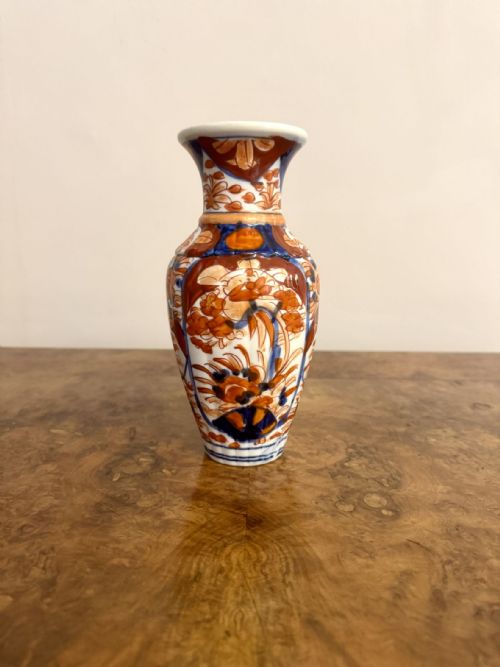
Blue and Orange Porcelain Vases
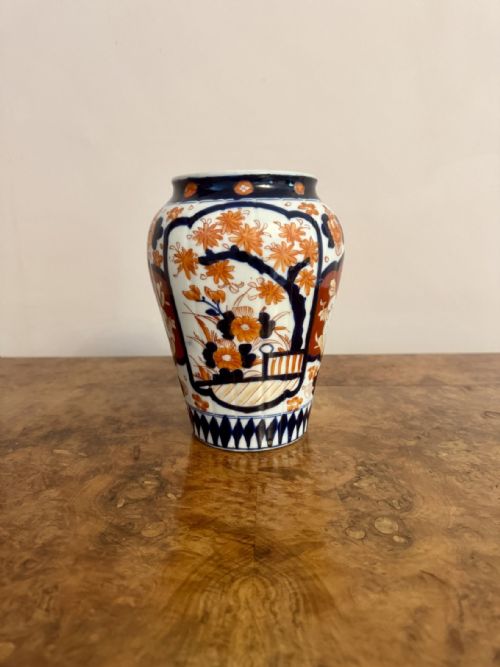
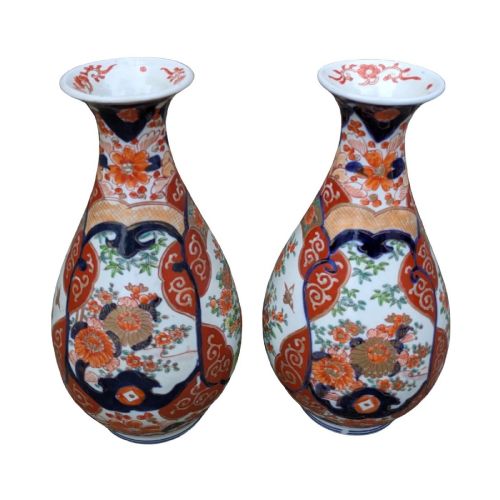
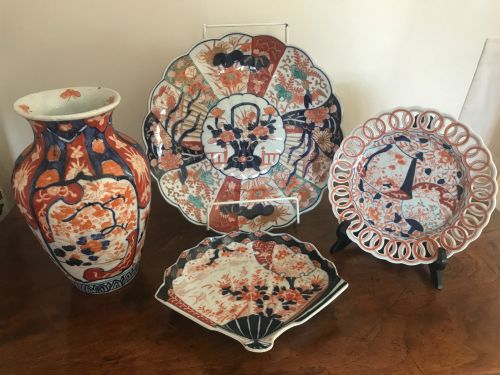
These blue and orange porcelain vases combine rich cobalt panels with warm iron-red pigments, offering striking focal points for traditional and eclectic interiors alike.
Blue and Orange Porcelain Vases
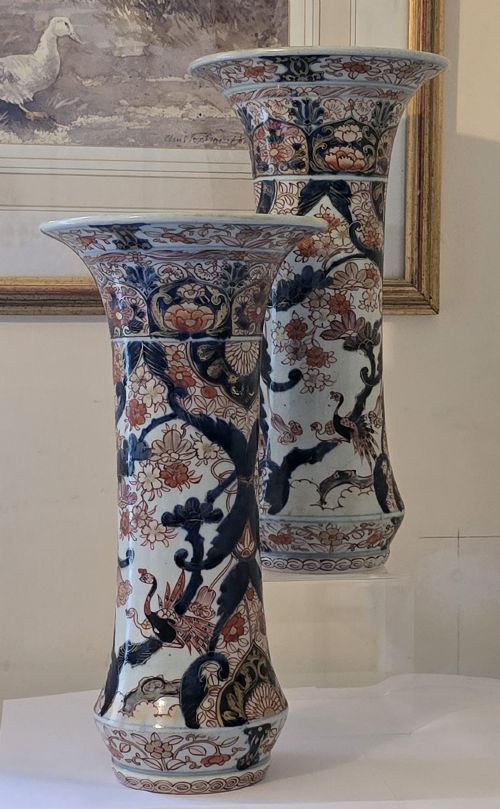
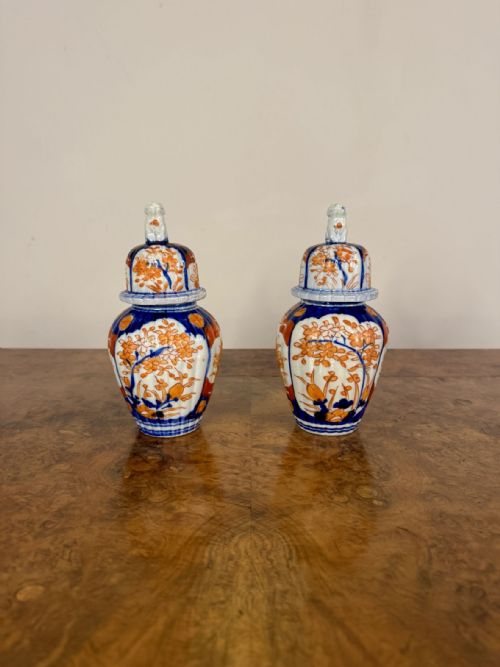
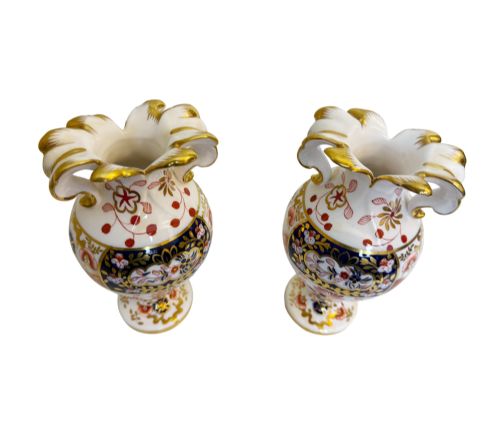
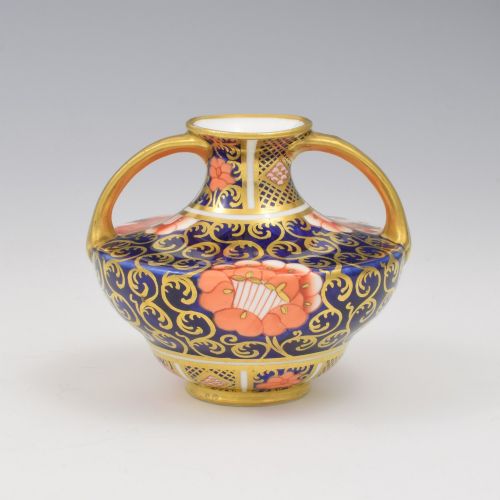
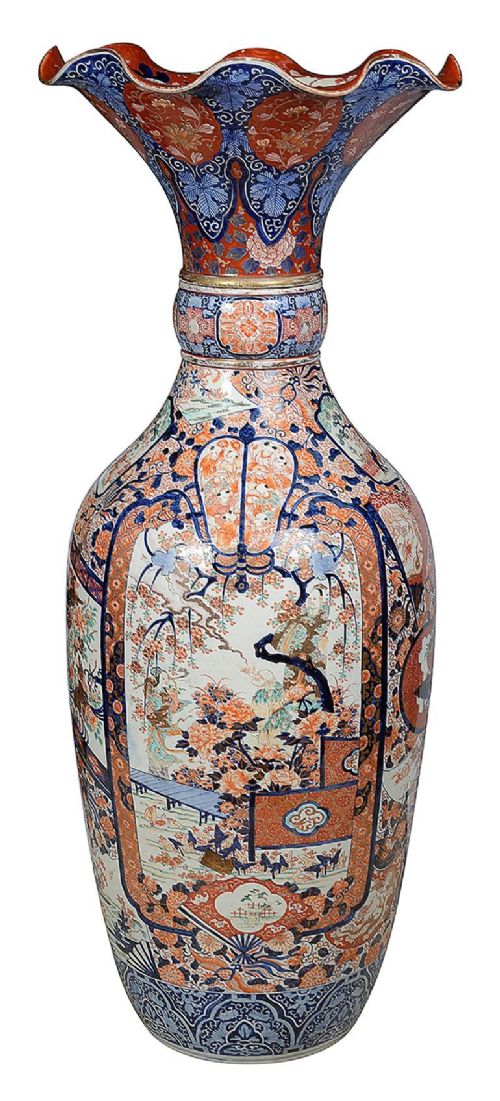
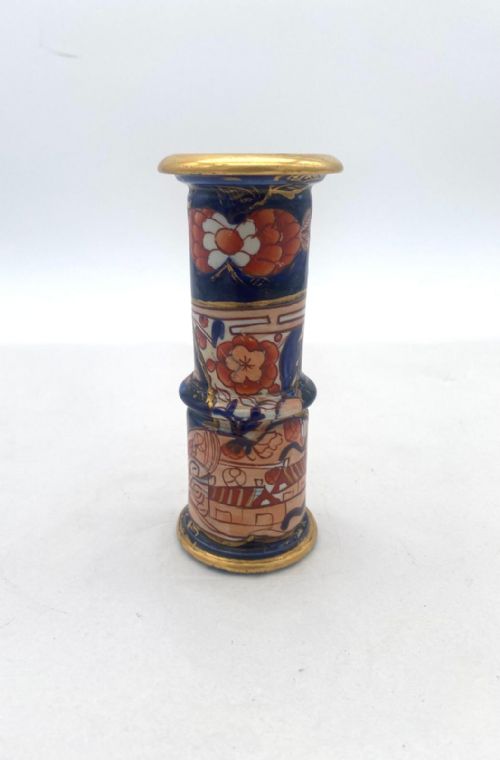
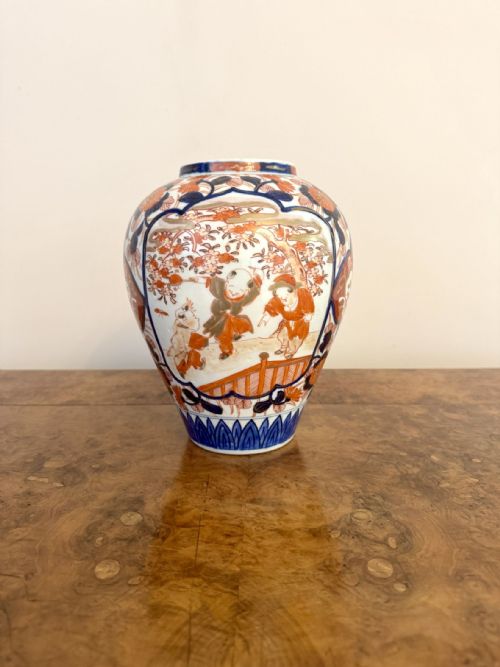
Blue and orange porcelain vases encompass robust floor-standing vessels, lidded ginger jars, and trumpet-shaped pairs produced across the eighteenth and nineteenth centuries. Buyers searching this phrase meet predominantly Japanese Imari export wares alongside English interpretations from factories like Spode and Royal Crown Derby.
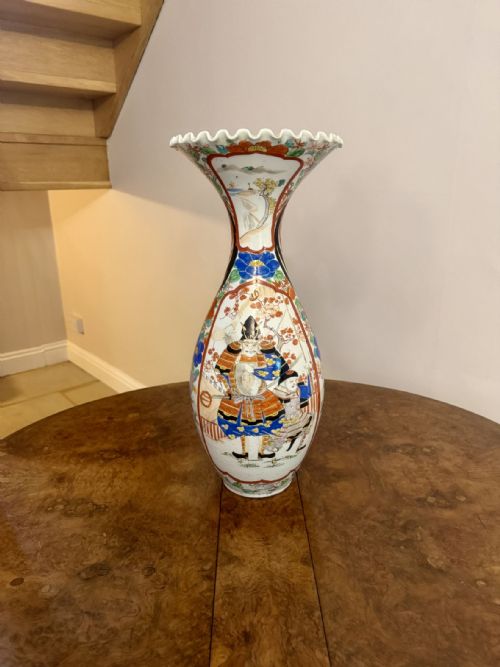
Forms range from miniature cabinet pieces and double gourd silhouettes to massive four-foot ornamental urns. Many examples reflect the traditional styles of the Meiji and Edo periods, whilst others incorporate brass mountings or adaptations into table lamps.
The aesthetic relies heavily on contrasting iron-red enamel and underglaze blue, frequently accented with gilding. These pieces serve equally as standalone decorative ceramics or as functional vessels for display.
Materials and Craftsmanship
The foundation rests on white hard-paste porcelain, painted with cobalt blue before firing and overlaid with iron-red enamel and gold leaf in subsequent low-temperature kilns. Artisans utilised intricate hand-painted floral panels, phoenix birds, and geometric borders across shaped and bottle-formed surfaces.
Glaze application varies from smooth, glossy surfaces to thick, pooled coatings on larger floor-standing pieces. Additional structural elements incorporate cast brass fittings and fabric components found on later adaptations.
Blue and Orange Porcelain Vases Retail Price Guide 2026
Typical asking prices for blue and orange porcelain vases among the pieces listed under this phrase on Sellingantiques today, from the lower quarter to the upper quarter. They describe what is for sale here now, not the wider market.
Listings feature porcelain forms spanning the eighteenth century through to the Edwardian era, incorporating materials such as enamel, gold leaf, and brass mounts.
Assessing Quality and Execution
Quality reveals itself in the crispness of the underglaze cobalt and the precision of the iron-red enamel work. Superior examples display dense, well-balanced compositions of phoenix birds and floral panels without blurring or misalignment.
Scale and proportion separate standard domestic vessels from monumental garnitures and large floor vases. The depth of the gilding and the weight of the porcelain body further distinguish standard production from exceptional studio outputs.
Spode·Royal Crown Derby
The Blue and Orange Porcelain Vases Glossary
- Imari
- A style of Japanese porcelain decorated in underglaze blue, iron-red enamel, and gold, originating from the port of Imari. These export wares gained immense popularity across European interiors during the eighteenth and nineteenth centuries.
- Clobbered
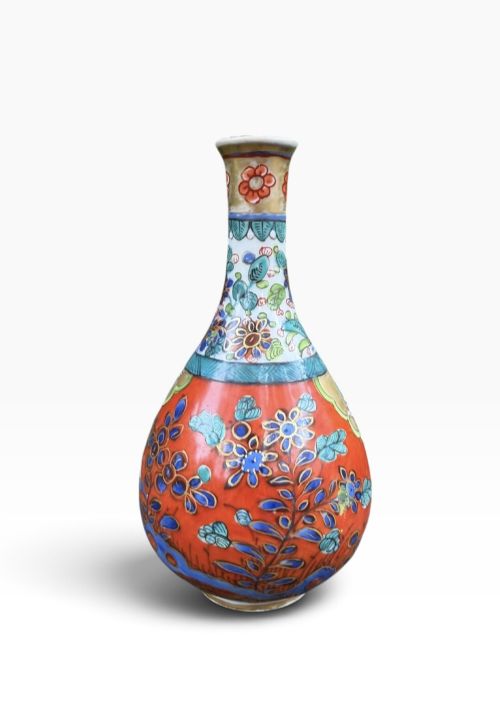
- A process where older plain or lightly decorated blue and white porcelain receives subsequent overglaze enamelling, often adding vibrant orange and gilt details. This technique revitalised existing stock to suit changing European tastes.
- Garniture
- A set of three or more matching vases designed to be displayed together on a mantelpiece or sideboard. They typically comprise a central lidded jar flanked by matching beaker or trumpet vases.
- Ginger Jar
- A wide-shouldered, bulbous porcelain vessel originally used for storing spices, later adapted purely for ornamentation. Most surviving examples feature high-domed covers and dense floral panel decoration.
- Meiji Period
- The era in Japanese history spanning from 1868 to 1912, noted for a massive increase in decorative porcelain export to Western markets. Pieces from this time frequently demonstrate ambitious scale and intricate polychrome painting.
Blue and Orange Porcelain Vases: Frequently Asked Questions
What is Imari porcelain?
Imari porcelain refers to Japanese export wares traditionally decorated with deep cobalt blue underglaze and vibrant iron-red overglaze enamel. These pieces frequently incorporate gold leaf highlights and intricate floral or avian motifs.
Named after the port from which they were shipped, these ceramics heavily influenced European pottery design throughout the eighteenth and nineteenth centuries.
How do I date an antique vase?
Dating relies on examining the characteristics of the porcelain body, the vibrancy and application of the enamel pigments, and stylistic markers specific to periods like the Meiji era or eighteenth-century production. Larger floor-standing pieces and lidded ginger jars often carry distinct baseline traits associated with their decade of manufacture.
Comparing the painting style of motifs such as phoenix birds and floral panels against documented examples helps narrow down the production window.
Were these vases used for flowers?
Many large lidded jars and floor-standing pieces served primarily as decorative display items or garniture sets rather than functional water holders. Smaller trumpet shapes, bottle vases, and spill vessels were better suited for holding floral arrangements.
Their striking colour palette ensured they functioned effectively as focal points within formal rooms regardless of their contents.
How do I style them at home?
These vibrant vessels pair well with neutral wooden sideboards, traditional mantelpieces, or as standalone floor-standing statement pieces. Their strong contrast of blue and orange anchors darker interior colour schemes and adds warmth to minimalist spaces.
Matching pairs and garniture sets work best when arranged symmetrically to highlight their shared decorative panels.