

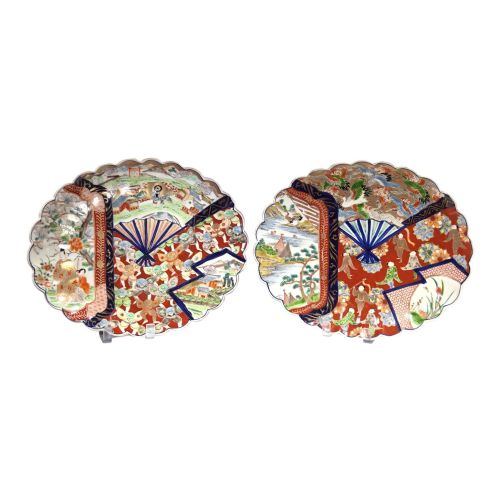


Japanese Export Porcelain Pair
A japanese export porcelain pair brings matched symmetry and intricate hand-painted decoration into a room, offering both decorative presence and historical depth.

Japanese Export Porcelain Pair
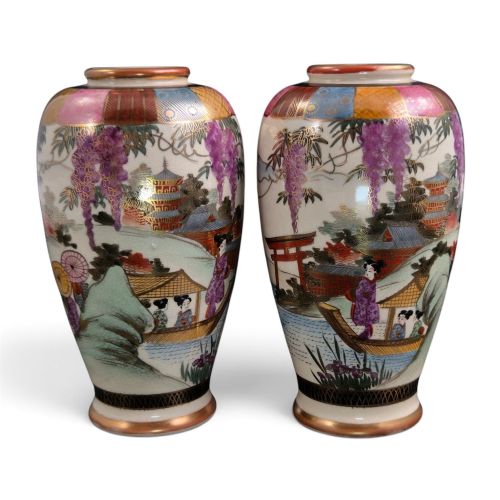
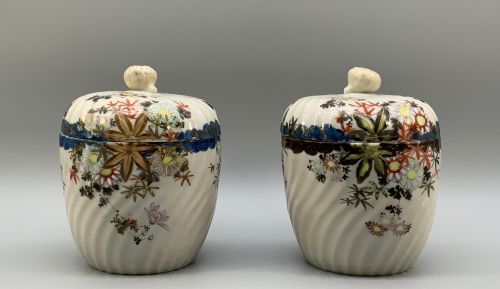
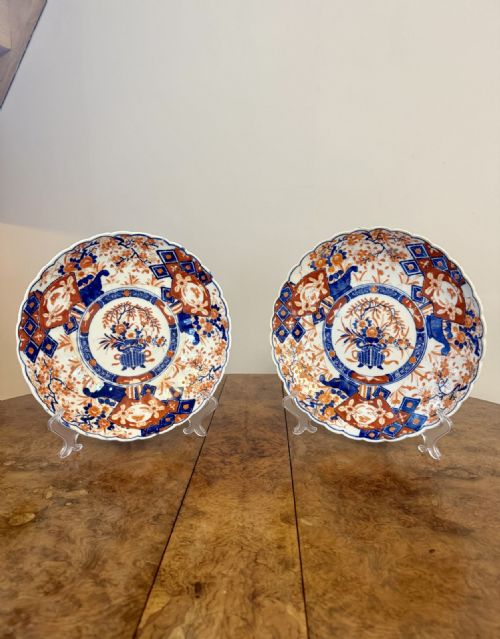
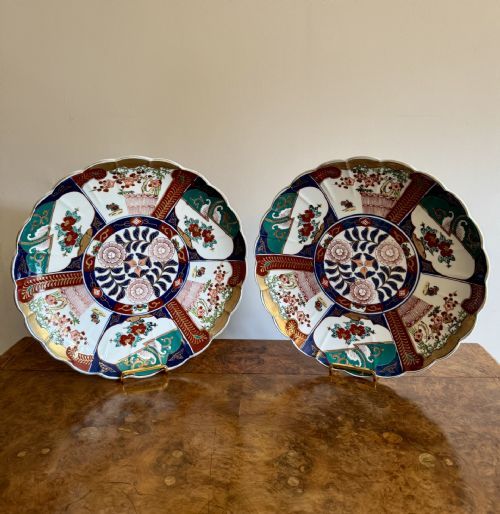
A japanese export porcelain pair consists of two matching ceramic vessels or plates created in Japan for international markets across several centuries. These matched objects range from large display chargers and lidded jars to tall spill vases and decorative plates designed to sit in balanced harmony.
The selections available here span multiple production eras, showing distinct aesthetic shifts from early traditions through to later periods. Buyers most frequently encounter Imari patterns with their rich cobalt blue and iron red palettes, alongside delicately painted Satsuma and Kutani wares.
Form and function combine in these matching sets, which were traditionally placed on mantelpieces, side tables, or cabinets as focal points. Surviving pairs retain their original symmetry, offering a clear view of historic workshop production meant for overseas clientele.
How they were made
Potters shaped fine ceramic and porcelain bodies by hand before applying underglaze blue, enamel colours, and detailed gilding or gold leaf. The pieces underwent multiple firings in kilns to set the intricate decorations and glossy glazes.
Skilled artisans applied hand-painted motifs using fine brushes, depicting botanical scenes, birds, and landscapes with precise brushwork. Artisans then added highlights of gold leaf and enamel to create depth and texture across the surface of each vessel.
Japanese Export Porcelain Pair Retail Price Guide 2026
Typical asking prices for japanese export porcelain pair among the pieces listed under this phrase on Sellingantiques today, from the lower quarter to the upper quarter. They describe what is for sale here now, not the wider market.
Listings feature porcelain, earthenware, enamel, glaze, and gold leaf across multiple periods including the Edo, Meiji, and Edwardian eras.
What varies in quality
The refinement of the hand-painted details sets finer examples apart from standard decorative output, particularly in the precision of floral motifs and exotic birds. Superior pairs display crisp lines and deliberate brushwork that maintain consistency across both matched pieces.
The application of glaze and gilding also indicates the standard of production, with higher-tier items retaining rich gold leaf highlights and stable enamel colours without blurring. Preservation of the original matching state and completeness further define the standing of each pair.
Hododa·Fukagawa
The Japanese Export Porcelain Pair Glossary
- Imari
- A style of Japanese porcelain decorated in underglaze blue, iron red, and gold, named after the port from which the wares were shipped. This aesthetic became highly popular in European export markets.
- Satsuma
- Earthenware pottery originating from the Satsuma province, typically characterised by a crackled ivory glaze and elaborate polychrome and gilt enamel decoration. These wares often feature detailed figurative or landscape scenes.
- Kutani
- A style of Japanese porcelain and ceramic ware known for bold colour palettes, frequently incorporating greens, yellows, purples, and reds alongside gold. The tradition originated in Kutani village.
- Arita
- A Japanese town and the primary production centre for early porcelain, where master potters developed techniques for export wares. Arita pieces form the foundation of early blue and white and Imari styles.
- Mon
- A Japanese emblem or crest used to decorate fine ceramics, often denoting the household, clan, or patron associated with the commission. These crests appear on exhibition-quality Satsuma pieces.
Japanese Export Porcelain Pair: Frequently Asked Questions
How were these pairs used?
These matched objects served primarily as ornamental display pieces in European and international interiors. Owners placed them on mantelpieces, side tables, and within cabinets to create visual symmetry and display refined taste.
Larger lidded jars and chargers functioned as focal architectural elements within a room. Smaller plates and spill vases adorned surfaces while showcasing intricate hand-painted narratives.
How do I date a Japanese porcelain pair?
Dating relies on stylistic clues, including the specific colour palette, the presence of specific marks or crests, and the underlying ceramic material. Early pieces often feature blue and white designs or traditional Imari patterns, while later Meiji and Edwardian works incorporate dense enamels and gilt highlights.
Examining the potting technique and glaze characteristics helps distinguish eighteenth-century productions from nineteenth- and early twentieth-century examples.
How do I care for antique porcelain?
Antique porcelain and earthenware require gentle handling and stable environmental conditions away from direct sunlight and extreme temperature fluctuations. Dusting with a soft, dry cloth preserves the delicate enamel and gold leaf decorations.
Displaying pairs on secure, level surfaces prevents accidental tipping and protects the matched components from impact.