


Hand Painted Satsuma Ware
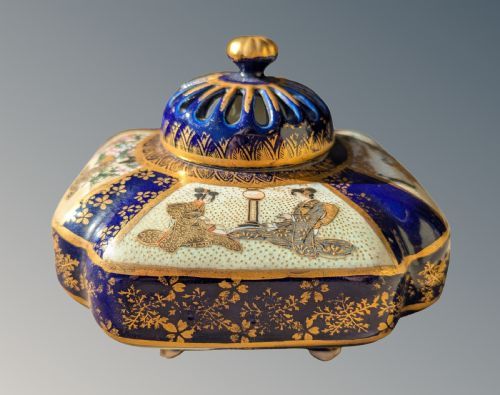
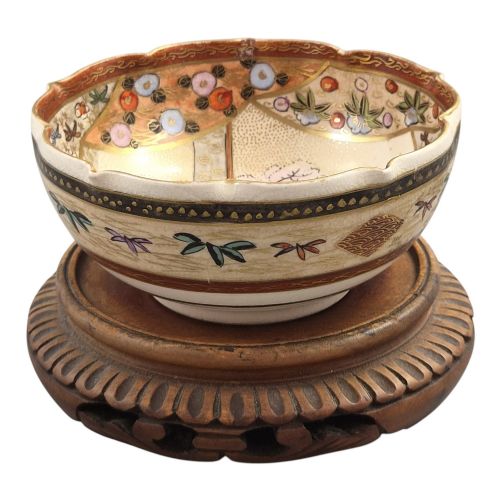
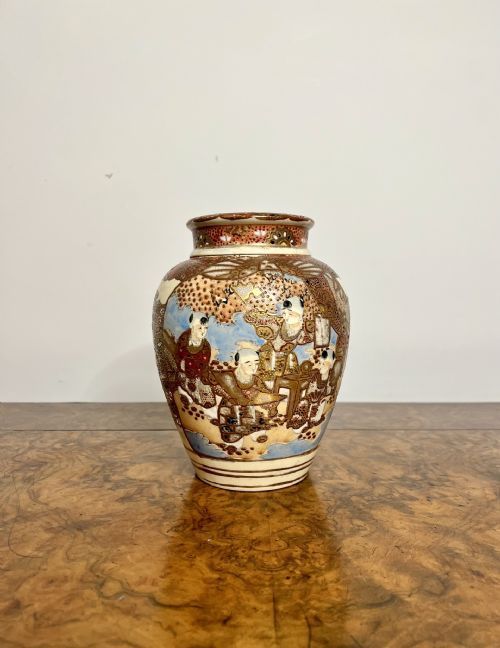
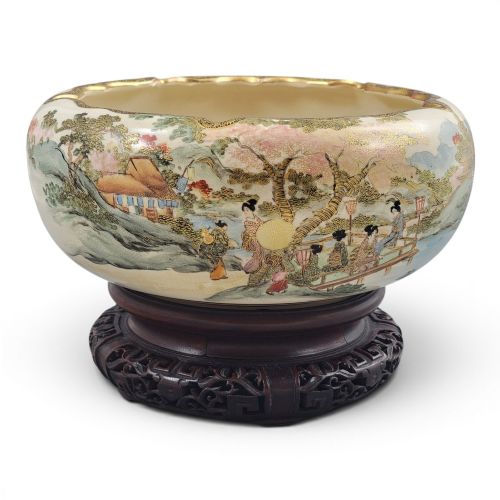
Hand painted satsuma ware comprises intricate earthenware ceramics adorned with enamel and gold leaf, offering collectors exquisite depictions of traditional Japanese scenes.
Hand Painted Satsuma Ware
Hand painted satsuma ware consists of Japanese ceramic items fashioned primarily in earthenware and porcelain during the nineteenth and early twentieth centuries. These pieces appear in numerous forms, with vases, decorative bowls, and plates dominating the selection.
The objects frequently date from the Meiji period, featuring heavily in nineteenth-century and Edwardian examples. Buyers encounter everything from miniature vessels and incense burners to monumental ginger jars and tea sets.
Originating predominantly from Kyoto, this ware showcases meticulous artistry linked closely to workshops and master artisans. The visual identity relies on detailed figural scenes, floral motifs, and landscapes rendered in rich enamels.
How they were made
Potters utilised earthenware and porcelain as the foundational bodies for these items, applying a characteristic crackle-glaze finish. Artisans then built upon this base using detailed hand-painted enamels.
Gilt and gold leaf were incorporated extensively to highlight borders, garments, and architectural elements, adding a luminous quality to the surface decoration. Wood occasionally appears in associated components or stands, though ceramic remains the primary medium.
Samurai warriors stare down delicate blossoms across centuries of kiln dust.
What varies in quality
The finesse of the brushwork distinguishes standard examples from masterworks, particularly in the rendering of complex multi-figure processions or battle scenes. Precision in the application of enamel and gold leaf determines the visual depth of each piece.
Signatures from renowned makers and workshops elevate the standing of an item, reflecting the prestige of the studio of origin. Furthermore, the complexity of the form and the preservation of the delicate gilding influence the overall calibre of the ware.
Kinkozan·Shizan·Chosei·Nikko·Hakusan·Hododa·Kotobuki do·Meizan·Taniguchi
The Hand Painted Satsuma Ware Glossary
- Satsuma ware
- Japanese pottery originating from the Satsuma Province, traditionally characterised by an ivory crackle-glaze earthenware body decorated with enamel and gold. It later became heavily produced in Kyoto for export.
- Koro
- A traditional Japanese incense burner, often featuring a pierced lid and three legs. These vessels frequently appear in miniature and larger formats within Satsuma collections.
- Meiji Period
- The era in Japanese history spanning from 1868 to 1912, marked by the opening of trade with the West. Much of the finest decorated Satsuma ware dates from this period.
- Mon
- A Japanese heraldic badge or crest used to identify families or clans. The Shimazu family crest frequently appears on high-quality Satsuma ceramics.
- Earthenware
- Porous pottery fired at lower temperatures, forming the typical substrate for traditional Satsuma pieces before the later adoption of porcelain.
Hand Painted Satsuma Ware: Frequently Asked Questions
How do I identify genuine Satsuma ware?
Genuine pieces typically feature a fine ivory-coloured crackle glaze combined with dense enamel painting and raised gold leaf. Many items also bear artist signatures or workshop marks on the base.
Examining the weight and the fineness of the hand-painted details helps distinguish authentic antique production from later decorative reproductions.
What periods do these pieces come from?
The majority of available items date from the late nineteenth century during the Meiji period, extending into the Edwardian era and the early twentieth century. Production from this window reflects the height of export-quality Japanese ceramic artistry.
Earlier nineteenth-century examples often display restrained palettes, whilst later pieces embrace more elaborate multi-figure compositions.
How were these decorative items used?
Many of these objects served as high-end decorative art for Western and domestic drawing rooms, displayed on mantelpieces or cabinets. Vases, bowls, and plates functioned primarily as aesthetic centerpieces rather than for daily utility.
Specialist items like koro were intended for burning incense during traditional gatherings or quiet reflection.
How should I care for antique Satsuma ceramics?
Keep pieces out of direct sunlight to protect the stability of the enamel and the brilliance of the gold leaf. Dust gently with a soft, dry cloth and avoid using liquid cleaners.
Due to the porous nature of earthenware bodies and the delicate surface gilding, these items require careful handling and stable indoor humidity.