
Pair of Oriental Vases
A pair of oriental vases brings balanced proportion and rich narrative detail to a mantelpiece or side table.
Pair of Oriental Vases
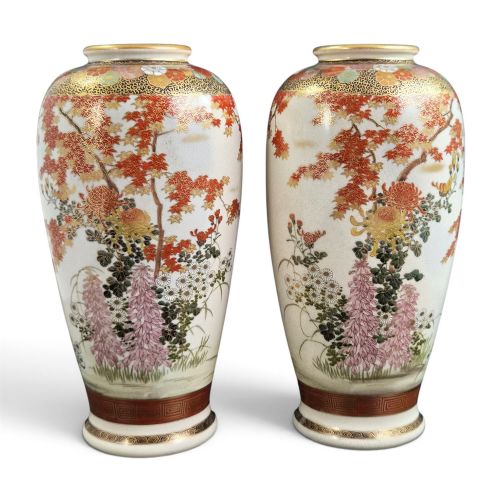
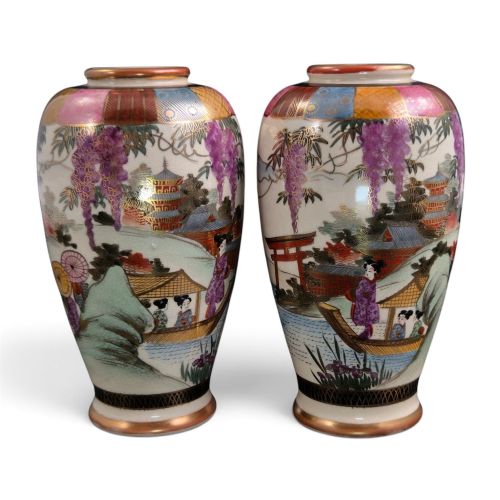
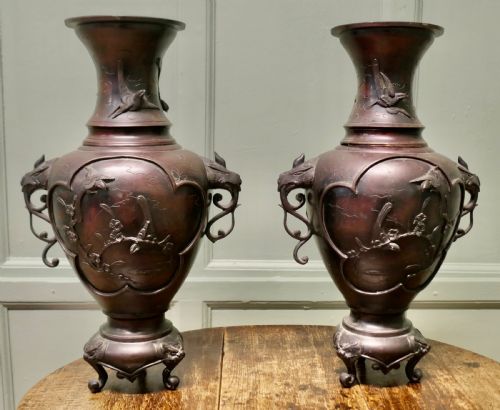
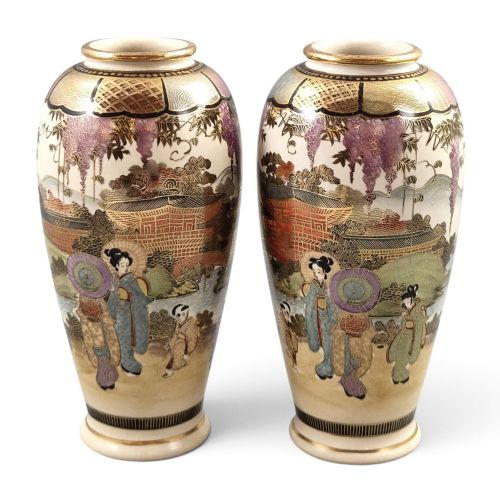
A pair of oriental vases brings together matched vessel forms originating from East Asian ceramic and metalwork traditions. When you search for a pair of oriental vases, you encounter symmetrical vessels fashioned in earthenware, porcelain, bronze, and cloisonné enamel.
The selections recorded here span from the Meiji period in Japan through to the Chinese Qing style and Republican eras. Many examples arrive from the nineteenth and early twentieth centuries, encompassing decorative floor jars, table lamps, and traditional baluster shapes.
Materials and construction methods
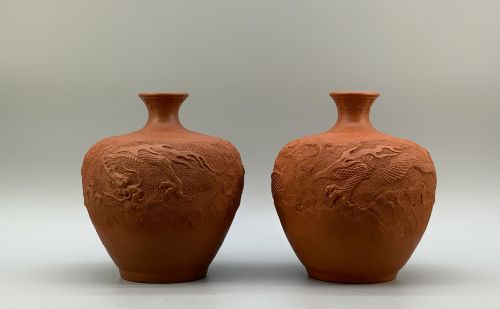
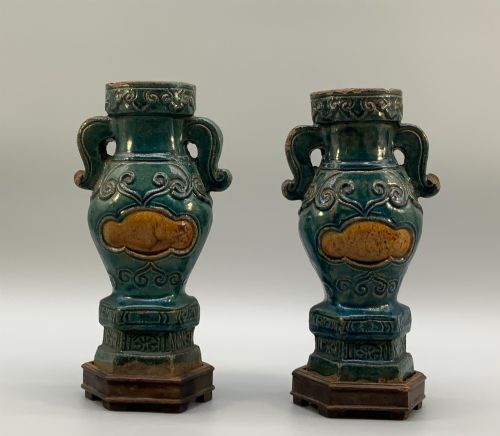
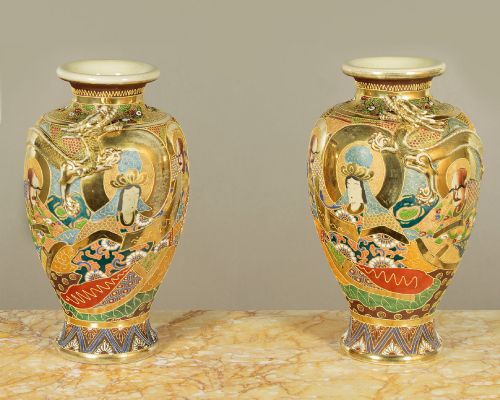
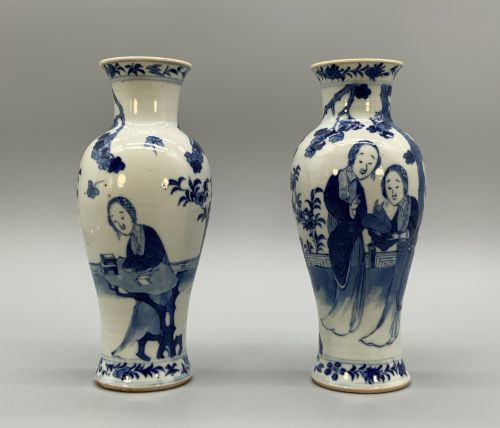
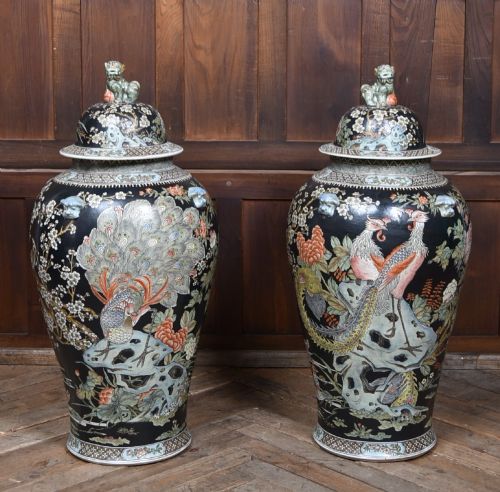
Ceramic pieces utilise porcelain or earthenware bodies, finished with underglaze blue, famille rose enamels, or crackle glazes applied by hand. Satsuma wares employ an ivory-coloured crackle earthenware canvas decorated with intricate polychrome pigments and raised gold leaf.
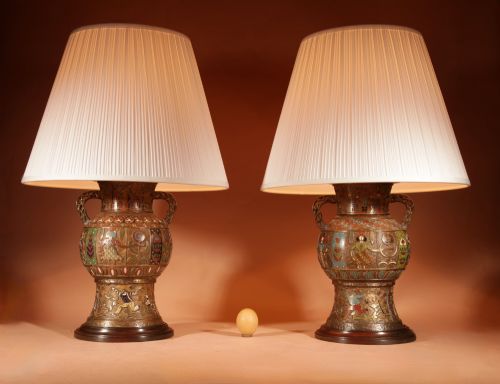
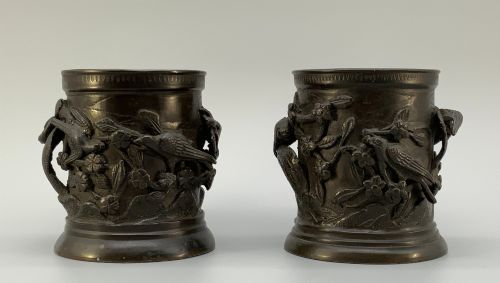
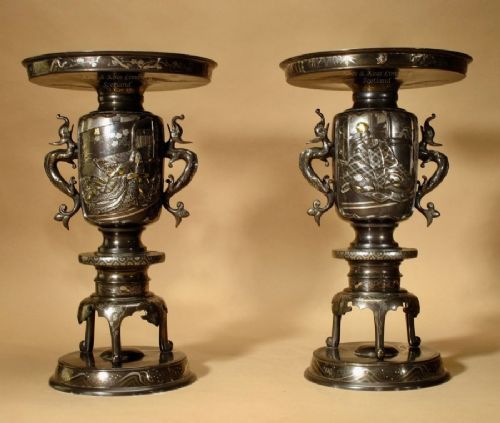
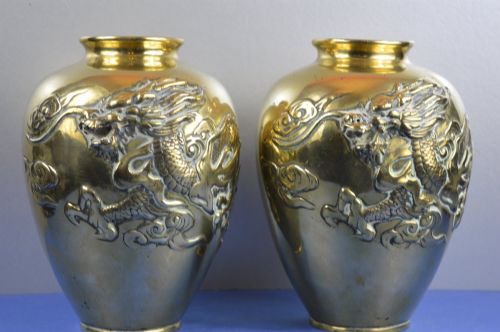
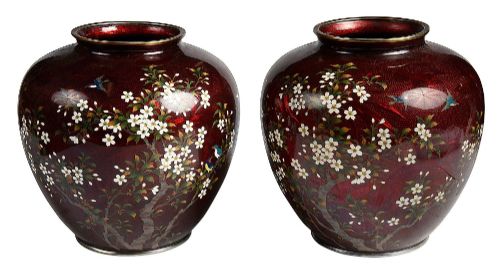
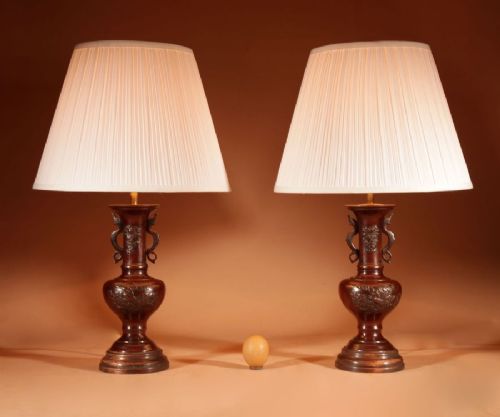
Metal vessels combine bronze, brass, and copper, shaped through casting or hammered techniques. Cloisonné pieces incorporate fine wire soldered to a metal base to form cells, which are then filled with enamel paste and fired multiple times.
Some industrious Victorian decorators turned porcelain palace jars into towering table lamps, ensuring dinner guests had plenty to converse about.
Distinguishing the finest examples
The standard of execution rests in the precision of the hand-painted brushwork and the clarity of the enamel pigments. Superior Satsuma and porcelain pieces display microscopic detail in figural expressions and gilding that remains crisp under close inspection.
In metalwork and cloisonné, quality reveals itself in the weight of the bronze and the exact alignment of the metal wires separating the enamel fields. Matched pairs must share identical proportions, kiln origins, and decorative symmetry without perceptible divergence.
Maruni Kobe·Manpei Kobe·Kinkōzan·Kinzan
The Pair of Oriental Vases Glossary
- Satsuma
- A type of Japanese earthenware featuring a pale, ivory crackled glaze decorated with elaborate enamel and gilt motifs. This ware gained immense popularity for export during the late nineteenth century.
- Cloisonné
- An enamelwork technique where metal wire is soldered to a bronze or copper body to create compartments for coloured glass paste. After firing, the surface is ground smooth and polished.
- Imari
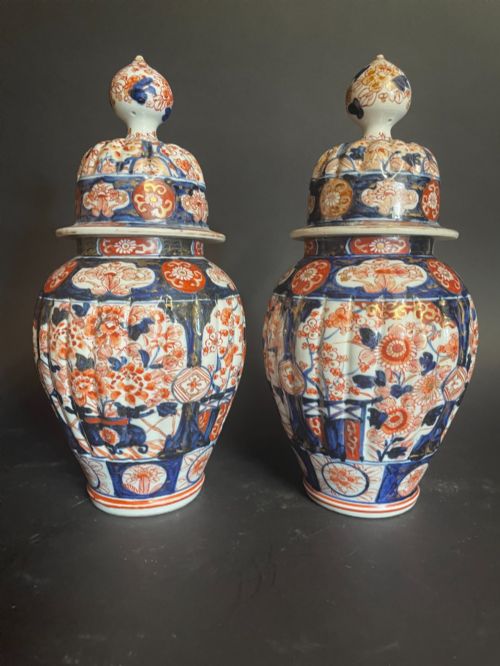
- A style of Japanese porcelain characterised by a palette of underglaze blue, iron red, and gold. These wares were traditionally manufactured in Arita and exported widely to Europe.
- Famille Rose
- A palette of opaque Chinese ceramic enamels dominated by pink or rose colours introduced during the Qing dynasty. The range allowed artists to render subtle tonal gradations in florals and figures.
- Baluster
- A vase shape featuring a rounded body that tapers toward the base and swells below a narrow neck. The profile mimics architectural supports found in staircases.
Pair of Oriental Vases: Frequently Asked Questions
How do I display a pair of oriental vases?
Matched pairs look best positioned symmetrically on either side of a fireplace, console table, or sideboard. Maintaining equal spacing allows the eye to appreciate their balanced proportions and mirrored designs.
Ensure they sit on stable, flat surfaces away from heavy foot traffic to protect delicate handles and enamel surfaces from accidental knocks.
Were these vases made for export?
Many nineteenth and twentieth-century examples were produced specifically for Western export markets following the opening of international trade routes. Japanese Meiji works and Chinese pieces from this era frequently catered to European interior tastes.
Export wares often combined traditional domestic motifs with larger scales or adapted forms, such as vessels fitted later as table lamps.
How do I tell Japanese from Chinese pieces?
Japanese works from the Meiji period often showcase distinct signatures or workshop marks from Kyoto and Satsuma provinces, alongside dense naturalistic scenes. Chinese ceramics frequently follow imperial reign marks or traditional styles like blue and white porcelain and famille rose.
Examining the paste, weight, and specific enamel palettes usually clarifies the regional origin and manufacturing period.
Can converted lamp fittings be removed?
Many period vases were fitted for electricity during the twentieth century by threading wiring through drilled bases or collars. Removing these alterations requires careful rewiring by a professional restorer to avoid damaging the underlying ceramic or metal.
Deciding to revert a lamp back to a standard vase depends on whether the base retains its original factory integrity.