




Underglaze Blue Imari Vases
Underglaze blue imari vases bring striking palettes and traditional forms into any room, offering classic ceramic artistry.
Underglaze Blue Imari Vases
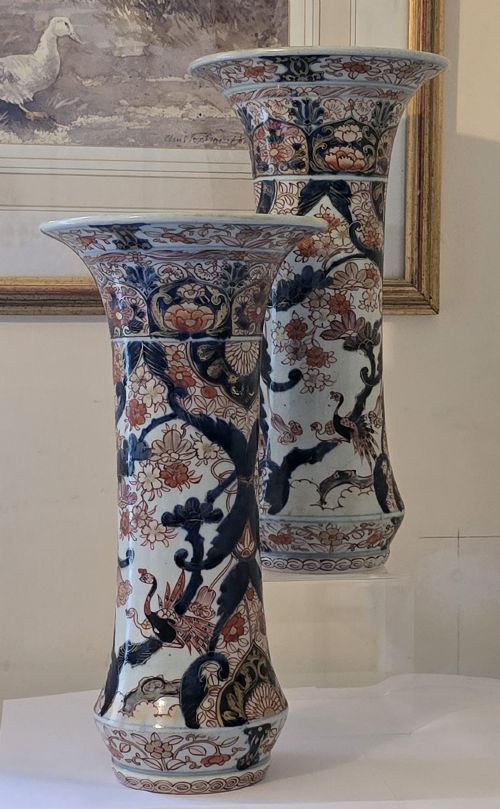
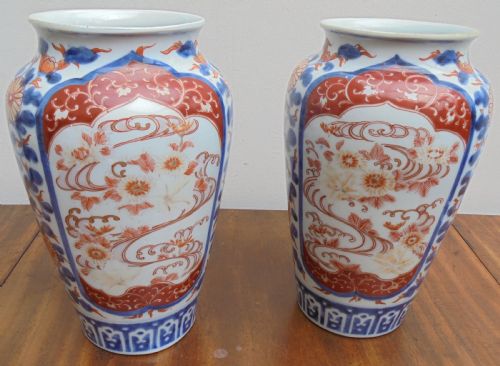
Underglaze blue imari vases are traditional ceramic vessels that collectors seek for their vibrant integration of cobalt cobalt decoration and contrasting iron-red and gold details. When you search for underglaze blue imari vases, you encounter forms ranging from simple baluster shapes to double gourd vessels and hexagonal profiles.
The examples available on this page span several centuries, reaching back to the seventeenth century through the eighteenth and nineteenth centuries up to nineteen hundred. These pieces encompass Japanese imari, Edo period, Meiji period, and Edo period Arita origins.
Vessels on this page include trumpet vases, baluster vases, double gourde vases, and wine bottles. Pairs appear frequently among the listings, offering matching decorative options for mantelpieces and display cabinets.
How they were made
The makers of these ceramics shaped porcelain bodies before applying cobalt glaze beneath a clear finish to create the distinctive underglaze blue decoration. Firing set the base cobalt blue before artisans added enamel, enamel glaze, and gold leaf highlights.
Gilding and detailed overglaze enamels were applied in subsequent firings to introduce rich reds and metallic accents over the white glazed porcelain surface. This layered technique required precise temperature control to fuse the various pigments and gold leaf securely to the glaze.
Underglaze Blue Imari Vases Retail Price Guide 2026
Typical asking prices for underglaze blue imari vases among the pieces listed under this phrase on Sellingantiques today, from the lower quarter to the upper quarter. They describe what is for sale here now, not the wider market.
Listings span from the seventeenth century through the eighteenth and nineteenth centuries to nineteen hundred, using porcelain, enamel, and gold leaf.
What varies in quality
Quality in these ceramics depends on the precision of the underglaze blue painting and the delicacy of the secondary enamel work. Crisp outlines and balanced compositions distinguish finer examples from simpler provincial output.
The preservation of the gold leaf and enamel glaze dictates visual impact, as worn surfaces diminish the intended polychrome brilliance. Well-formed shapes, such as crisp hexagonal profiles or symmetrical double gourdes, reveal superior potting skill.
The Underglaze Blue Imari Vases Glossary
- Underglaze blue
- Cobalt pigment applied to the unglazed ceramic body before the transparent glaze layer goes on and the piece is fired. This technique protects the blue decoration beneath the glass-like surface.
- Imari
- A style of Japanese export porcelain originating from the port of Imari, traditionally featuring a palette of underglaze blue, iron red, and gold. The aesthetic became widely popular across European and domestic markets.
- Baluster
- A vase form with a rounded body that tapers toward the neck and stands on a broader base. The silhouette resembles architectural balusters found on staircases.
- Double gourd
- A vessel shape formed by two bulbous sections stacked vertically, resembling a traditional water carrier made from a dried fruit. The profile requires expert throwing to maintain balance between the upper and lower lobes.
- Arita
- The Japanese town and surrounding region in Hizen province where porcelain production began in the early seventeenth century. Arita kilns produced the foundational wares that defined the imari tradition.
Underglaze Blue Imari Vases: Frequently Asked Questions
What is an imari vase?
An imari vase is a ceramic vessel decorated in a traditional palette that combines underglaze blue with iron red and gold.
These pieces were produced primarily in Japan for both domestic use and export, featuring distinct floral, avian, and geometric motifs.
How do I date an imari vase?
Dating relies on stylistic shifts in the painting, the quality of the porcelain body, and the specific shades of cobalt and enamel.
Pieces on this page range from the seventeenth century through the Edo and Meiji periods up to nineteen hundred.
How were these vases used?
These vessels served as decorative ornaments in traditional Japanese interiors and later in European drawing rooms.
Larger forms and pairs stood on tables or mantels, while specialised shapes like wine bottles held liquids.
What does underglaze blue mean?
Underglaze blue refers to cobalt pigment painted directly onto the raw clay before the protective glaze is applied.
This method ensures the blue pigment remains permanent and protected beneath the smooth glass surface after firing.