
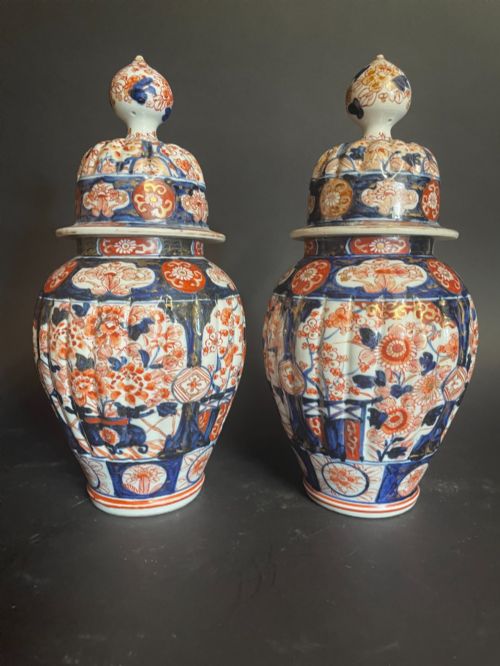


Gilt Porcelain Temple Jar
These gilt porcelain temple jar pieces bring nineteenth-century decorative presence into a room, offering striking form and rich metallic embellishment.
Gilt Porcelain Temple Jar
When you search for a gilt porcelain temple jar, you are looking at substantial lidded vessels created for display during the nineteenth century. These objects combine ceramic bodies with prominent metallic highlights, drawing on distinct aesthetic traditions.
The versions most commonly met on this page are nineteenth-century pieces influenced by Japanese Imari styles, Qing Dynasty traditions, and European interpretations such as Regency Chinoiserie. They appear as lidded jars, baluster vases, and large decorative vessels.
Many of these items integrate supplementary materials such as ormolu mounts or ironstone bodies alongside traditional porcelain and earthenware. Their forms range from balanced pairs to monumental single pieces designed for commanding placement.
How they were made
Production relied on shaped ceramic bodies formed from porcelain, ironstone, or earthenware, finished with detailed enamel painting and surface gilding. Artisans applied gold leaf and gilding by hand to accentuate specific decorative motifs across the ceramic surface.
Some pieces incorporate cast ormolu mounts fitted securely to the ceramic base or collar, adding metallic structure to the design. Kiln firing fixed the underglaze blues, polychrome enamels, and base glazes before final gilding was applied.
Standing up to forty-five inches high, these towering lidded jars demand ceilings high enough to accommodate their grand ambitions.
What varies in quality
Quality depends upon the crispness of the hand-painted enamel work and the precision applied to the gilding or gold leaf details. Finer examples display deliberate brushwork and well-defined pictorial scenes that remain sharp across the entire body.
The integration of secondary elements like ormolu mounts or fitted lids distinguishes superior items from simpler production wares. Balance in proportions and the depth of the underlying glaze further separate standard decorative vessels from exceptional pieces.
The Gilt Porcelain Temple Jar Glossary
- Imari
- A traditional Japanese style of porcelain decoration characterised by a palette of underglaze blue, iron red, and gold. This aesthetic heavily influenced nineteenth-century production both in Japan and Europe.
- Ormolu
- Gilded bronze used for decorative mounts on ceramics and furniture during the nineteenth century. It provides structural framing and metallic contrast to the porcelain body.
- Baluster
- A vase shape featuring a bulbous lower portion that tapers towards the neck, commonly seen on large lidded jars. This silhouette offers stability and visual balance.
- Ironstone
- A heavy, durable ceramic material developed in the nineteenth century as a robust alternative to porcelain. It takes glazes and rich blue pigments effectively.
- Chinoiserie
- European artistic style reflecting Chinese motifs and decorative patterns, popular in Regency and nineteenth-century design. It appears on various vases and jars of the period.
Gilt Porcelain Temple Jar: Frequently Asked Questions
What is a gilt porcelain temple jar used for?
These large lidded vessels served primarily as decorative focal points in nineteenth-century interiors, often placed on mantelpieces or pedestals. Their substantial size and rich surface decoration made them statements of taste rather than functional containers.
Today, they function similarly in interior design, adding height, colour, and historical character to a room. Their fitted lids and robust ceramic bodies allow them to stand alone as sculptural objects.
How do you distinguish Japanese Imari from other styles?
Japanese Imari is identified by a specific palette combining deep underglaze blue with iron red and abundant gilt highlights. The patterns often feature intricate floral and geometric panels arranged symmetrically.
On this page, pieces adopting this style date mainly to the nineteenth century, reflecting the strong European demand for Japanese export porcelain during the Meiji and late Edo periods.
What distinguishes ironstone from porcelain?
Ironstone is a dense, opaque earthenware developed to offer the durability of porcelain with a heavier weight. It provides a solid foundation for deep cobalt glazes and extensive gilding.
In listings from the nineteenth century, ironstone pieces often appear as large hall vases designed to withstand heavy use while maintaining a refined appearance.
How do ormolu mounts affect these pieces?
Ormolu mounts provide gilded bronze framing that elevates the status of a ceramic vessel by adding European metalwork craftsmanship. These mounts were frequently added to Chinese or Japanese vases during the nineteenth century to suit Western decorative tastes.
They secure the base, rim, or handles, introducing a contrasting metallic texture that complements the gilding on the porcelain body.