
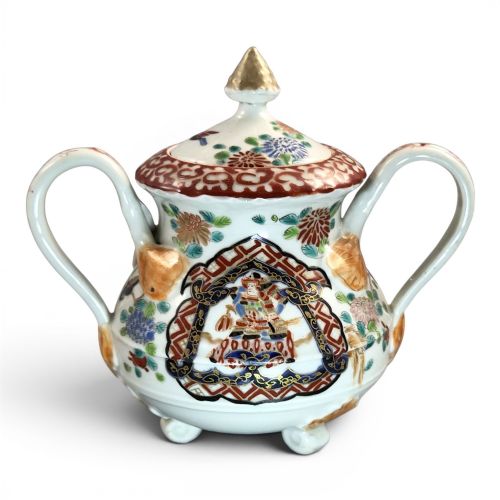


Imari Lidded Jar
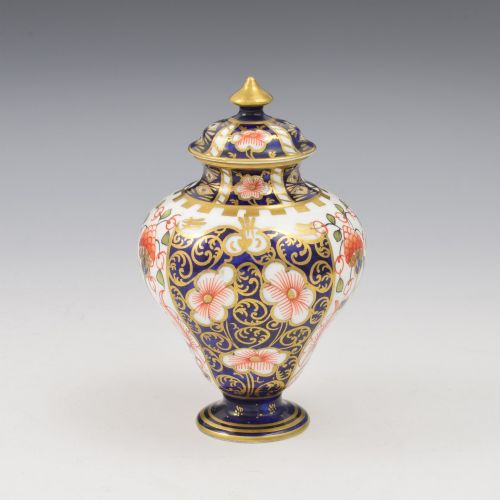
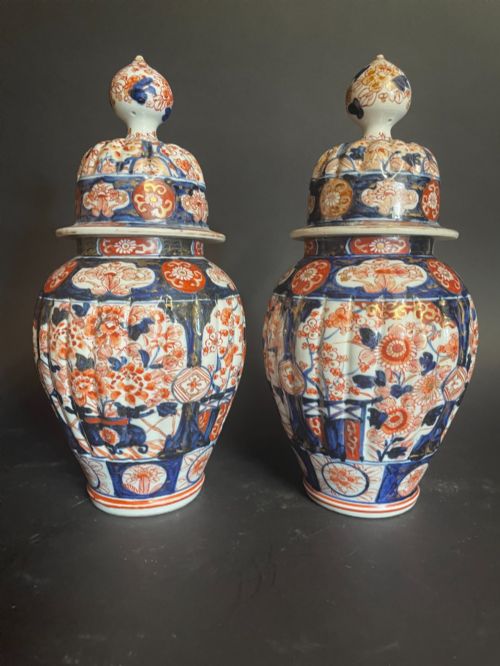
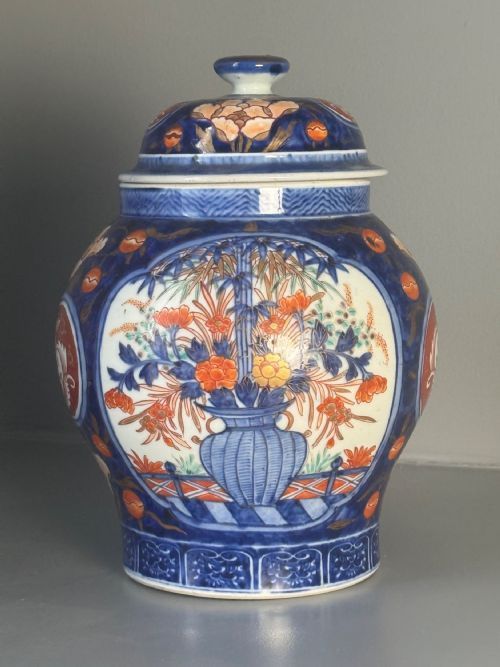
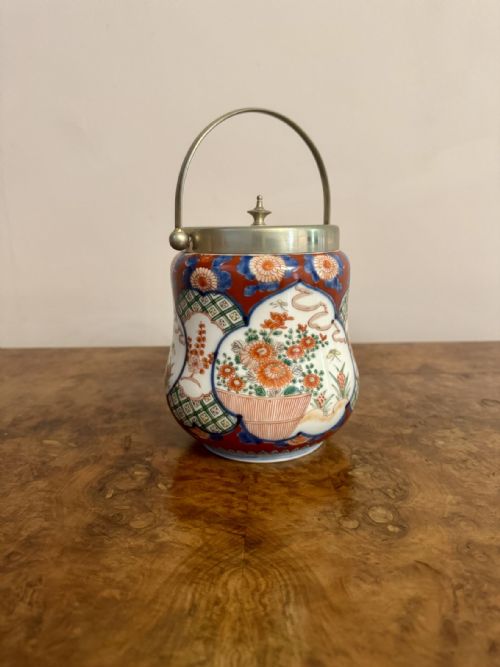
These imari lidded jar examples range from historic Japanese Arita pieces to later European interpretations, prized for their vibrant palettes and covered forms.
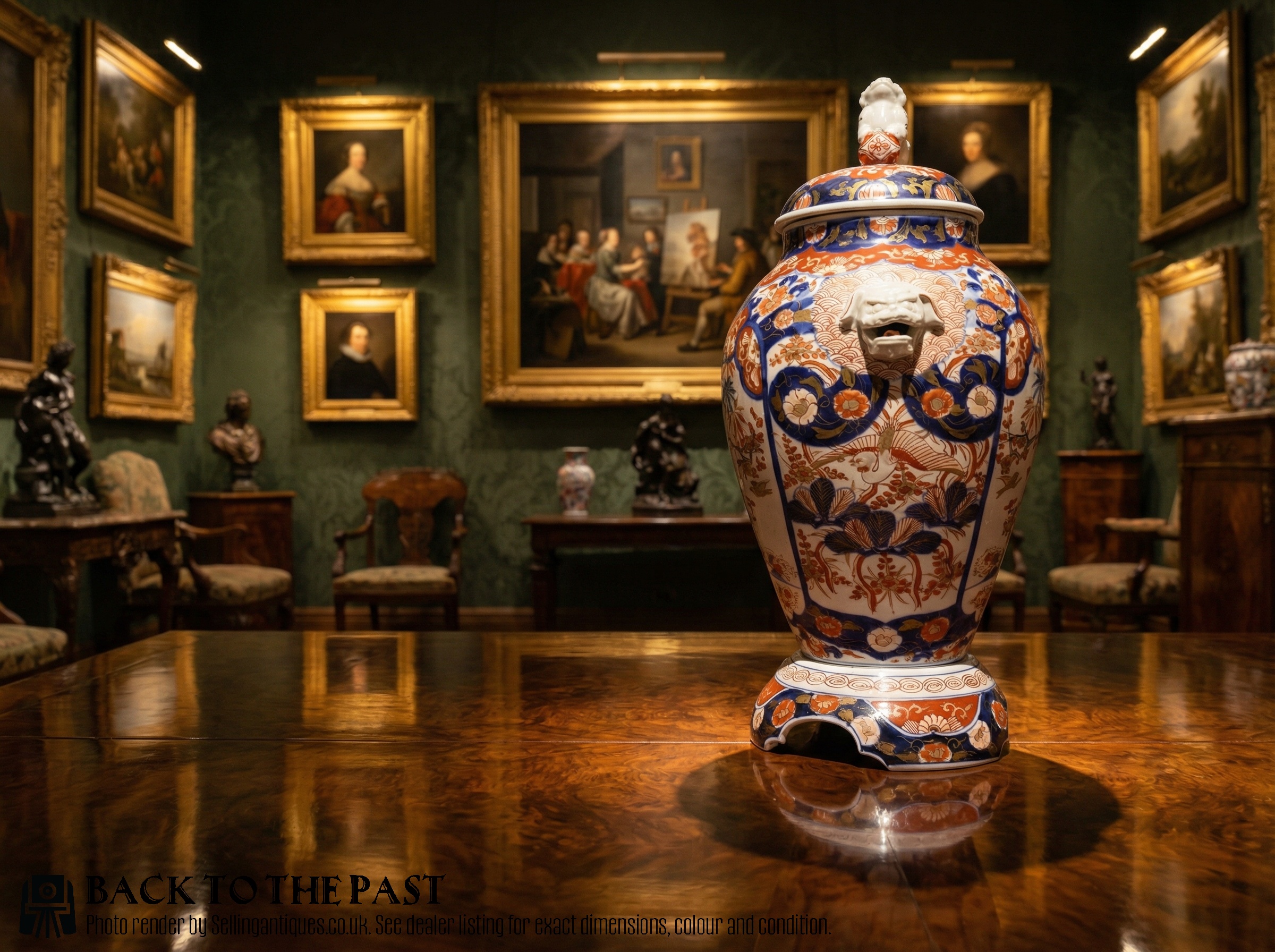
Imari Lidded Jar
When searching for an imari lidded jar, buyers encounter covered vessels designed for display, storage, or potpourri, spanning centuries of production. The selection primarily includes Japanese examples from the Edo and Meiji periods alongside English ironstone and porcelain variations from the Georgian, Victorian, and Edwardian eras.
The forms vary from ginger jars and sugar bowls to large baluster vases and octagonal shapes fitted with matching covers. These containers often served practical domestic roles in European and Asian interiors before becoming primarily decorative collector pieces.
How they were made
The pieces on this page utilise ceramic, porcelain, and ironstone bodies shaped into jars, vases, and bowls. Artisans applied glaze and hand-painted motifs, frequently incorporating enamel, gold leaf, and gilding to accentuate the characteristic palette.
Firing techniques evolved across the 17th to 20th centuries, shifting from early Arita kilns to later nineteenth-century workshops and English factories like Royal Crown Derby and Mason's.
Listings span Japanese Arita production, nineteenth-century Meiji examples, and English ironstone pieces by Mason's and Royal Crown Derby.
What varies in quality
The execution of the hand-painted decoration determines much of the visual distinction between examples, with finer pieces displaying precise brushwork and controlled use of enamel and gilding. Potter marks, such as those from Fukagawa, and the weight and translucency of the porcelain body further separate standard production from exceptional studio output.
The integrity of the matching cover and the complexity of the jar shape, such as octagonal baluster forms or koro vessels, heavily influence the standing of an individual piece within the wider range.
Royal Crown Derby·Fukagawa·Samson
The Imari Lidded Jar Glossary
- Imari
- A style of ceramic decoration originating in Japan, characterised by a distinctive palette of underglaze blue, iron red, and gilt. This aesthetic was later copied by European factories.
- Arita
- The Japanese town and surrounding region in Hizen province where Japanese porcelain production began. Many pieces decorated in the imari style originated from these kilns.
- Meiji Period
- The era in Japanese history spanning from 1868 to 1912, corresponding to the reign of Emperor Meiji. A large volume of exported decorative ceramics dates from this time.
- Baluster
- A jar or vase shape with a rounded body that tapers toward the base and swells out above, frequently paired with a domed lid.
- Ironstone
- A type of heavy, durable earthenware developed in nineteenth-century England as a robust alternative to porcelain. Factories like Mason's utilised this material for covered jars and vases.
Imari Lidded Jar: Frequently Asked Questions
What is an imari lidded jar?
An imari lidded jar is a ceramic or porcelain vessel featuring a matching cover and decorated in the traditional imari palette of blue, red, and gold. These containers were produced in both Asian and European kilns for storage and display.
They appear in various forms, including ginger jars, baluster vases, and potpourri pots, serving as decorative focal points in period interiors.
How do I tell Japanese imari from European pieces?
Distinguishing the origin involves examining the paste, weight, and painting style of the ceramic body. Japanese pieces often utilise Arita porcelain, while English makers frequently employed ironstone or bone china.
Maker marks, where present, help clarify the factory or workshop of origin, though many nineteenth-century export pieces bear decorative or imitation marks.
Were these jars used for ginger?
Some lidded jars with wide mouths originated as containers for shipping and storing spices or ginger from East Asia. Over time, European households repurposed these covered vessels for general storage or purely ornamental display.
Many examples listed as ginger jars or sugar bowls were designed primarily as decorative ornaments rather than functional kitchen containers.
How do I care for antique porcelain?
Antique porcelain and ironstone require gentle handling and stable environmental conditions away from direct sunlight and rapid temperature changes. Dusting with a soft, dry cloth keeps the glaze and gilding clean without risking abrasion.
Lids should be lifted and handled separately from the main body to prevent accidental drops and rim chipping during cleaning.