
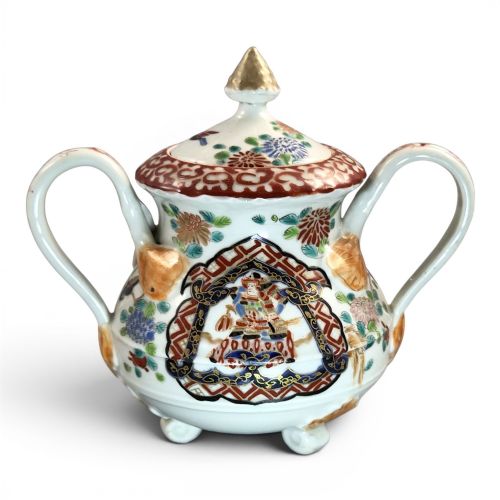


Japanese Porcelain Covered Jar
A japanese porcelain covered jar brings vibrant hand-painted colour and domestic history straight from Far Eastern kilns into British rooms.
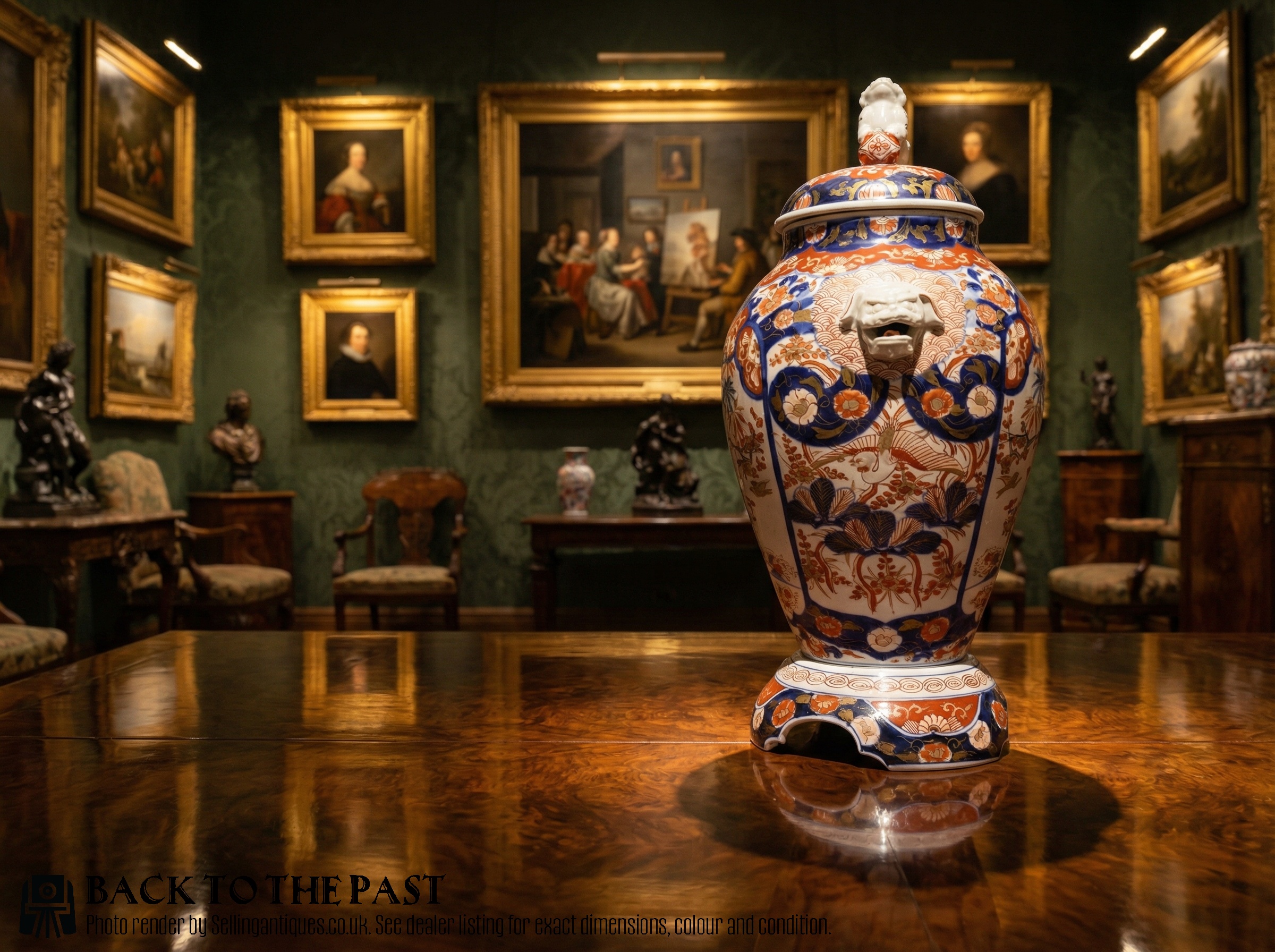
Japanese Porcelain Covered Jar
When you search for a japanese porcelain covered jar, you encounter lidded vessels created primarily for export during the Edo, Meiji, and Victorian periods. These pieces take forms such as ginger jars, baluster vases, and sugar bowls, spanning centuries of Far Eastern ceramic production.
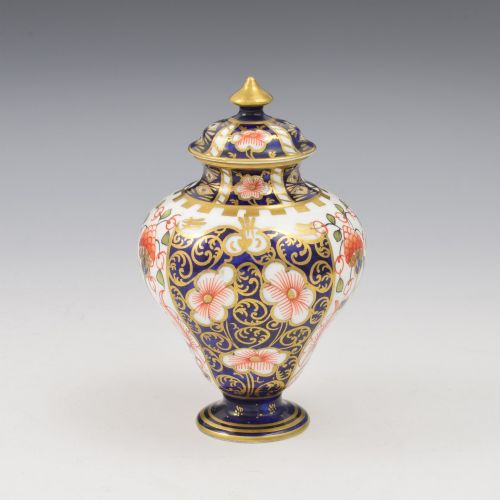
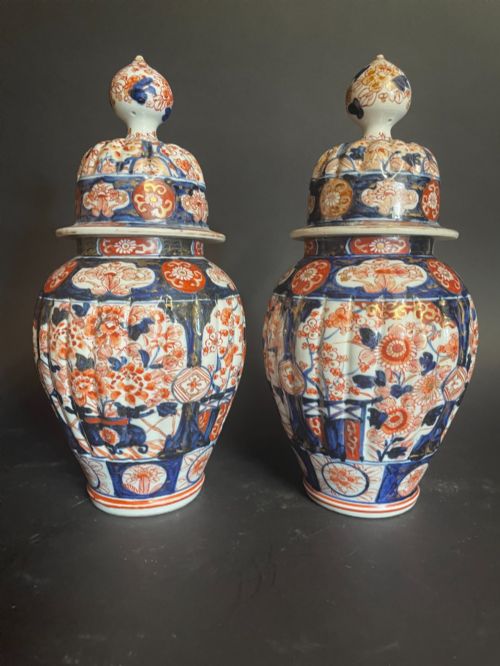
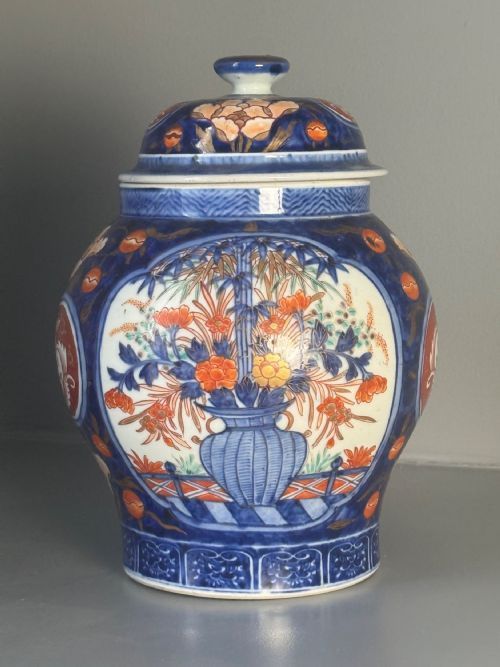
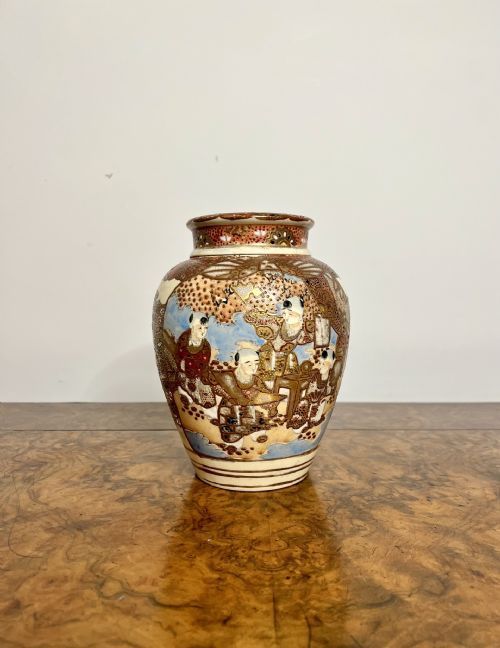
The selections on this page demonstrate the enduring popularity of Imari palettes, Satsuma earthenware traditions, and Kutani styles. Workshops in Arita produced much of the blue and white or iron-red porcelain, whilst other regional kilns contributed distinct decorative vocabularies.
Most examples date from the nineteenth century, reflecting the peak of Victorian and Edwardian interest in Japanese decorative arts. Buyers find both individual lidded vases and matching pairs intended for mantelpieces and cabinet display.
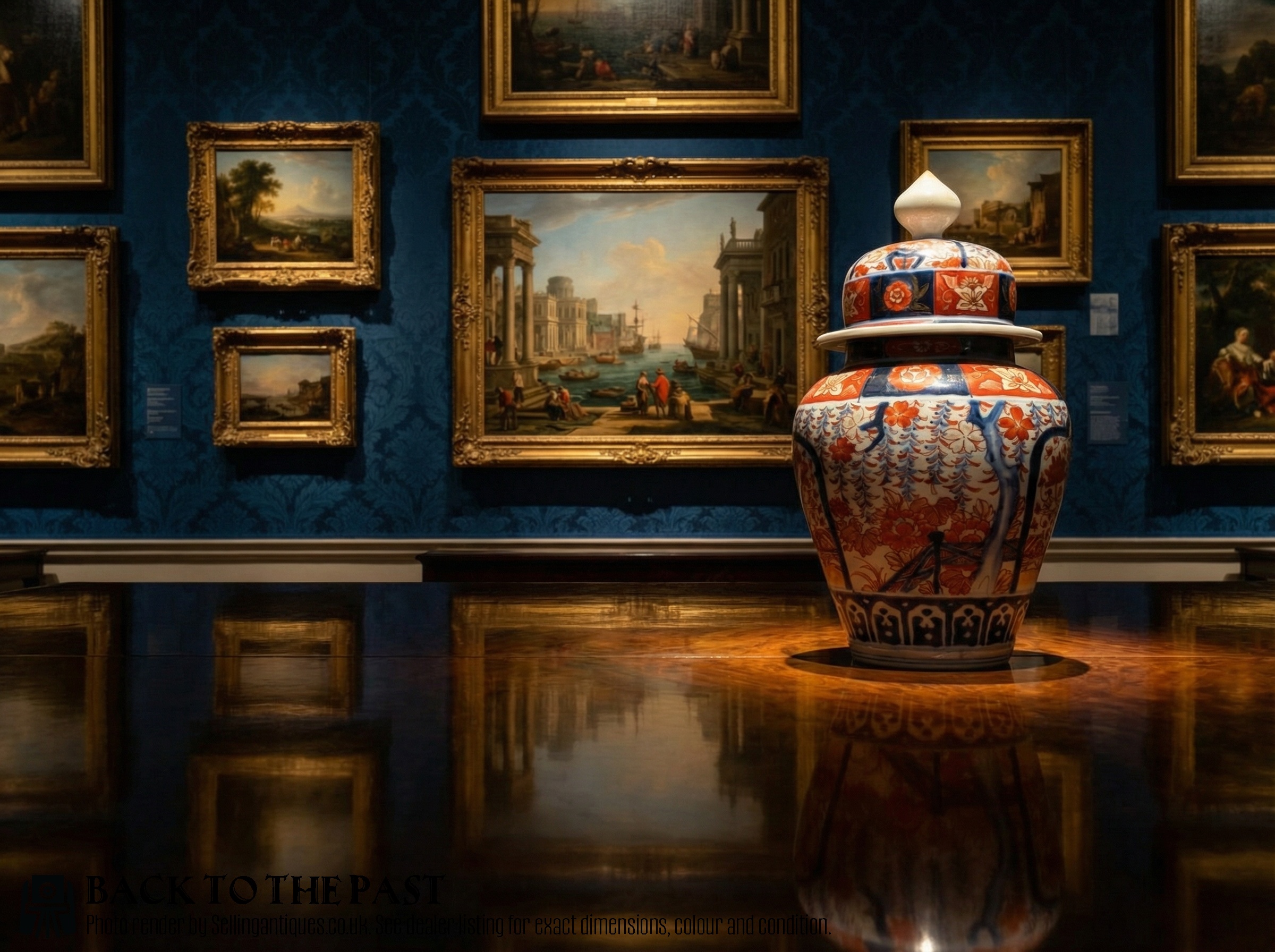
How they were made
Potters shaped high-fired porcelain and earthenware bodies on the wheel or pressed them into moulds to form the base vessel and its matching cover. Artisans then applied underglaze blue pigments and overglaze enamels, often supplemented by gold leaf or gilt details.
Kiln operators managed wood-fired or coal-fired kilns to achieve the vitreous glaze surfaces characteristic of genuine oriental wares. Subsequent low-temperature firings fixed the polychrome enamel decorations and added gilding over the finished glaze.
Listings feature porcelain and earthenware bodies decorated with enamel, gold leaf, and glaze across multiple nineteenth-century styles.
What varies in quality
Quality rests upon the crispness of the porcelain body, the precision of the hand-painted brushwork, and the preservation of the delicate gilding and enamel layers. Superior examples display complex figure scenes, samurai motifs, or fine landscape details executed with steady control.
The integration between the vessel and its cover indicates the care taken during production and subsequent survival. Heavier potting, well-balanced proportions, and distinct maker or regional marks elevate individual jars within their respective ceramic traditions.
Fukagawa·Yamashu
The Japanese Porcelain Covered Jar Glossary
- Imari
- A style of Japanese porcelain decorated in underglaze blue, iron red, and gilt. Pieces produced in Arita gained international renown for this vibrant palette.
- Satsuma
- A type of Japanese earthenware featuring a crackled ivory glaze decorated with polychrome enamels and gold. It was widely exported during the Meiji period.
- Ginger jar
- A high-shouldered ceramic vessel with a domed cover originally used for storing spices. Later nineteenth-century examples served purely decorative interior functions.
- Kutani
- Japanese ceramic ware known for bold polychrome designs, frequently incorporating green, red, yellow, and purple pigments. Production flourished during the nineteenth century.
- Baluster
- A vase form characterised by a rounded lower body that tapers towards a narrow neck. This shape provides a stable canvas for expansive narrative scenes.
Japanese Porcelain Covered Jar: Frequently Asked Questions
How do I date a Japanese jar?
Examine the potting style, glaze texture, and decorative palette to establish an approximate period. Nineteenth-century pieces often exhibit brighter overglaze enamels and distinct regional marks.
Compare the base treatment and weight with established examples from the Edo or Meiji eras. Finer stylistic details help narrow the manufacturing decade.
Were these jars used for storage?
Many lidded vessels originally held commodities like ginger, tea, or preserves before reaching European markets. Over time, their function shifted towards decorative display in parlours and drawing rooms.
Today, surviving lidded jars remain valued as ornamental cabinet pieces rather than functional kitchen containers.
What is the difference between Imari and Satsuma?
Imari wares use a hard porcelain body decorated in vibrant underglaze blue, iron red, and gold. They present a glossy, vitreous finish designed for durability and visual impact.
Satsuma pieces utilise a softer earthenware body covered in a characteristic finely crackled cream glaze. Artisans painted these surfaces with dense polychrome scenes and extensive gilding.
How should I display lidded jars?
Place pairs symmetrically on mantelpieces, sideboards, or within glass-fronted cabinets to highlight their decorative presence. Ensure they sit safely away from heavy household traffic to protect protruding covers.
Allow adequate space around larger baluster forms so the painted motifs remain clearly visible from multiple angles.