
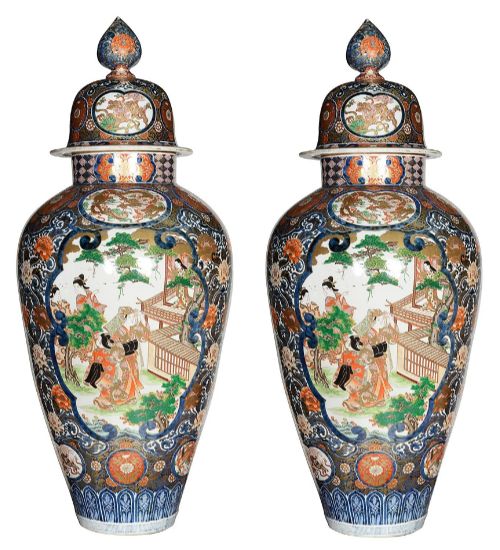
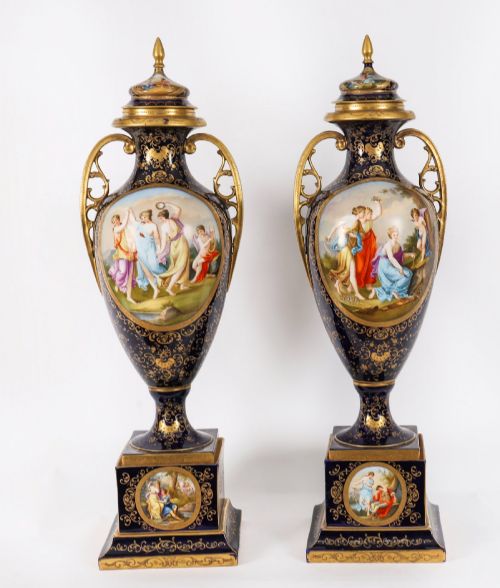
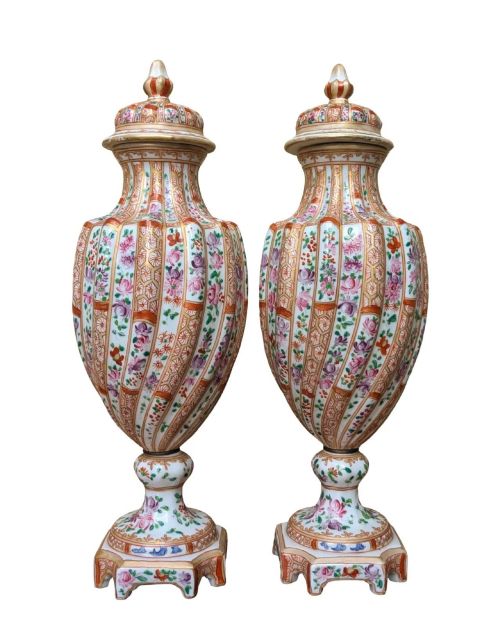
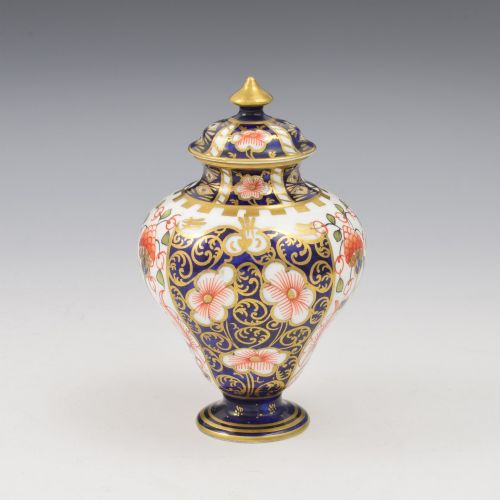
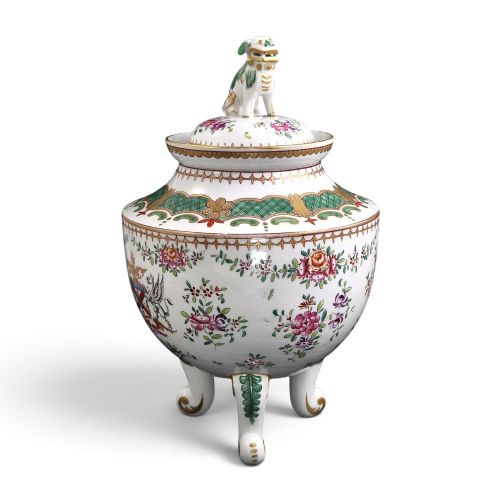
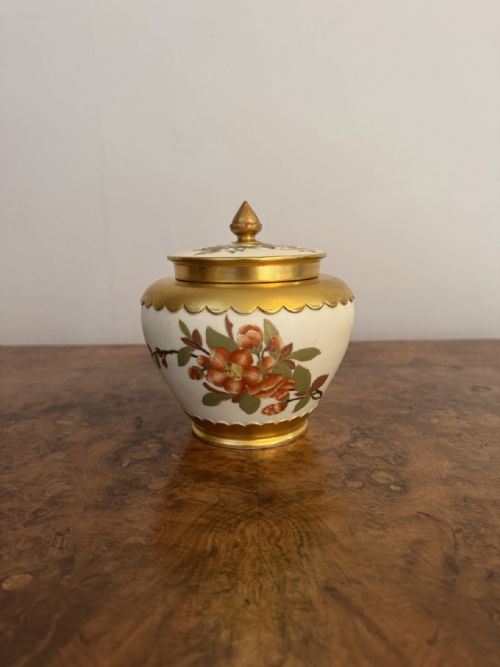

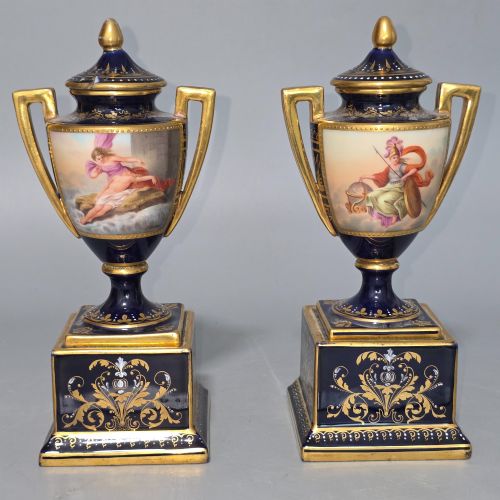
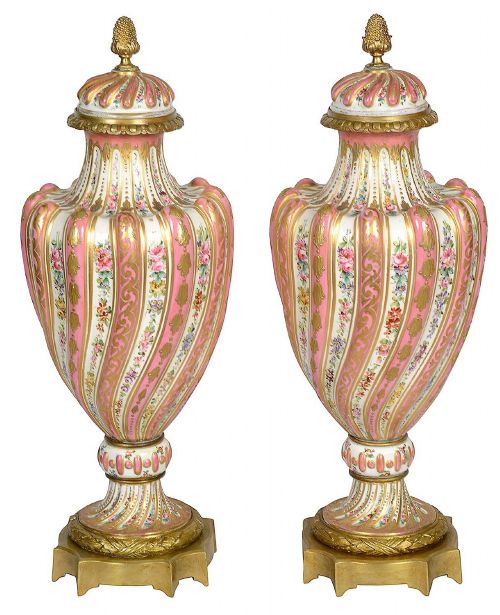
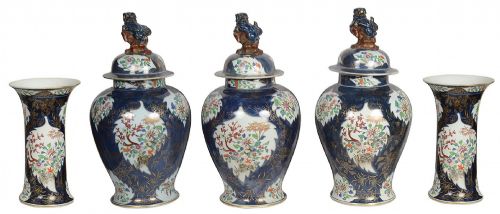

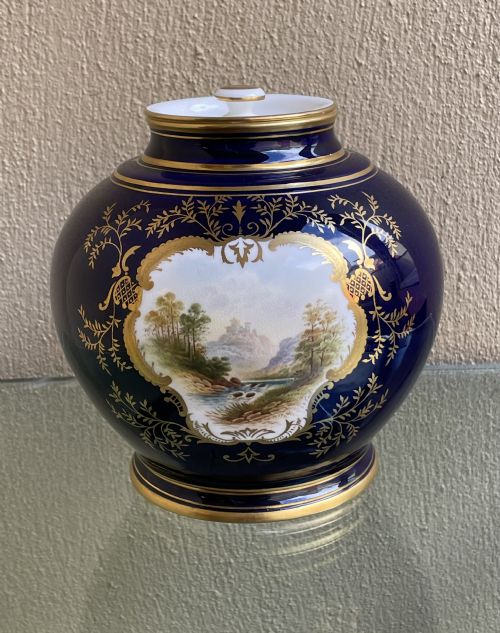


Gilded Porcelain Lidded Vase
These gilded porcelain lidded vases combine intricate hand-painted detail with generous metallic accents, offering a decorative centrepiece for any traditional interior.
Gilded Porcelain Lidded Vase
A gilded porcelain lidded vase is a covered vessel primarily utilised for display, ornamental storage, or potpourri. These pieces range from compact ginger jars to large pedestals standing over sixty centimetres tall. The form encompasses traditional English shapes alongside continental urns and amphorae.
The pieces on this page span the eighteenth, nineteenth, and twentieth centuries, reflecting diverse aesthetics from Victorian and Edwardian periods to Rococo Revival and Neoclassical styles. English factories such as Royal Worcester and Coalport sit alongside continental makers producing Sevres and Vienna styles. Japanese Imari and Satsuma designs also appear frequently among the listings.
The version a buyer meets most often is a nineteenth-century continental or English lidded vessel featuring hand-painted scenes or floral motifs framed by gilding. Potpourri pots with pierced lids and ginger jars with domed covers are particularly common forms. Many examples incorporate handles, pedestals, or ormolu mounts to elevate the silhouette.
How they were made
The foundation of every piece is fired ceramic paste, commonly categorised as porcelain, earthenware, or ironstone. Potters shaped these materials on wheels or within moulds before applying initial glazes and high-temperature kiln firings.
Colour and detail arrived through hand-painted enamel decoration, often depicting figures, birds, or botanical studies. Artisans then applied gold leaf, gilding, or gilt bronze highlights by hand, followed by a final low-temperature firing to bond the metallic elements to the glazed surface.
Some nineteenth-century potpourri pots retain faint traces of dried floral spices inside their pierced covers after more than a century.
What varies in quality
The standard of painting determines much of the visual success, distinguishing factory work by named artists from generic output. Precision in the brushwork, particularly within facial expressions, fruit studies, and intricate Chinoiserie or armorial motifs, separates the finer specimens.
The application and preservation of the gilding further define the range. Thickly burnished gold leaf and well-preserved gilt bronze mounts indicate superior production values compared to flat, worn metallic paint. The structural integrity of the lid and any associated pedestal also influences the overall execution.
Royal Crown Derby·Samson Paris·Royal Worcester·Coalport·Spode·Helena Wolfsohn Dresden·Royal Winton·Berlin·Hadley's Worcester
The Gilded Porcelain Lidded Vase Glossary
- Gilding
- The application of gold leaf or gold dust to the porcelain surface for decorative effect. This finish is frequently burnished to create a bright metallic shine.
- Potpourri
- A mixture of dried petals and spices kept in a specialised lidded jar with a pierced top to release fragrance. These vessels are designed to diffuse scent while remaining decorative.
- Imari
- A style of Japanese ceramic decoration featuring a distinctive palette of underglaze blue, iron red, and abundant gold. European makers frequently copied this aesthetic.
- Amphora
- A two-handled ancient Greek storage jar shape revived during the nineteenth century for decorative urns. These vessels often feature classical figures and elaborate pedestal bases.
- Garniture
- A set of matching vases or jars designed to be displayed together on a mantelpiece or sideboard. They typically consist of a central taller vessel flanked by smaller matching pieces.
Gilded Porcelain Lidded Vase: Frequently Asked Questions
What were lidded vases used for?
These covered vessels primarily served as decorative mantel ornaments or centrepieces in period drawing rooms. Certain variations with pierced lids functioned specifically as potpourri containers to scent domestic spaces.
Larger urns and amphorae were strictly ornamental, designed to display wealth and artistic taste. Smaller ginger jars allowed for the storage of spices or preserves before transitioning into purely decorative objects.
How do I identify the period?
Makers' marks stamped, painted, or impressed on the base provide the most reliable indicator of age and origin. Stylistic clues such as Victorian botanical painting or Art Deco geometric forms further narrow down the decade of manufacture.
Physical characteristics like the weight of the porcelain, the texture of the glaze, and the composition of the gilding also help distinguish eighteenth-century wares from later nineteenth-century revivals.
Are lids original to the vases?
Lids were produced alongside the base as a single unit during manufacture, fitting the aperture precisely. Inspecting the interior rim and glaze continuity reveals whether the cover matches the wear and composition of the lower body.
Replacement lids often show slight discrepancies in colour temperature, gilding density, or porcelain thickness. A matched pair or a ginger jar with its original cover commands greater interest from collectors.