



Oriental Floor Standing Vase
An oriental floor standing vase brings scale and presence to a room, offering striking ceramic or metal forms from the nineteenth and twentieth centuries.
Oriental Floor Standing Vase
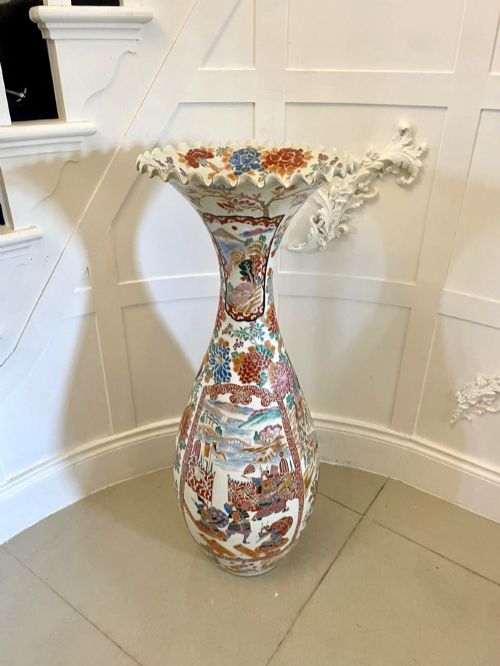
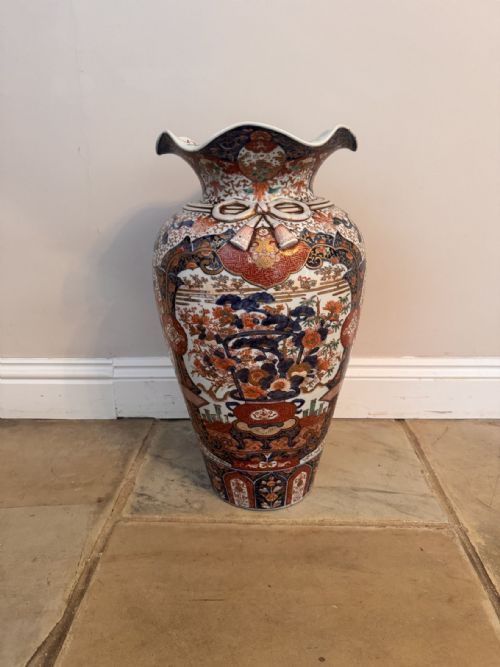
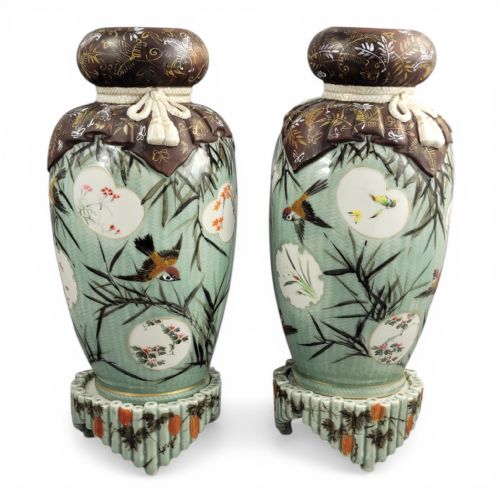
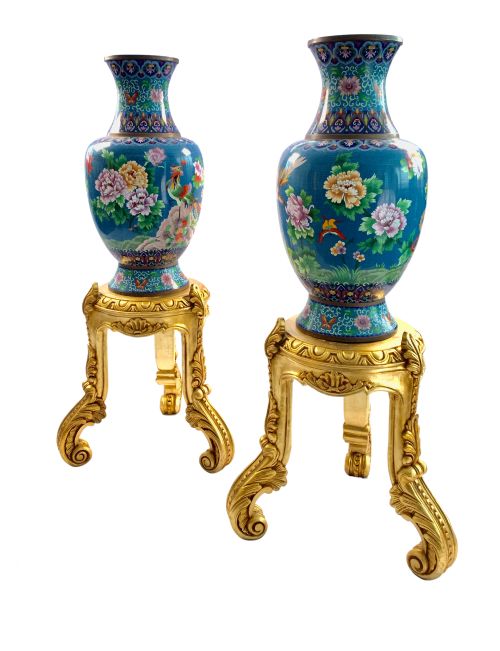
When you search for an oriental floor standing vase, you encounter large scale vessels designed to command space, often accompanied by original hardwood stands. These pieces span the nineteenth and twentieth centuries, taking the form of monumental floor vases, temple vases, and plant stands.
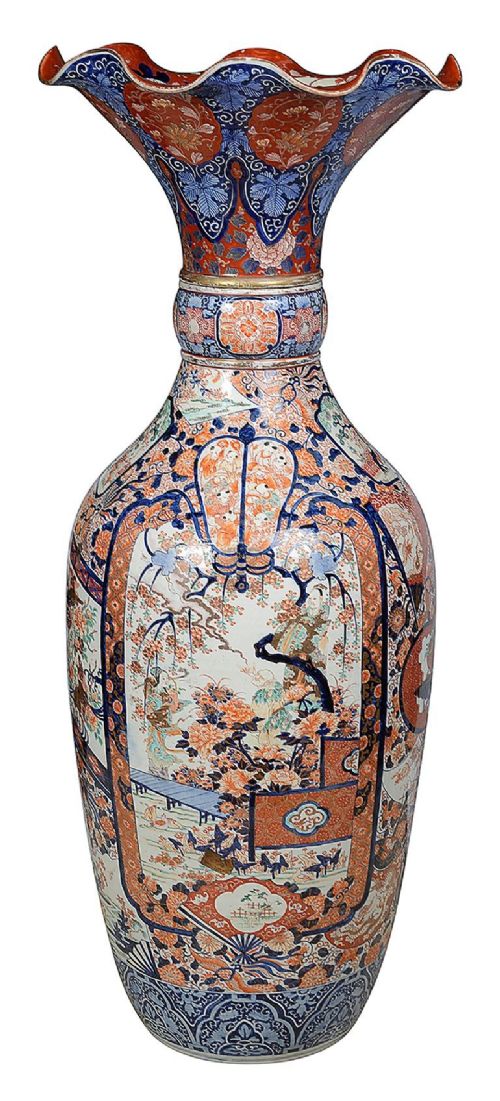
The selections on this page are dominated by Japanese Imari and Chinese export works, including Meiji period porcelain, Qing dynasty pieces, and cloisonné enamels. Many examples arrive in matched pairs, presenting traditional decorative schemes intended for prominent placement in a grand interior.
How they were made
The construction of these large vessels relies on heavy ceramic bodies finished with detailed glazes, overglaze enamels, and occasional applications of gold leaf. Bronze and cloisonné enamel are also utilised for substantial metal forms that demand robust internal structure.
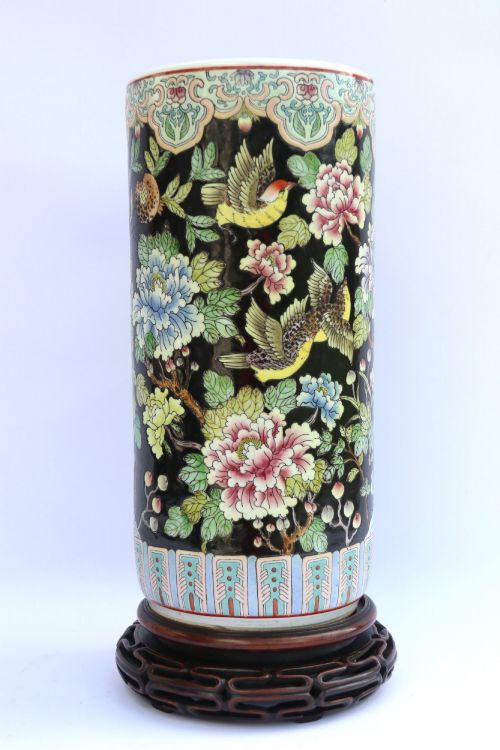
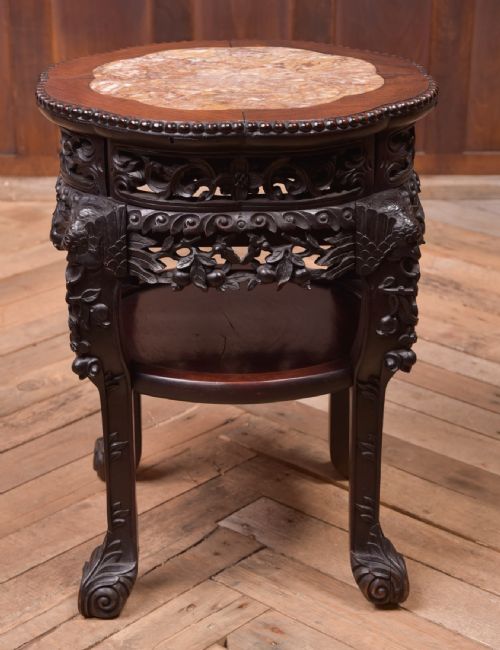
Many vases are paired with carved hardwood or matching porcelain stands, which provide necessary stability and elevation for pieces reaching substantial heights. Lacquer and carved marble additionally appear in supporting elements and specific temple vase variants.
Some temple vases are taller than the people who originally dusted them.
What varies in quality
Quality in an oriental floor standing vase rests primarily upon the crispness of the painting and the depth of the glaze work. Pieces from the Meiji period or Qing dynasty show varying degrees of hand-painted precision in complex floral and figurative motifs.
The survival of original hardwood stands and matching pairs significantly elevates a piece. Furthermore, the overall scale and structural integrity of the ceramic body separate standard decorative items from monumental works of art.
Kato Sanhei·Fukagawa
The Oriental Floor Standing Vase Glossary
- Imari
- A style of Japanese export porcelain decorated in underglaze blue, iron red, and gold. This palette creates a rich decorative surface seen on many large nineteenth-century examples.
- Cloisonné
- A metalwork technique where compartments are created on a vessel using flat wire and then filled with enamel paste. These pieces are subsequently fired and polished to a smooth finish.
- Meiji Period
- The era in Japanese history spanning from 1868 to 1912, characterised by prolific artistic production and export of high-quality ceramics and bronzes.
- Qing Dynasty
- The final imperial dynasty of China, lasting from 1644 to 1912, known for diverse ceramic output including famille noire and rose medallion schemes.
Oriental Floor Standing Vase: Frequently Asked Questions
Where should I place a floor vase?
These large vessels suit grand reception rooms, wide hallways, or empty corners where their height and scale can be appreciated without obstruction.
Ensure they rest on a stable surface, utilising their original stands or sturdy flooring to support their substantial weight safely.
Are these vases always sold in pairs?
While many monumental examples appear as matched pairs, single pieces are equally common in both Japanese Imari and Chinese export styles.
Pairs offer symmetrical arrangement possibilities for large hearths or doorways, whereas single vessels serve as standalone focal points.
How do I distinguish Japanese Imari from Chinese porcelain?
Japanese Imari typically employs a distinctive palette of underglaze blue, iron red, and gold leaf on dense porcelain bodies. Chinese works from the Qing dynasty often feature alternative schemes such as famille noire or rose medallion.
Examining the specific brushwork and decorative motifs clarifies the regional origin of the piece.
What is the purpose of the stands?
The original hardwood or porcelain stands elevate the vessel and distribute its weight evenly across the floor. They form an integral part of the overall design, particularly for Meiji period and Qing dynasty pieces.
Retaining the matching stand preserves the historical completeness and visual balance of the object.