


Imari Porcelain Display Urn
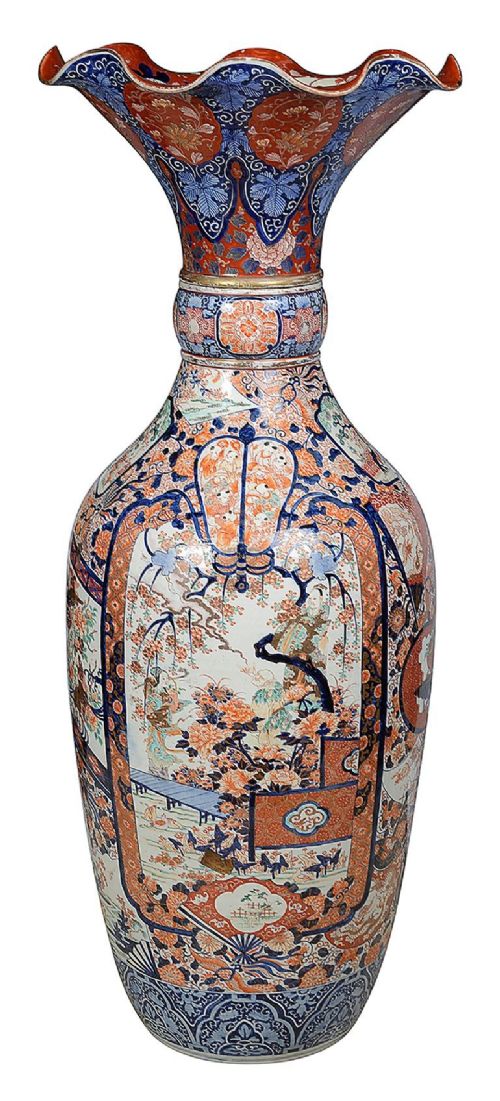
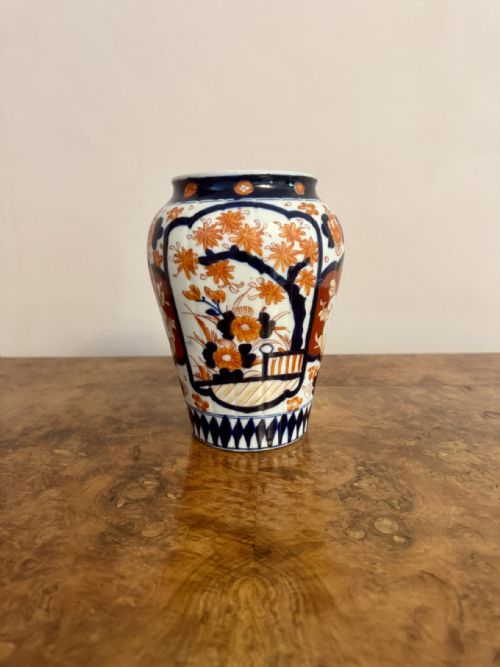
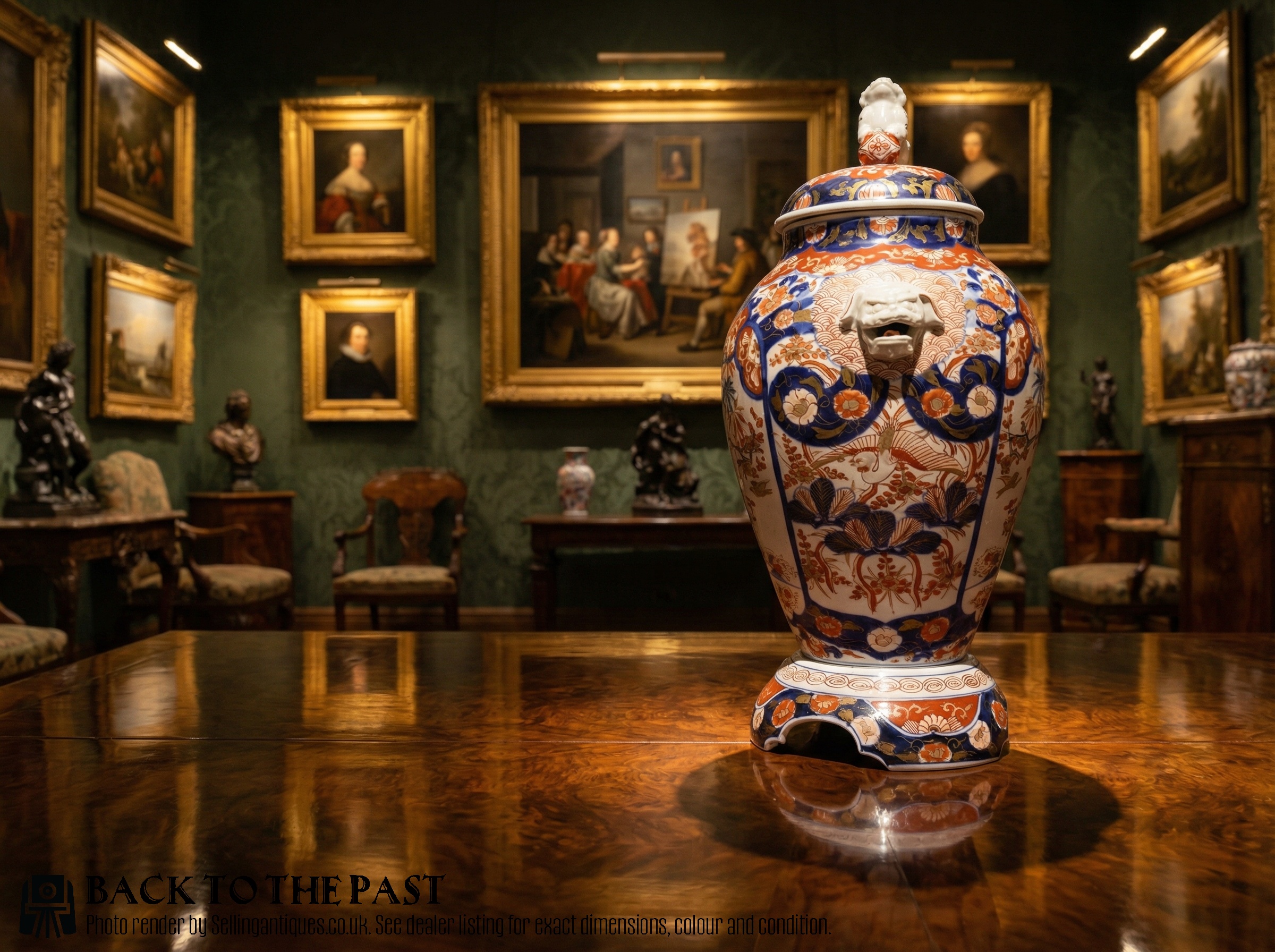
These imari porcelain display urn pieces bring rich cobalt blue underglaze and iron red overglaze enamel colour to any room.
Imari Porcelain Display Urn
When you search for an imari porcelain display urn, you are looking at decorative ceramic vessels spanning the Edo period, the Meiji period, and the nineteenth century. The selection on this page centres primarily on large floor standing vases, lidded vases, ginger jars, and covered jars originating from Japan.
These items take various forms, from single towering floor vases measuring nearly five feet high to collections of small vases and paired lidded vessels. The styles encompass Japanese Imari and Arita Imari, alongside bamboo patterned and ribbed examples.
Buyers choose these forms to anchor a room or to add traditional ceramic depth to a mantel or hall. The majority of pieces date from the nineteenth century, including specific years such as 1870, 1880, 1890, and 1900, with earlier roots extending into the eighteenth century.
What varies in quality
Quality in these ceramics rests upon the crispness of the cobalt blue underglaze and the richness and preservation of the overglaze enamel and gold leaf application. Finer examples display precise control in the moulded or ribbed bodywork and meticulous hand-painted detail across the surface.
Scale and presence also dictate distinction, separating smaller cabinet items from impressive, large-scale floor standing vases and matched pairs of lidded urns. The clarity of the porcelain body and the depth of the historical palette distinguish superior pieces from standard decorative wares.
Listings feature porcelain forms spanning the Edo and Meiji periods, alongside nineteenth-century dates such as 1870, 1880, 1890, and 1900.
The Imari Porcelain Display Urn Glossary
- Imari
- A style of Japanese porcelain decorated in underglaze blue, iron red, and gold. This palette creates a striking contrast that defined export wares for centuries.
- Underglaze
- Pigment applied to the ceramic body before the application of a clear glaze and subsequent firing. Cobalt blue is the most common underglaze colour found on these pieces.
- Overglaze enamel
- Decorative colours painted on top of the already fired and glazed ceramic, then fixed with a lower temperature firing. This technique introduces vibrant iron reds and gilt details.
- Ormolu
- Gilded bronze mounts used to accent and support decorative objects. It frequently appears on European settings of Asian porcelain.
- Ginger jar
- A wide-mouthed storage jar with a rounded body, originally used for spices and later adapted as an ornamental display piece.
Imari Porcelain Display Urn: Frequently Asked Questions
How do I clean an imari porcelain display urn?
Dust the surface gently with a soft, dry cloth to prevent the accumulation of dirt within the moulded or ribbed sections.
Avoid using chemical cleaners or immersing the porcelain in water, as moisture can damage older enamels and gilt highlights.
Where should I place a large floor vase?
Position large floor-standing vessels in corners or entrance halls where they can stand securely away from foot traffic. Ensure the base rests on a level surface to support the significant height and weight of the porcelain.
Keep them out of direct sunlight to protect the iron red enamels and gold leaf details from fading over time.
How do I tell Edo period pieces apart from Meiji period items?
Edo period ceramics often reflect earlier traditional manufacturing techniques and forms, with roots dating back centuries.
Meiji period works, particularly those from the later nineteenth century, frequently demonstrate larger export scales and distinct decorative patterns like bamboo motifs.
What is the difference between a ginger jar and a lidded vase?
Ginger jars typically feature a rounded shoulder and a short, wide neck designed to accept a fitted lid for storage purposes. Lidded vases often display more elongated or columnar proportions intended primarily for ornamental display.
Both forms utilise matching porcelain bodies and similar cobalt blue and overglaze enamel decoration.