
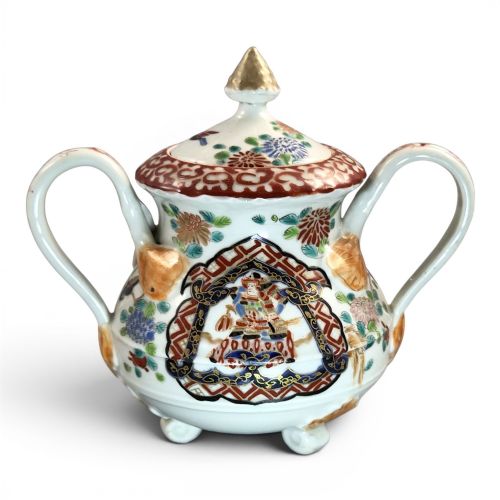


Porcelain Imari Lidded Jar
These porcelain imari lidded jar examples bring together centuries of distinct ceramic traditions and vibrant palettes for display.
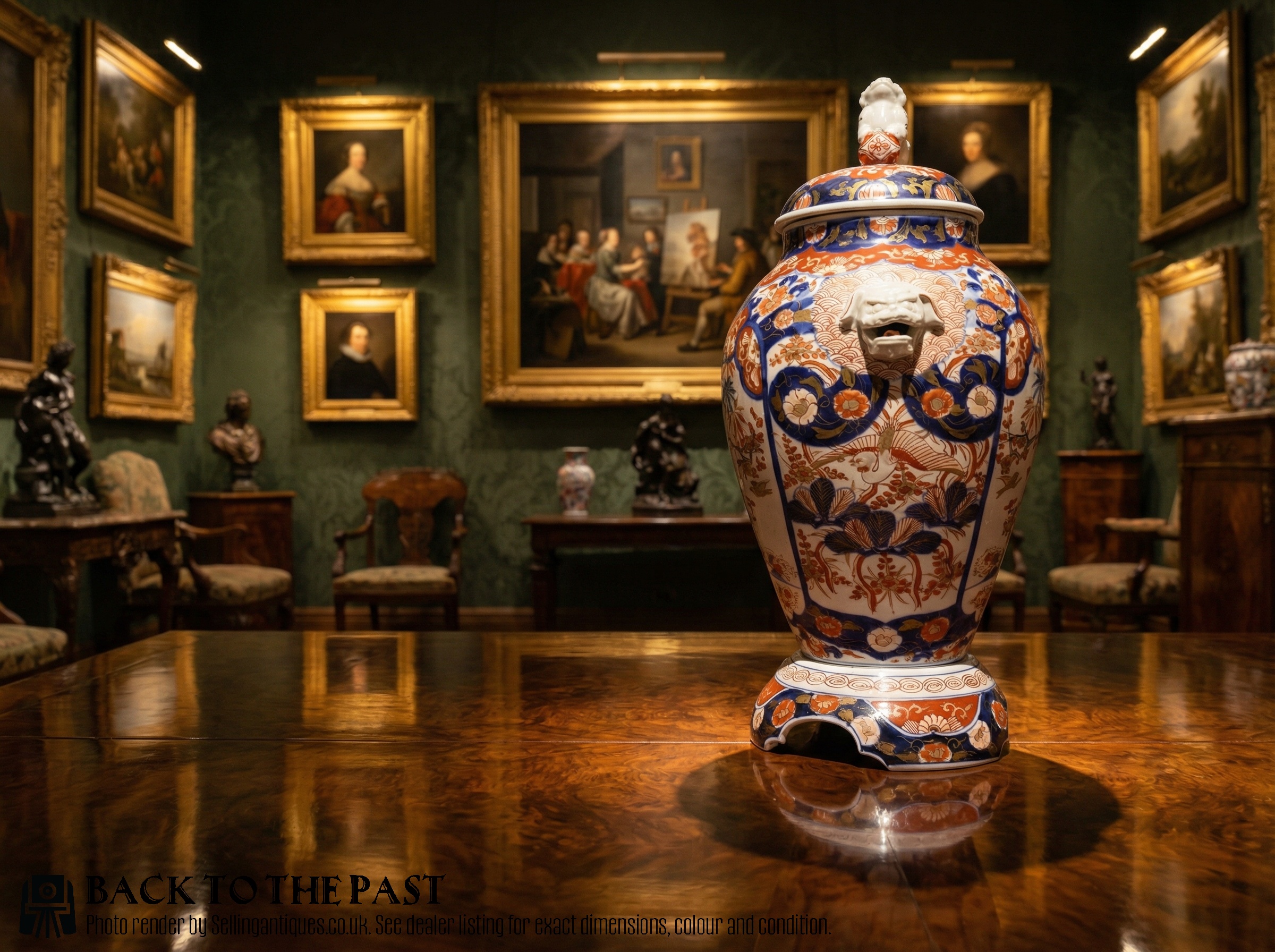
Porcelain Imari Lidded Jar
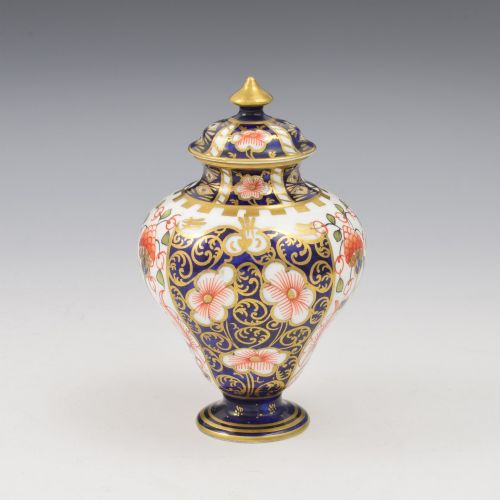
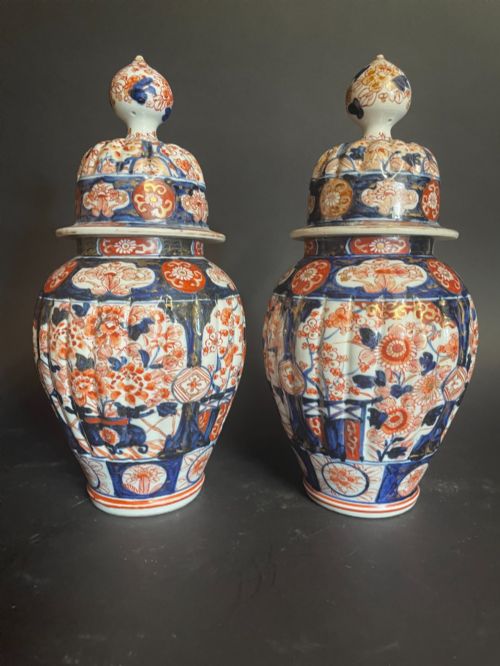
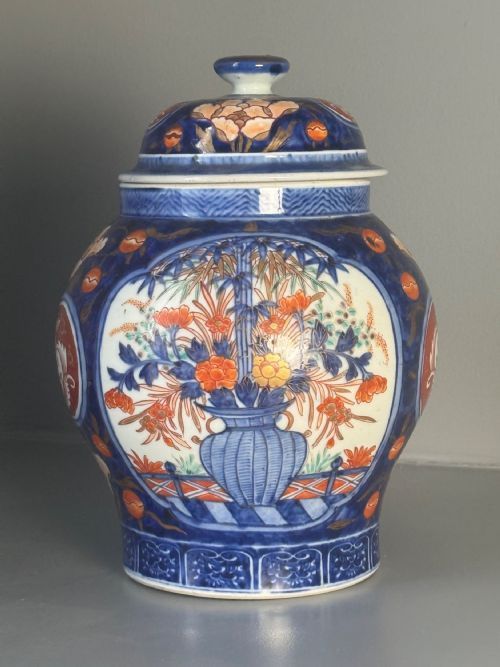
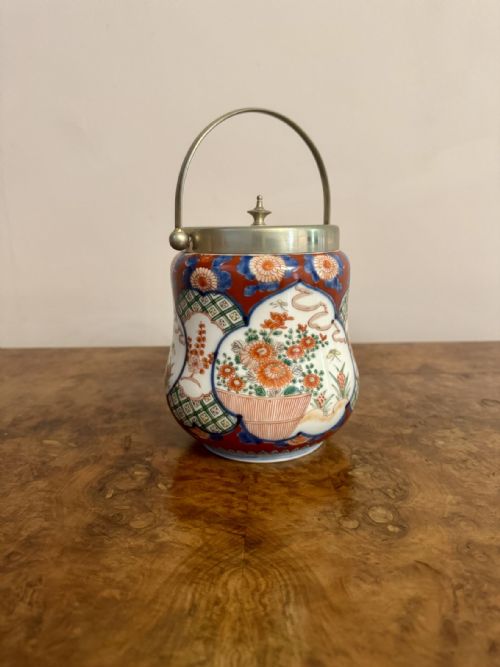
A porcelain imari lidded jar combines vessel and cover, forming a distinct category within traditional ceramics. These pieces appear in forms such as ginger jars, biscuit barrels, and baluster vases spanning the eighteenth, nineteenth, and early twentieth centuries.
The selections on this page draw predominantly from Japanese production centres like Arita, alongside European interpretations from English potteries and continental makers. Buyers encounter both domestic storage vessels and large decorative containers intended for prominent display.
Originating in periods ranging from the Edo and Meiji eras to the Georgian and Victorian epochs, these containers showcase the global reach of distinct decorative styles. The forms vary from straightforward cylindrical jars to octagonal shapes and handled vessels.
What Varies in Quality
Quality rests in the precision of the hand-painted details and the crispness of the porcelain body. Superior examples display controlled brushwork in the enamel and gilding, with covers that fit the mouth of the vessel with exact balance.
The depth and brilliance of the glaze separate standard production pieces from finer works. Master hands achieved distinct saturation in the cobalt blue and iron red pigments, maintaining clarity across complex multi-layered motifs.
Object forms include standard ginger jars, sugar bowls, biscuit barrels, potpourri containers, and large baluster vases.
Royal Crown Derby·Fukagawa·Masons
The Porcelain Imari Lidded Jar Glossary
- Imari
- A style of ceramic decoration originating in Japan, characterised by a palette of cobalt blue, iron red, and gold. This decorative scheme was later adopted by European potteries during the eighteenth and nineteenth centuries.
- Arita
- The Japanese town and surrounding region famous for producing porcelain ware exported through the port of Imari. It remains a central location in the history of East Asian ceramic manufacture.
- Baluster
- A vertical architectural form with a swelling lower portion that inspired the graceful contour of many traditional jars and vases. This silhouette provides stability and visual balance to large vessels.
- Koro
- A traditional Japanese incense burner typically featuring a pierced cover to allow scented smoke to escape. These vessels frequently share forms with lidded jars and vases.
- Ironstone
- A type of durable ceramic developed in nineteenth-century England as a robust alternative to porcelain. It readily accepted imari style transfer printing and hand-painted enamel decoration.
Porcelain Imari Lidded Jar: Frequently Asked Questions
How were these jars used?
These lidded vessels served practical roles as storage containers for dry goods, spices, and ginger, or functioned as ornamental pieces in domestic interiors.
Larger examples occupied prominent positions on mantelpieces and cabinets, while smaller jars sat on tables or served as potpourri holders.
How do I date a jar?
Dating relies on examining the characteristics of the porcelain body, the specific tones of the enamel, and any workshop marks stamped on the base.
Changes in export patterns and stylistic shifts between the Edo and Meiji periods, or between Georgian and Victorian eras, provide further chronological markers.
Are European pieces different?
European potteries produced imari style wares using local ceramic bodies like ironstone or soft-paste porcelain rather than traditional Japanese clay.
While they adopted the distinct red, blue, and gold palette, the underlying weight, potting technique, and glaze texture reflect Western manufacturing methods.
How do I care for them?
These ceramic pieces require gentle dusting with a soft, dry cloth to protect fragile overglaze enamels and gold leaf highlights.
Displaying them away from direct sunlight and handling them by the body rather than the lid prevents accidental surface wear or drops.