


Large Gold Fireplace Mirror
A large gold fireplace mirror commands the room above a mantelpiece, reflecting light and adding architectural presence to an interior.
Large Gold Fireplace Mirror
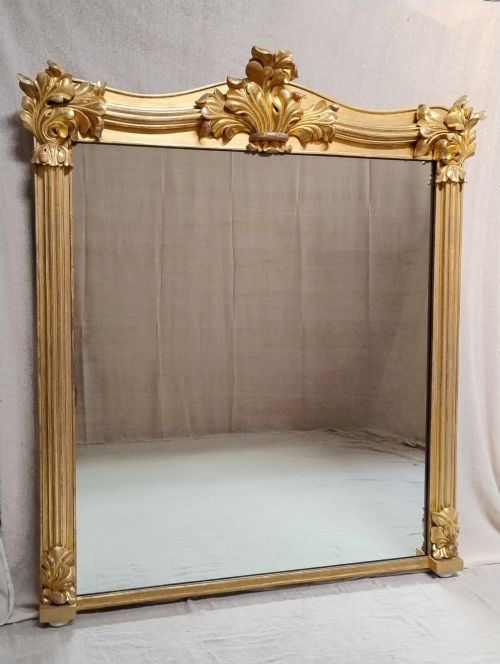
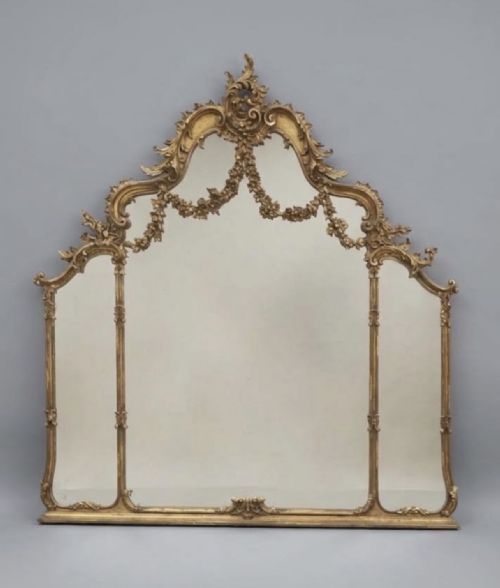
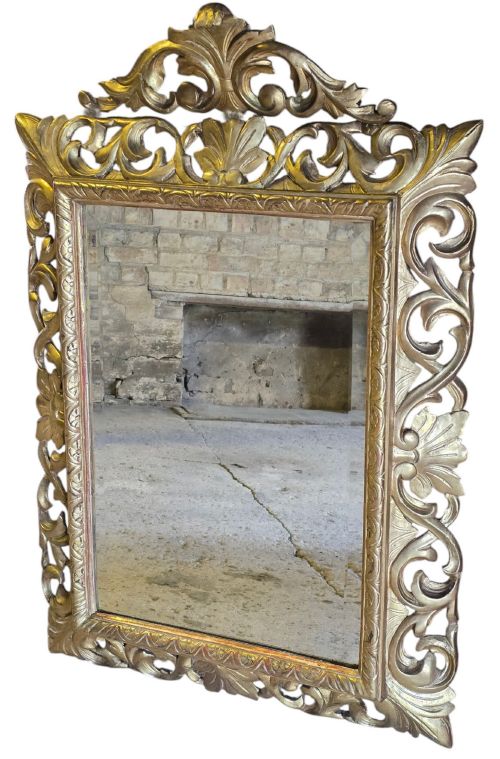
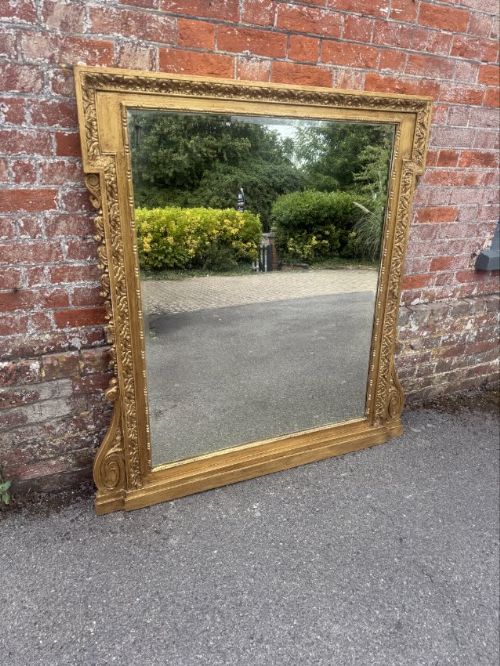
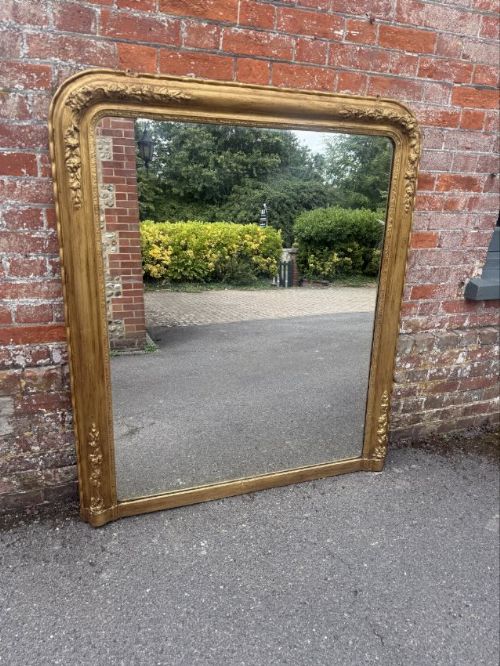
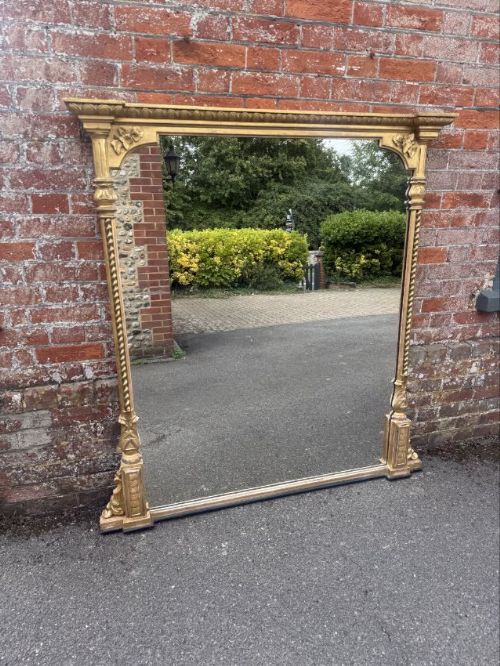
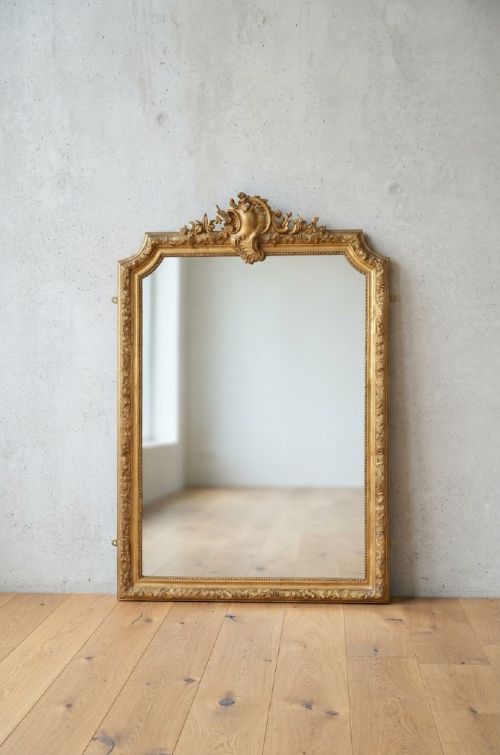
When you search for a large gold fireplace mirror, you encounter substantial overmantel mirrors designed to sit directly above a hearth. These pieces originate predominantly from the nineteenth century, spanning periods from the Regency era through the Victorian epoch and into nineteen hundred.
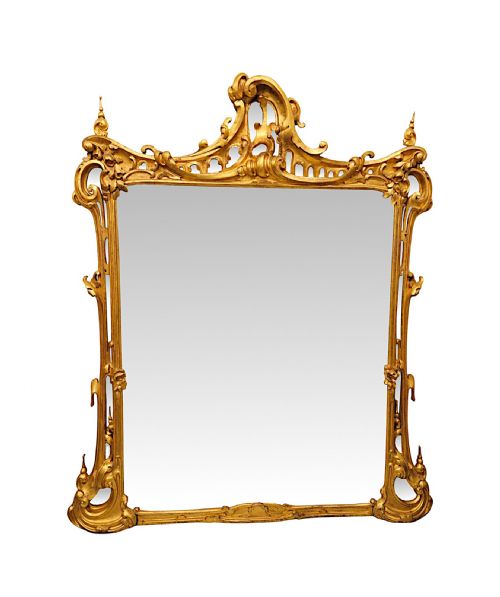
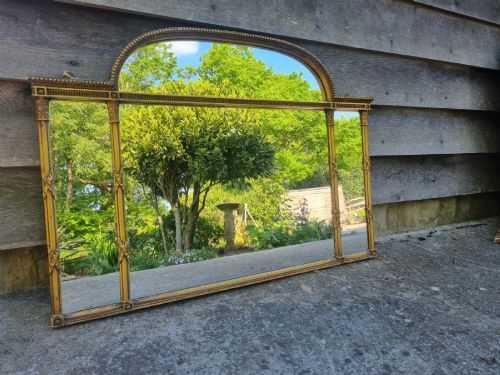
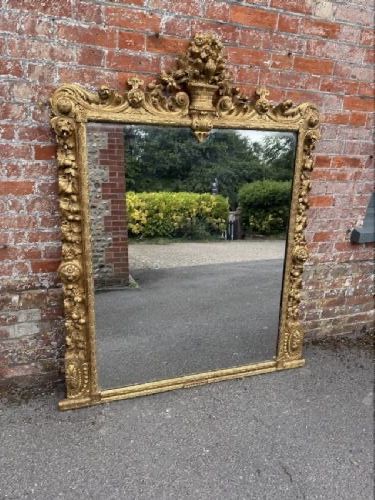
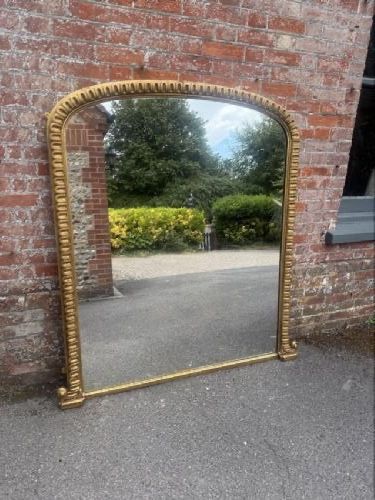
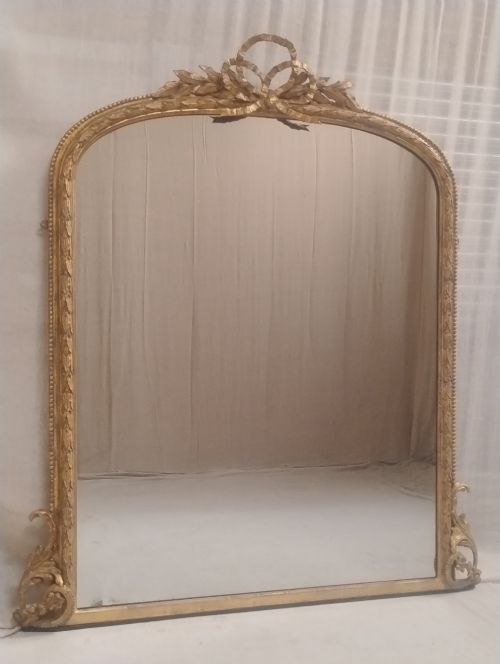
The dominant forms on this page are overmantel mirrors shaped with arched tops, rectangular frames, and occasionally triple plates. English and French origins appear frequently, with styles ranging from classical Regency and French Chateau to Rococo Revival and Chinese Chippendale.
How they were made
Carved wood frames form the structural foundation of these pieces, providing a durable skeletal support for ornamental details. Artisans applied gesso over the wooden base to create a smooth surface suitable for intricate moulding and carving.
Gold leaf and composition ornamentation provide the shimmering metallic exterior finish. Craftsmen laid thin sheets of gold leaf or applied moulded composition details onto the gesso ground before burnishing the surface.
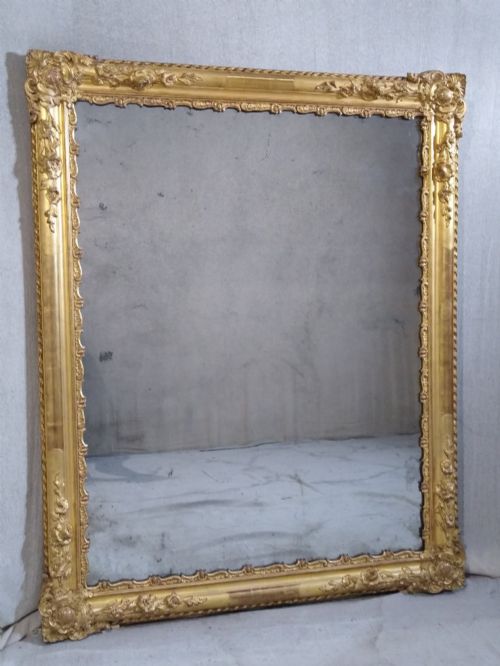
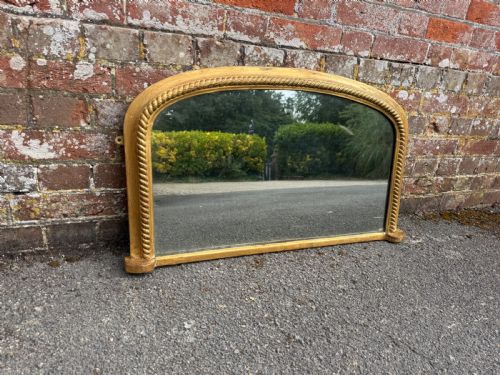
One nautical-themed rope twist frame brings a touch of maritime whimsy straight to the drawing-room hearth.
What varies in quality
The crispness and depth of the carved wood and applied gesso ornamentation distinguish finer examples from simpler workshops. Deeply articulated rope twist, floral tulip motifs, and ornate crestings reflect greater artisan skill and labour time.
The integrity of the gilding and the preservation of the original mirror glass indicate superior craftsmanship and careful historic maintenance. Hand-applied gold leaf ages with a softer warmth compared to mechanical or later chemical finishes.
The Large Gold Fireplace Mirror Glossary
- Gesso
- A plaster-like mixture applied to wood frames to create a smooth surface for gilding. It allows for sharp, detailed relief mouldings.
- Overmantel mirror
- A large wall mirror specifically proportioned to hang on the chimney breast above a fireplace mantel. These frames often feature lower feet or flat bases designed to rest directly on the mantel shelf.
- Giltwood
- Timber that has been coated with gold leaf or gold paint. This technique gives the appearance of solid gold while utilising a lighter wooden structure.
- Composition
- A moulded mixture of whiting, resin, glue, and linseed oil pressed into decorative ornaments. It provides intricate details on Victorian and nineteenth-century frames without the expense of hand carving every element.
- Rococo Revival
- A nineteenth-century design style characterised by asymmetrical scrolls, C-scrolls, and naturalistic shell motifs. It draws inspiration from earlier eighteenth-century French decorative arts.
Large Gold Fireplace Mirror: Frequently Asked Questions
Where should a large gold fireplace mirror be hung?
These mirrors are traditionally positioned centrally on the chimney breast directly above the fireplace mantel. Their horizontal or vertical proportions balance the architectural weight of the hearth below.
Securing such heavy frames requires substantial wall fixings anchored securely into masonry or solid studs. Resting the base directly on the mantelpiece helps distribute the considerable weight of the wood and glass.
How do I identify a Victorian overmantel mirror?
Victorian examples often feature robust carved wood and gesso frames incorporating arched tops, column sides, or rope twist details. Their dimensions are typically grand to suit the higher ceilings of nineteenth-century domestic architecture.
Stylistic cues such as ebonised accents, parcel-gilt finishes, and architectural crestings point directly to the Victorian period. Examining the construction of the wooden backboards provides further confirmation of the manufacturing era.
Can these mirrors be placed on walls without a fireplace?
While originally engineered for placement over hearths, these large mirrors function effectively as principal wall mirrors in reception rooms or hallways. They anchor large empty wall spaces in the same manner as a piece of case furniture.
When hanging away from a mantel, ensure the wall fixings are rated for heavy gilded frames. Professional installation is advisable given the substantial weight of nineteenth-century wood and mirror glass.