
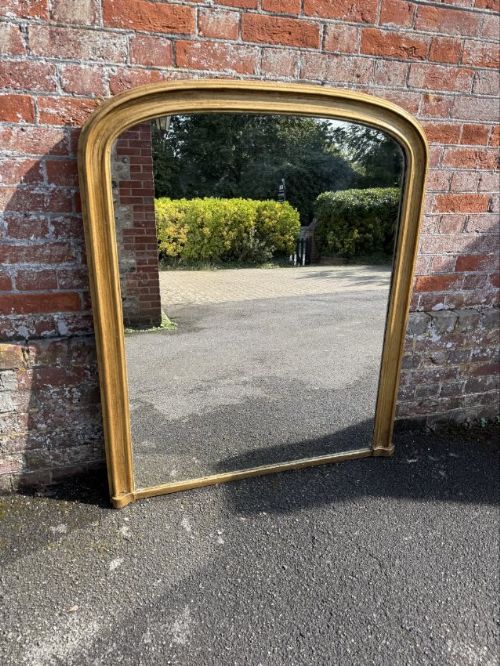
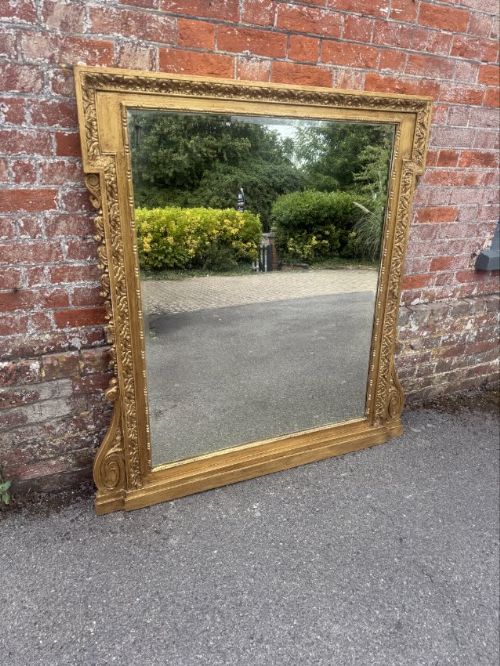
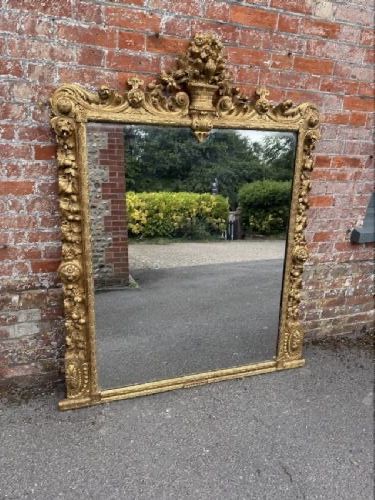
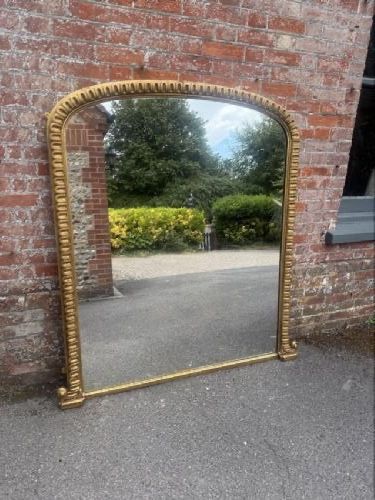
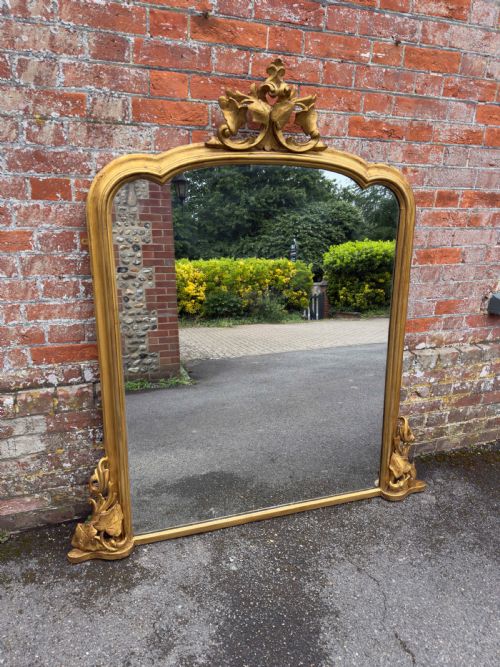
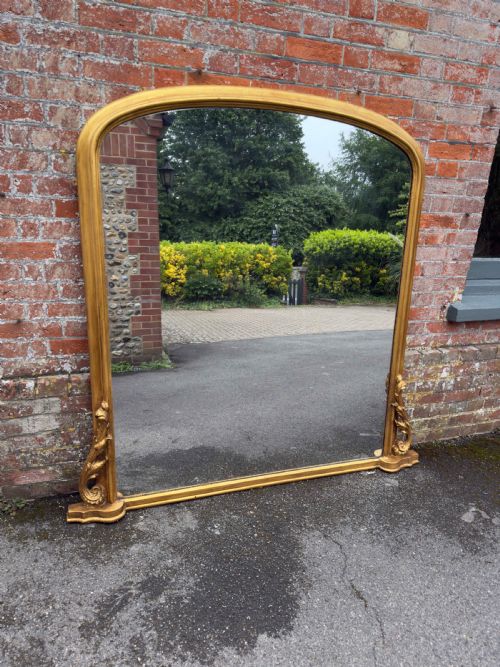
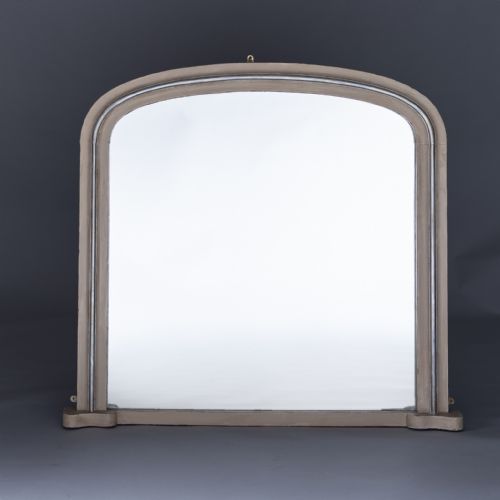


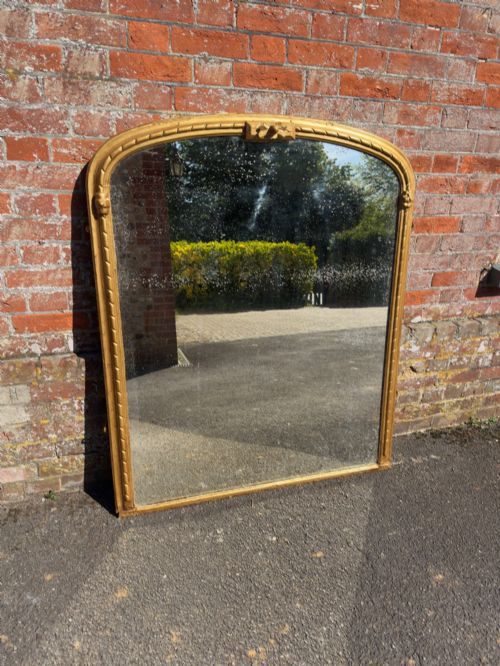
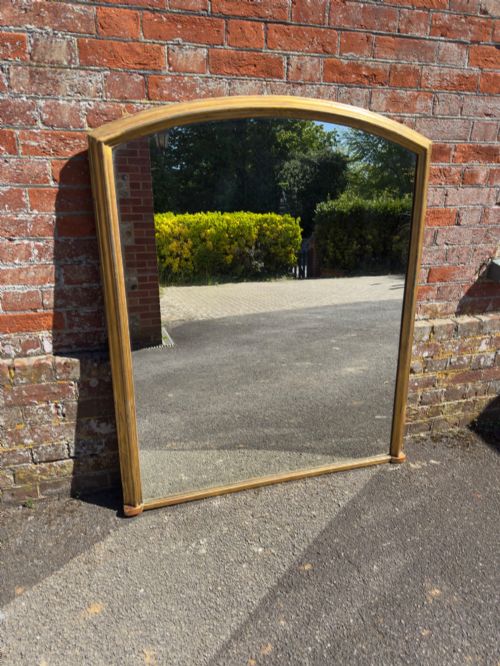
English Mantel Mirror
When choosing an english mantel mirror, you are looking at substantial antique furnishings designed to sit above a fireplace and anchor a room.
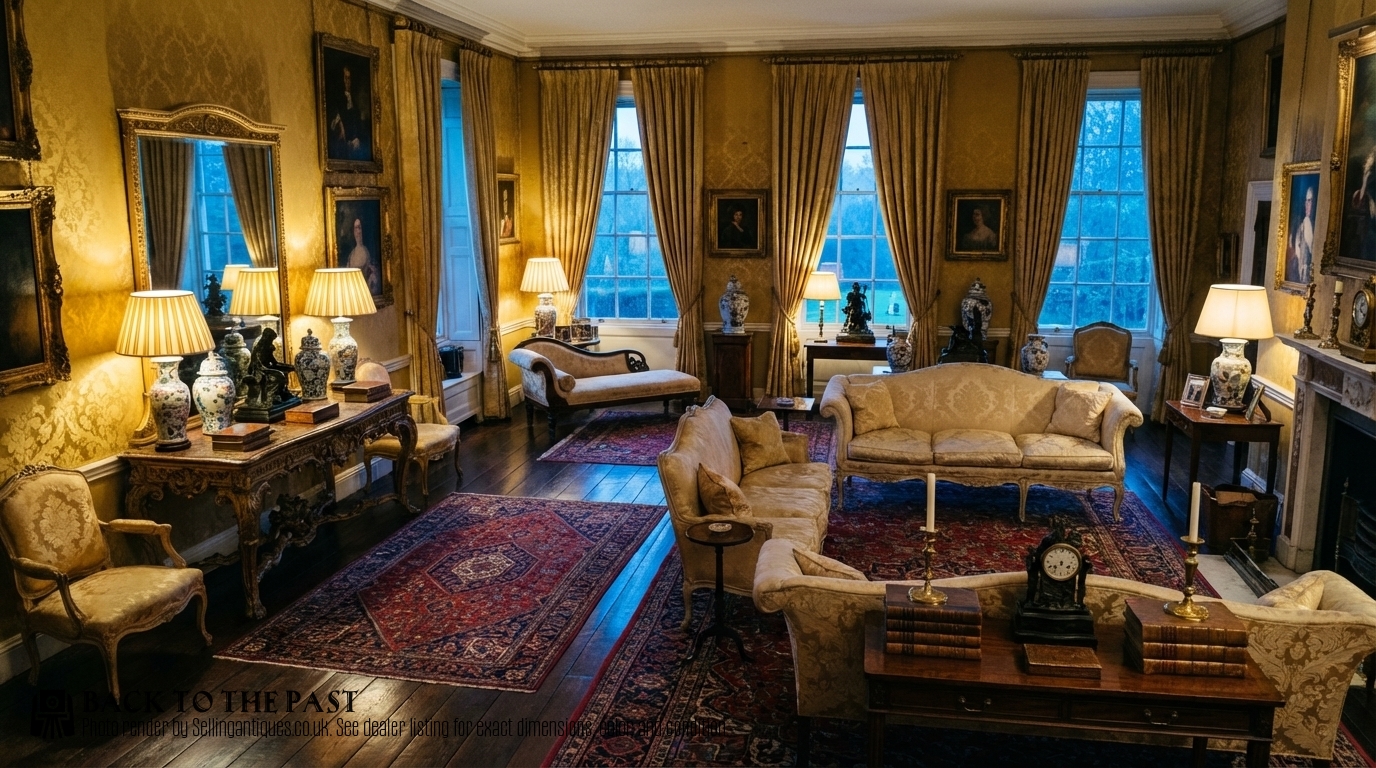
English Mantel Mirror
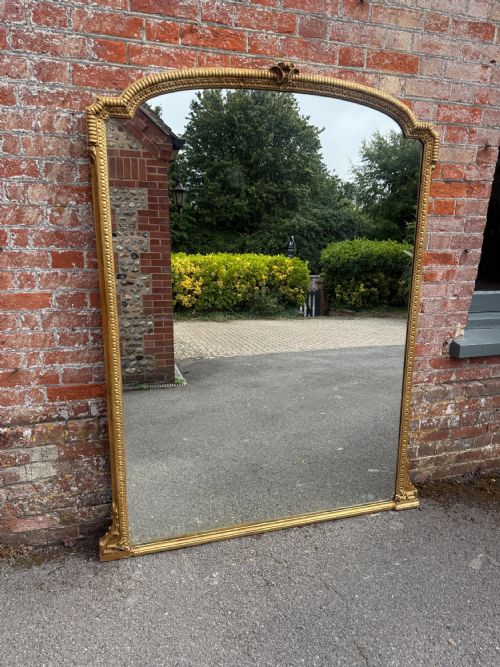
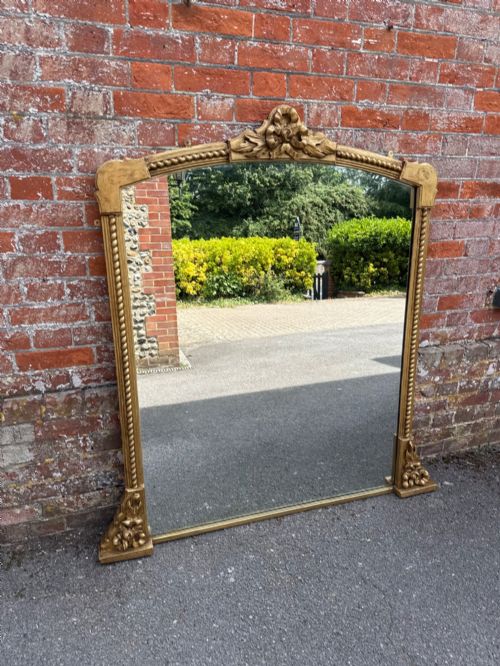
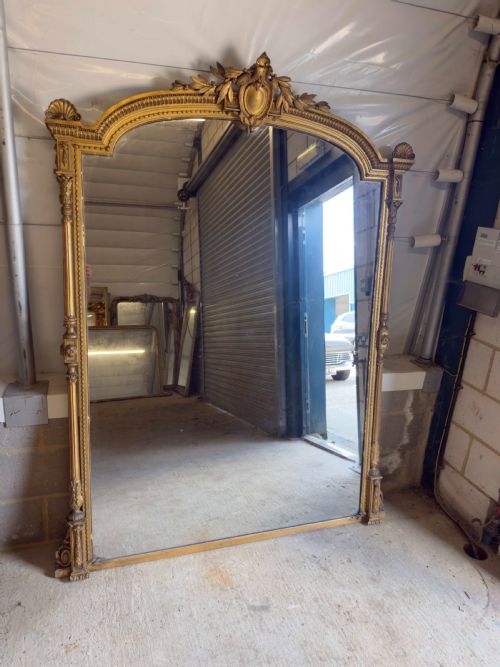
An english mantel mirror is typically a large architectural glass piece designed to hang above a fireplace or rest directly on a mantelpiece. These grand accessories reflect light deep into period rooms and visually expand the living space.
The selections available range from nineteenth-century Victorian arched forms to Regency neoclassical designs and twentieth-century Art Deco variations. Most examples encountered in daily browsing date from the mid to late nineteenth century, finished with prominent gilded frames.
How They Were Made
Carved wooden foundations built from solid timber provide the structural core for these heavy frames, often reinforced with applied plaster ornaments. Artisans then coated these intricate mouldings in layers of gesso before applying gold leaf, paint, or parcel-gilding.
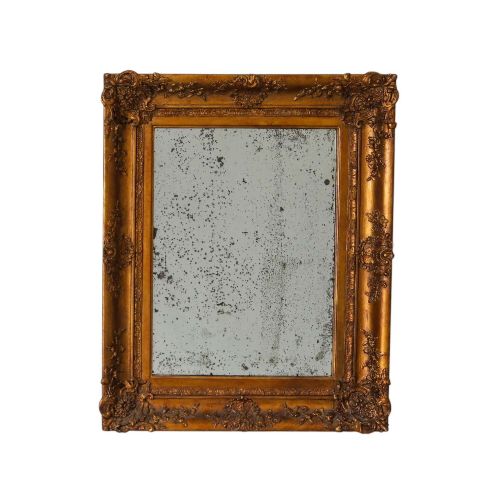
Mirror glass plates were traditionally secured within the rebate using wooden backs, sometimes exhibiting characteristic foxing or age spots from chemical breakdown over the decades. Frames feature decorative motifs such as rope twists, columns, or tulip carvings executed by hand.
Some nineteenth-century makers cleverly incorporated secret internal timber wedges so the heavy mirror could tilt slightly forward to capture the candlelight below.
What Varies in Quality
The crispness of the hand-carved woodwork and the depth of the gesso relief distinguish finer examples from simpler production pieces. Superior frames retain their original gold leaf surfaces rather than modern overpainting, displaying a warm, authentic metallic lustre.
Structural integrity also separates grades, as heavy overmantels require robust internal framing to support massive glass plates without warping. Original mirror plates showing soft, undulating reflections hold greater appeal than stark, modern replacement glass.
The English Mantel Mirror Glossary
- Gesso
- A plaster-like mixture applied to wooden frame foundations to create a smooth surface for gilding. This material allows artisans to carve intricate relief ornaments before applying gold leaf.
- Giltwood
- Timber that has been coated with thin sheets of gold leaf or gold paint. It provides the characteristic bright metallic finish seen on formal period mirrors.
- Overmantel
- A large mirror or painting specifically designed to be positioned directly above a fireplace mantel. These pieces frequently span the width of the fireplace surround.
- Foxing
- The natural age-related brown spots and speckles that develop on antique mirror glass due to the deterioration of the backing. Collectors value genuine foxing as an indicator of great age.
- Parcel-gilt
- A decorative treatment where only selected portions of a painted or ebonised frame are highlighted with gold leaf. This technique creates a striking contrast between dark timber and bright metallic accents.
English Mantel Mirror: Frequently Asked Questions
Where should an english mantel mirror be hung?
These mirrors traditionally anchor the wall directly above a fireplace hearth, where they draw the eye upward and brighten the room.
Alternatively, they can be mounted on a large expanse of wall space above a low sideboard or console table to create a similar architectural focal point.
How do I know if the mirror plate is original?
Original nineteenth-century glass often displays subtle distortions, tiny bubbles trapped within the material, and gentle foxing around the edges where the silvering has aged.
Modern replacement glass appears perfectly flat, uniform in reflection, and entirely free from the characteristic darkening spots associated with high age.
Can these heavy mirrors be mounted safely on plaster walls?
Due to their substantial weight involving dense wood, gesso, and thick glass, these pieces require heavy-duty fixings anchored directly into wall studs or masonry.
Professional installation is strongly advised to distribute the considerable load safely and prevent the frame from pulling away from the wall.
What is the difference between an overmantel and a wall mirror?
Overmantel mirrors are proportioned specifically to sit above fireplace mantels, often featuring landscape rectangles or arched tops designed for wide wall spaces.
Standard wall mirrors generally offer more vertical proportions or smaller dimensions intended for hallways, dressing rooms, and pier spaces between windows.