

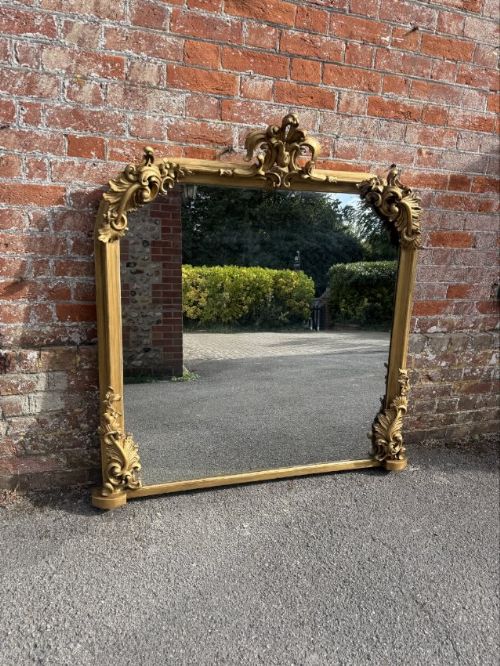
Antique Mirror for Mantelpiece
An antique mirror for mantelpiece placement sits above the hearth, designed to reflect light and anchor the room.
Antique Mirror for Mantelpiece
An antique mirror for mantelpiece installation is fundamentally an overmantel mirror designed to sit precisely on the chimney breast above the fireplace surround. These pieces fill the substantial wall space created by high chimney breasts, drawing the eye and distributing light from the hearth across the interior. The format ranges from simple rectangular shapes to elaborate arched and compartmentalised designs intended to command the room.
The examples most commonly encountered on this page date from the nineteenth century, including pieces from the Regency and Victorian periods. Makers during these eras produced substantial architectural frames in giltwood, gesso, and carved wood to suit the proportions of period sitting rooms. Overmantel mirrors from this span frequently feature arched crests, gilt finishes, or triple plate configurations designed specifically for domestic display above a mantel.
Materials and construction
Makers constructed the structural frames of these pieces using timber such as pine, oak, or mahogany, often applying layers of gesso to create a smooth surface for ornamentation. Carved wooden elements and moulded composition details were attached to the wooden carcase before the application of gold leaf or paint finishes. Gilding involved laying thin sheets of gold onto a prepared bole, while alternative finishes included parcel-silvering or layered colour palettes.
The mirror glass itself was secured within the frame, sometimes divided into multiple plates as seen in Regency and nineteenth-century compartmental formats. Backing boards held the glass in place, and the weight of these substantial frames required robust construction to withstand wall mounting or resting securely upon a mantel shelf.
Antique Mirror for Mantelpiece Retail Price Guide 2026
Typical asking prices for mirror for mantelpiece among the pieces listed under this phrase on Sellingantiques today, from the lower quarter to the upper quarter. They describe what is for sale here now, not the wider market.
Several mirrors include elaborate chariots and mythological figures carved right into the gilded crests.
Distinctions in quality
The distinction between standard domestic mirrors and exceptional pieces lies in the crispness of the carved detail and the depth of the gesso relief upon the frame. Superior examples display sharply defined ornamentation, whether in the Regency neoclassical style or Victorian rococo revival, whereas lesser pieces rely on simpler moulded composition with softer contours.
The quality of the gilding and the preservation of the original mirror plate further separate the tiers of craftsmanship. Hand-gilded surfaces exhibiting subtle tonal variation indicate superior workshop practice, while original glass retaining its authentic foxing adds historical integrity to the piece.
The Antique Mirror for Mantelpiece Glossary
- Overmantel mirror
- A large mirror designed specifically to be hung or placed upon the mantelpiece above a fireplace. These frames are typically wide or arched to match the proportions of the fire surround.
- Giltwood
- Timber, commonly pine or gesso-coated wood, covered with a thin layer of gold leaf. This finish provided the bright, reflective surfaces favoured in formal nineteenth-century interiors.
- Gesso
- A plaster-like mixture applied to wooden frames as a base for gilding or carving. It allowed craftsmen to mould intricate relief patterns before applying gold leaf.
- Compartmental mirror
- A mirror plate divided into multiple sections within a single frame. Regency examples frequently employed this multi-plate layout to create architectural rhythm.
- Pier mirror
- A tall mirror designed to hang on the wall space between two windows. These share stylistic traits with overmantel mirrors but are proportioned for vertical wall spaces.
Antique Mirror for Mantelpiece: Frequently Asked Questions
Did these mirrors hang on the wall or rest on the mantel?
Most overmantel mirrors were constructed to rest directly upon the wooden or marble mantel shelf while being secured to the wall near the top of the frame. This dual method of support kept the heavy piece stable against the chimney breast.
Some lighter wall mirrors from the period were hung entirely from picture hooks, but substantial overmantels relied on the mantel shelf to bear a significant portion of their vertical load.
How do I identify a Regency overmantel mirror?
Regency overmantel mirrors typically display neoclassical motifs such as reeded columns, ball-stud frames, or giltwood detailing inspired by classical architecture. Compartmental plates divided into three sections are also characteristic of this period.
The clean lines and restrained ornamentation distinguish Regency pieces from the heavier, more florid rococo revival styles popular later in the nineteenth century.
What is the difference between an overmantel and a wall mirror?
An overmantel mirror is proportioned specifically to sit horizontally above a fireplace mantel, often featuring a wider layout and an arched or pedimented top. Wall mirrors are generally designed for standalone placement on vertical wall spaces.
While both share similar construction methods using gesso and giltwood, an overmantel's dimensions reflect its intended relationship with the hearth and chimney breast.