






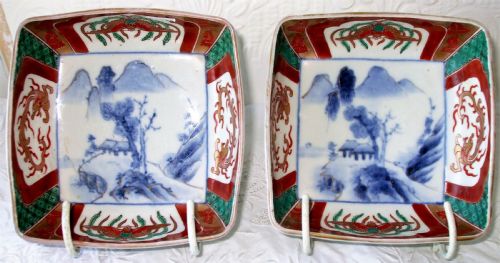
Japanese Imari Porcelain Dish
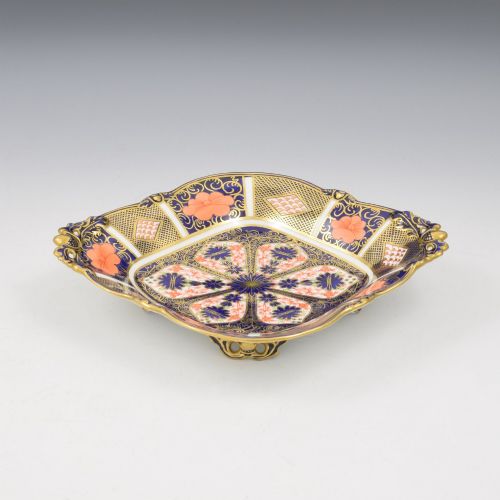
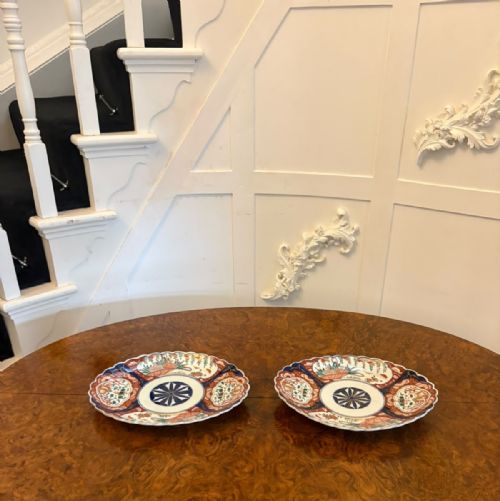
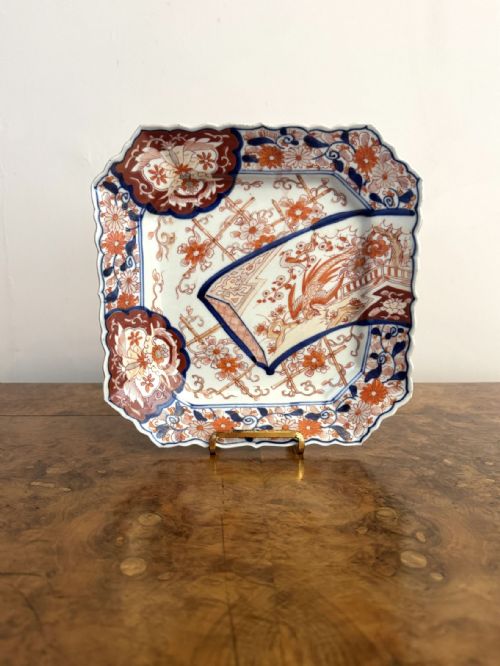
A Japanese imari porcelain dish brings together cobalt underglaze blue, iron red enamel and gold leaf on crisp white porcelain.
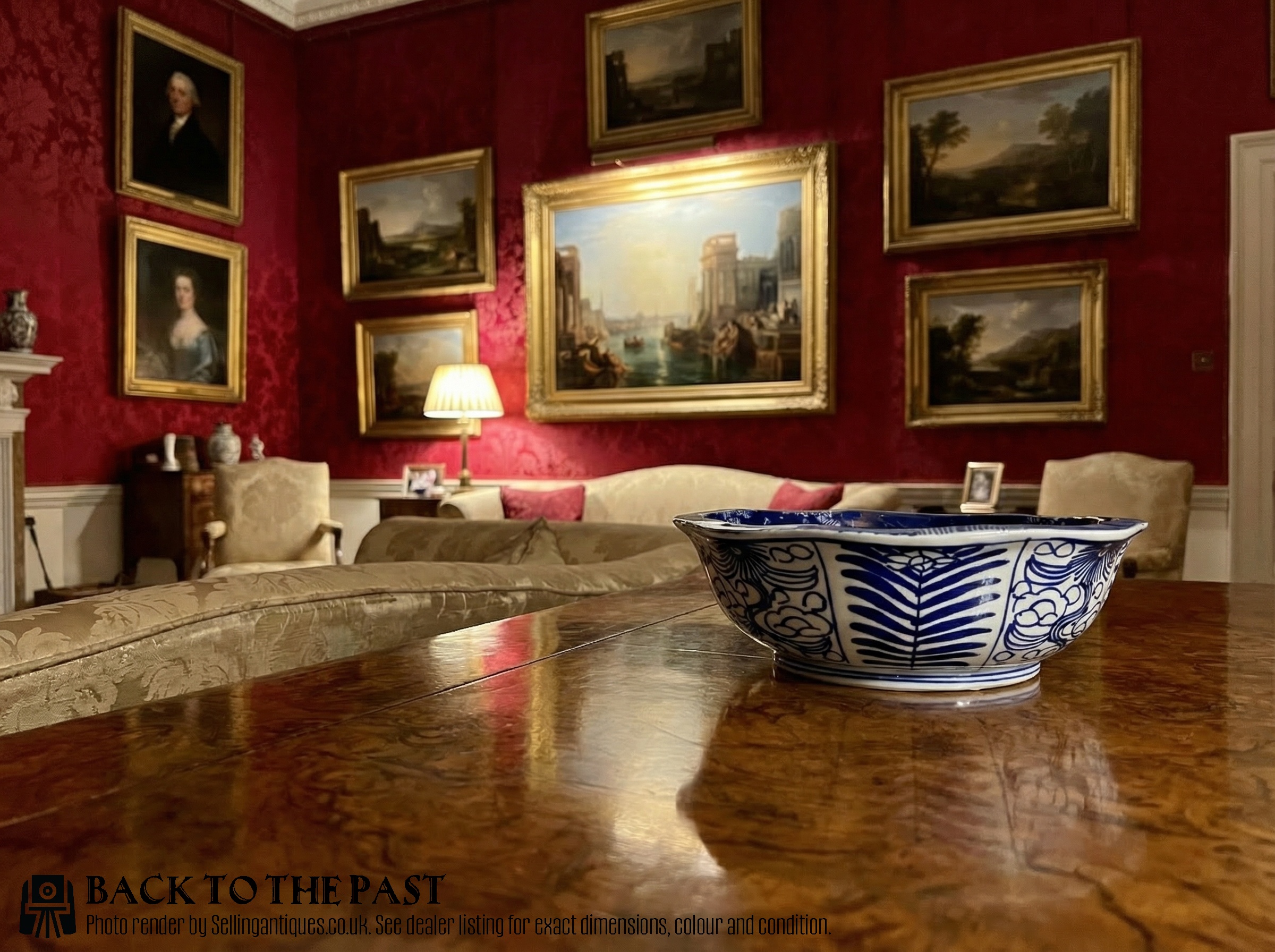
Japanese Imari Porcelain Dish
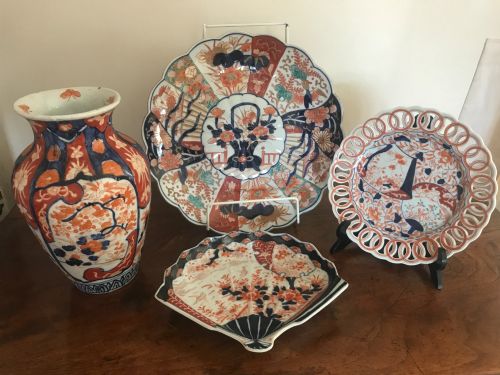
A Japanese imari porcelain dish sits among the most recognisable decorative ceramics exported from Japan, taking the form of plates, bowls, chargers and boat-shaped vessels. When searching for a japanese imari porcelain dish, buyers encounter domestic and decorative tableware intended for display or service.
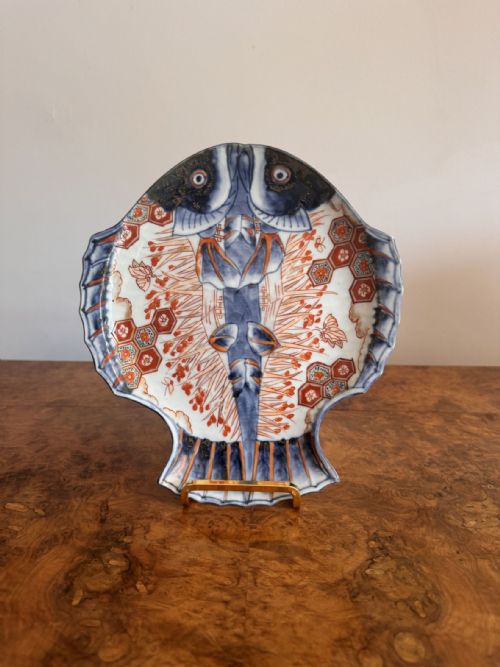
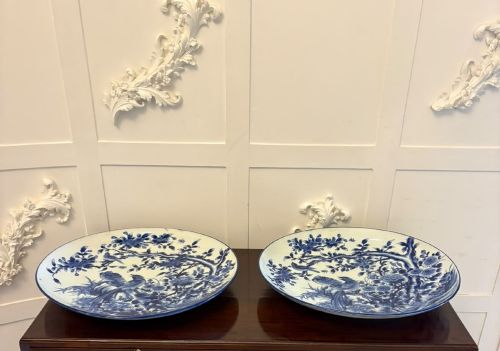
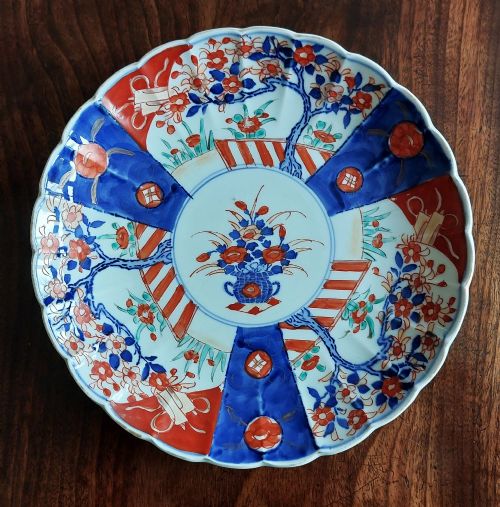
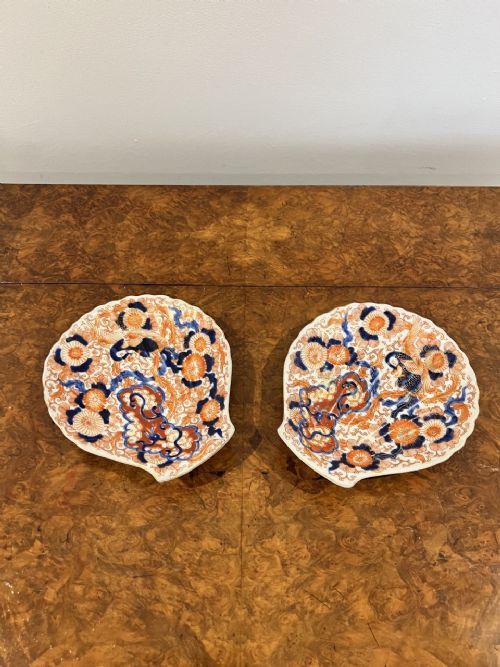
The pieces appearing most frequently span the nineteenth century, Victorian era and the Meiji period, alongside occasional eighteenth-century examples and Samson revival pieces. Forms range from standard circular plates to scalloped edges, fish shapes, hexagonal outlines and large wall chargers.
Originating in Arita and following Japanese Edo and Meiji traditions, these ceramics often feature hand-painted floral and exotic bird motifs executed in rich palettes. Collectors find both single items and matched pairs or sets designed for visual impact.
How they were made
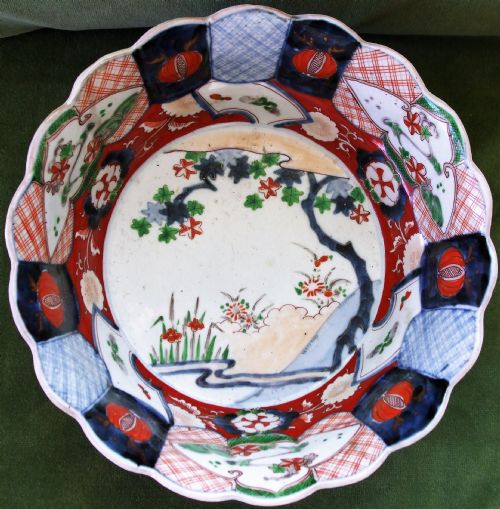
Potters shaped high-fired porcelain bodies, applying cobalt underglaze pigment before the initial firing to establish deep blue linear details and motifs. Enamel colours and gold leaf or gilding were then added in subsequent firings to create the characteristic layered palette.
Surface decoration relied on careful hand painting, uniting cobalt underglaze with red enamel and gilt highlights across decorative plates, chargers and bowls. Glaze application sealed the body while preserving the contrast between the crisp white porcelain ground and the dense ornamentation.
Japanese Imari Porcelain Dish Retail Price Guide 2026
Typical asking prices for japanese imari porcelain dish among the pieces listed under this phrase on Sellingantiques today, from the lower quarter to the upper quarter. They describe what is for sale here now, not the wider market.
Among the plates and bowls wait unexpected swimming companions, including an antique plate fashioned entirely in the form of a fish.
What varies in quality
Execution of the hand-painted motifs separates standard output from finer items, distinguishing loose brushwork from precise botanical and avian details. The crispness of the cobalt underglaze and the preservation of the gold leaf or gilding dictate overall visual success.
Form complexity also influences standing, with unusual shapes like fish, boat forms, squares and hexagonal plates demanding greater skill from the potter than simple circular dishes. Scale plays a role, as large chargers require exceptional control during drying and firing to avoid warping.
The Japanese Imari Porcelain Dish Glossary
- Imari
- A style of Japanese porcelain originating in Arita, defined by a palette of cobalt underglaze blue, iron red enamel and gold leaf. The style gained popularity in the West during the Edo and Meiji periods.
- Meiji Period
- The era in Japanese history spanning from 1868 to 1912, associated with increased export of decorative arts including porcelain plates and chargers. Pieces from this time often display intricate hand-painted floral and bird designs.
- Charger
- A large decorative plate or dish intended primarily for display on walls or tables rather than everyday dining. These items frequently measure of large scale and showcase dense ornamentation.
- Cobalt Underglaze
- A blue pigment applied to the raw porcelain body before glazing and firing, producing deep indigo tones beneath a protective glassy layer. It forms the structural foundation of traditional imari decoration.
- Scallop Edge
- A decorative rim formation featuring curved indentations that create a wavy outline. This shaping appears frequently on antique plates, bowls and dishes.
Japanese Imari Porcelain Dish: Frequently Asked Questions
How do I display an imari charger?
Large chargers are traditionally placed on sturdy wall hangers or supported upright on cabinet plate stands to showcase their detailed surface work.
Because of their substantial scale and weight, secure fixings are essential when mounting them on walls for display.
Were these dishes used for dining?
While manufactured as functional ceramics, many surviving examples served decorative purposes in European and Japanese interiors due to their striking enamel colours.
Plates and bowls with delicate gilding are generally treated as display pieces today to preserve the painted surfaces.
How do I identify a Meiji period piece?
Meiji period items date between 1868 and 1912, aligning with the historical era of increased export trade to Western markets.
They often feature vibrant combinations of cobalt underglaze, red enamel and gold leaf applied to plates and dishes with distinct scalloped edges.
What is the difference between Arita and Imari?
Arita refers to the Japanese town and production centre where the porcelain was actually manufactured from raw materials.
Imari was the port from which these ceramics were shipped, becoming synonymous with the distinctive blue, red and gold decorative style.