


Japanese Enamel Vase
A Japanese enamel vase brings intricate metallic detail and storied Meiji and Showa craftsmanship straight to a room.
Japanese Enamel Vases
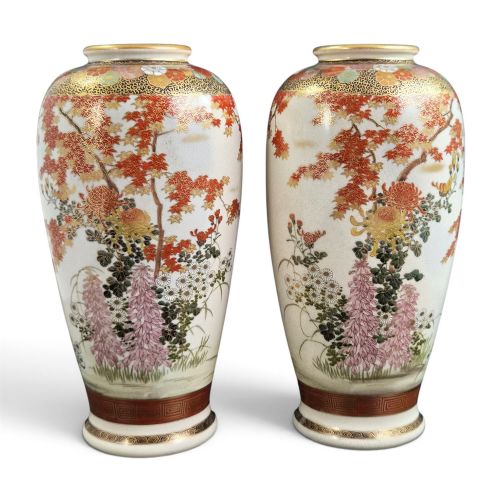
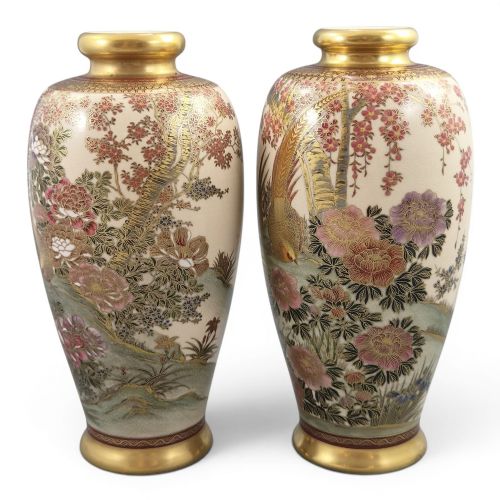
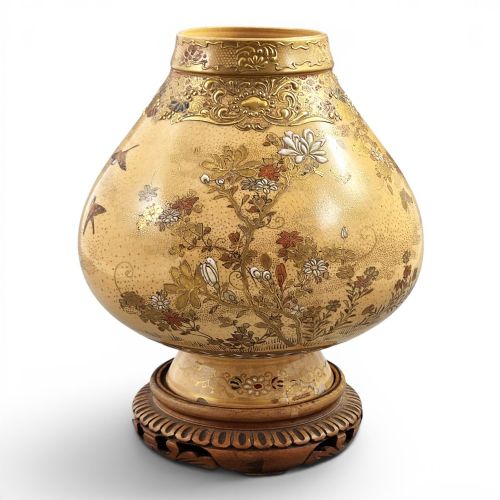
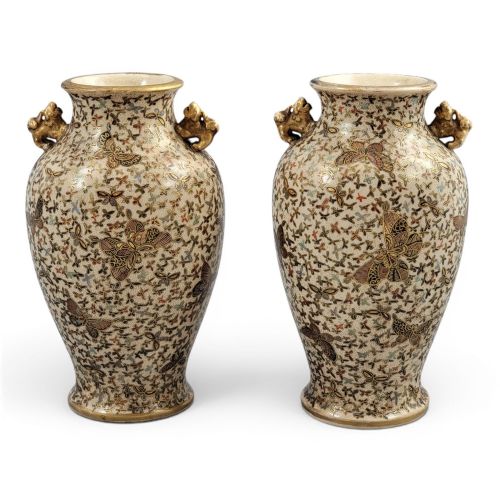
A Japanese enamel vase displays meticulous metalwork and decorative motifs rooted in the Meiji and Showa periods. Collectors encounter these vessels in forms ranging from compact bottle shapes to substantial floor-standing pieces.
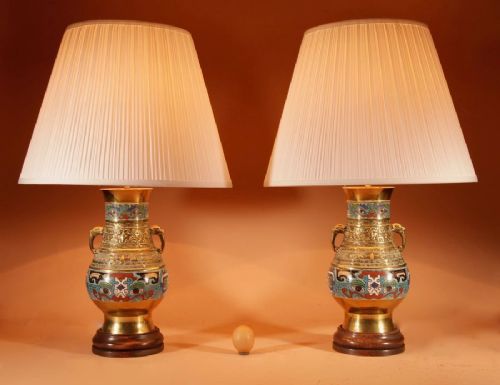
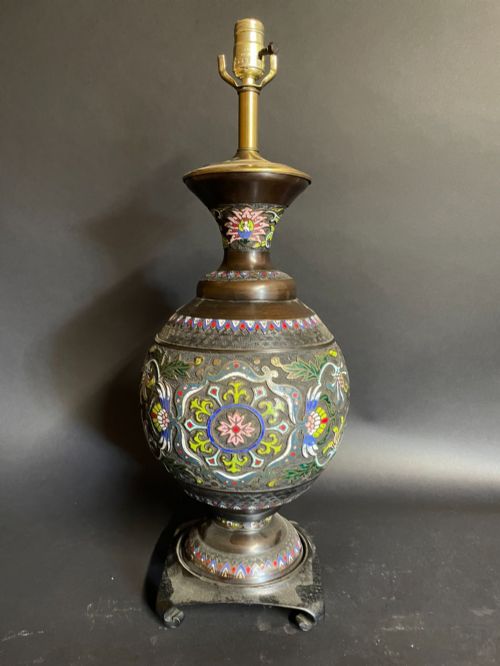
The material vocabulary relies predominantly on copper bodies embellished with cloisonne enamel, alongside occasional silver wire mounts and wooden display elements.
Meiji era examples showcase complex floral or natural subjects, while Showa period works continue traditional workshops with modern aesthetic touches.
Materials and Construction
Artisans form the structural body of each Japanese enamel vase using hammered copper or occasionally pottery, preparing the foundation for intricate surface decoration.
Makers apply fine silver or gold wire to map out detailed cells, known as cloisons, which are subsequently filled with coloured enamel pastes and fired multiple times.
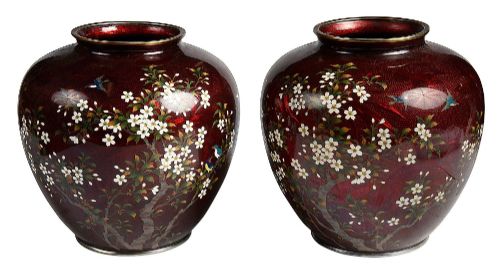
Advanced ginbari techniques involve texturing the copper base beneath transparent enamel layers to create depth, while final polishing achieves a smooth, luminous finish.
Workshop signatures from historic Kyoto and Tokyo ateliers frequently appear alongside silver wire mounts.
Evaluating Quality
The refinement of the wirework dictates the primary tier of execution, where tighter grids and thinner silver lines denote superior dexterity from master workshops.
Surface clarity and the absence of firing blemishes separate standard production pieces from masterworks signed by prominent makers such as Namikawa Yasuyuki or the Ando Company.
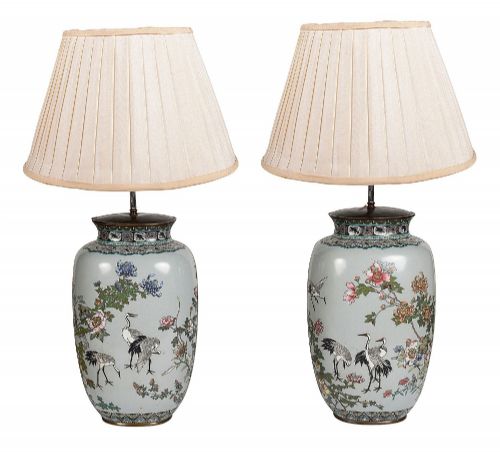
The integration of complex motifs, such as detailed avian subjects or Mount Fuji landscapes, distinguishes ambitious sculptural investments from simple floral repeats.
Ando Company·Namikawa Yasuyuki·Hayashi Kodenji·Kumeno Teitaro·Tamura Yukio
The Japanese Enamel Vase Glossary
- Cloisonne
- A decorative metalwork technique where fine wire creates compartments on a copper body to hold coloured enamel pastes. Subsequent kiln firings fuse the glassy surface before final polishing.
- Ginbari
- A Japanese enamelling method featuring a textured or foiled copper ground beneath transparent enamel. This technique produces a patterned, reflective background effect.
- Meiji Period
- The historical era spanning from 1868 to 1912 characterised by rapid modernisation and the flourishing of decorative arts for international export. Pieces from this time often exhibit exceptional technical ambition.
- Showa Period
- The historical era lasting from 1926 to 1989 encompassing traditional craft continuation alongside contemporary design shifts. Makers working in this timeframe produced both classical revivals and modern interpretations.
- Imari
- A traditional Japanese porcelain style featuring rich cobalt blue and iron red decoration, sometimes referenced in enamel-decorated ceramic vessels. It denotes a specific palette and aesthetic heritage.
Frequently Asked Questions
How do I date a Japanese enamel vase?
Examination of the wiring style, base metal, and signature markers helps assign pieces to either the Meiji or Showa eras. Earlier Meiji works often utilise dense silver wire grids and rich dark fields, whereas later twentieth-century pieces adopt cleaner contemporary motifs.
Maker marks stamped on the base or integrated into the enamel provide definitive links to historic workshops like Ando or Namikawa. Comparing the subject matter and manufacturing technique against documented archives clarifies the exact period of production.
What is ginbari enamel?
Ginbari is a specialised technique where the copper vessel wall is embossed or textured with a fine pattern before translucent enamel is applied. This creates a shimmering, reflective background beneath the surface colour.
Pieces utilising this method often reveal delicate floral or geometric textures shining through the outer glaze. It demands high precision from the artisan to avoid damaging the delicate foil during firing.
How should I display these vases at home?
Positioning a Japanese enamel vase in a well-lit space allows natural daylight to catch the reflective metallic wires and translucent enamel layers. Placing them on stable wooden surfaces ensures the delicate copper and glass composition remains secure.
Because many examples feature intricate floral or avian motifs, pairing them with minimal surrounding decor highlights their detailed craftsmanship. Avoid direct harsh sunlight to protect the coloured glass enamels over time.
Are these vases made of copper or pottery?
The majority of traditional Japanese enamel pieces utilise hammered copper bodies as the structural foundation for wirework and glass pastes. This metalwork base provides the necessary rigidity for the multi-layered firing process.
Some distinct nineteenth and twentieth-century examples employ pottery or porcelain bases instead, finished with hand-applied enamel decoration. Inspecting the base rim usually reveals whether the core material is metallic or ceramic.